
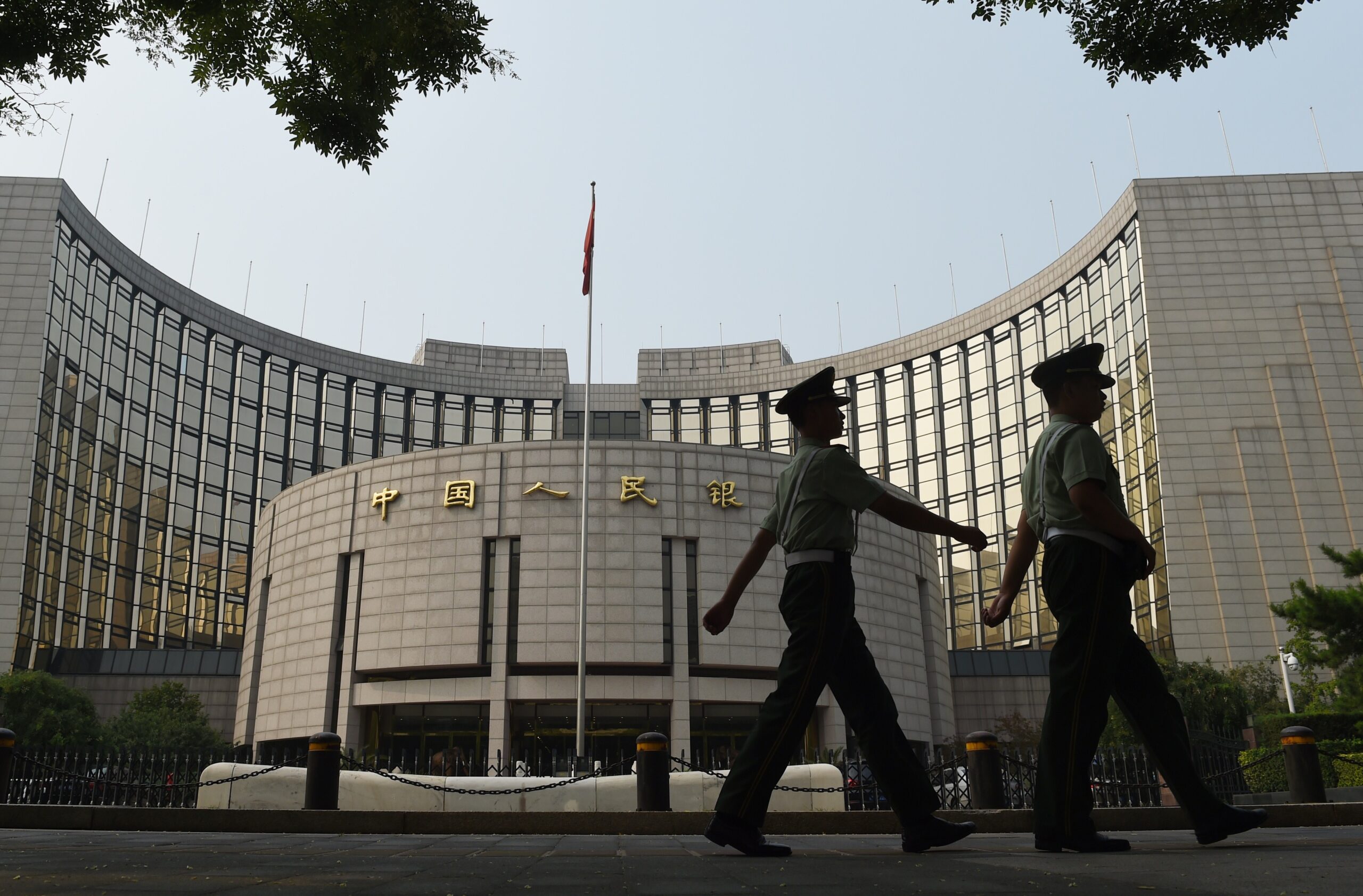
As China’s economy continues to decline, market confidence is severely lacking. In June, both social financing and new loans fell below expectations, while deposits saw a significant increase. Analysts point out that this indicates a decrease in the demand for new financing in the real economy, with households still actively deleveraging and a large amount of funds sitting idle in banks.
On July 15th, the People’s Bank of China announced that preliminary statistics show that the scale of social financing in the first half of 2026 increased by 20.84 trillion yuan, a decrease of 2.02 trillion yuan from the same period last year. Loans issued to the real economy increased by 10.76 trillion yuan, a decrease of 1.98 trillion yuan compared to the previous year.
Further breakdown reveals that loans issued to the real economy increased by 10.76 trillion yuan, with foreign currency loans equivalent to 160.9 billion yuan, entrusted loans decreasing by 78.8 billion yuan, trust loans decreasing by 44.6 billion yuan, among other changes. Financial commentator Xiao Yi explained that the weak traditional credit and the slowing pace of government financing indicate a decline in the demand for new financing in the real economy.
Xiao Yi highlighted that the slight increase in loans to enterprises and the decrease in household loans may indicate that businesses are cautious about investment returns, while large state-owned enterprises find it easier to issue bonds compared to small and medium-sized businesses.
The central bank’s data for the end of June showed that broad money supply (M2) reached 356.71 trillion yuan, an 8% year-on-year increase, while narrow money supply (M1) stood at 118.48 trillion yuan, growing by 4%.
Xiao Yi analyzed that despite the liquidity being ample, a significant portion of funds remain within the banking system rather than flowing into real economic activities such as investments and consumption. The 4% gap between M1 and M2 suggests a shift towards fixed deposits or wealth management products, indicating low business activity and consumer spending.
By the end of June, both foreign currency and yuan deposits increased by 8.2% year-on-year. The first half of the year saw a notable increase in yuan deposits, primarily from households, non-financial enterprises, government entities, and non-bank financial institutions.
Regarding loans, there was an increase of 10.72 trillion yuan in the first half of the year. Notably, household loans decreased, while loans to enterprises and government entities saw substantial increases.
In conclusion, Xiao Yi indicated that despite ample liquidity, weak credit demand, households actively deleveraging, and significant funds remaining stagnant in the banking system, making it challenging for them to flow into the real economy.