
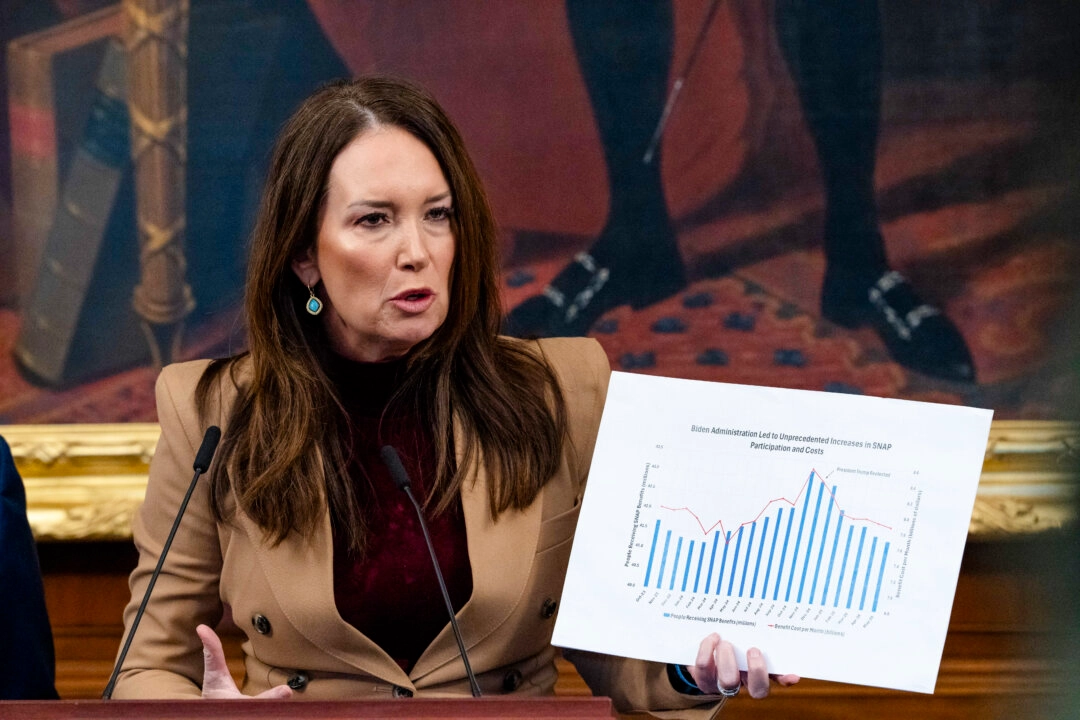
The U.S. Department of Agriculture Secretary, Brooke Rollins, disclosed that the Supplemental Nutrition Assistance Program (SNAP), commonly known as food stamps, is suspected of staggering levels of fraud, with the Agriculture Department alone having recouped nearly $10 billion in funds.
Rollins revealed this information during the annual Hill Nation Summit on Tuesday, July 14th, stating in an interview with NewsNation, “In a year and a half, we have recouped billions of dollars in funds, nearing the $10 billion mark, and we have already arrested 1,000 individuals.”
Over the past few months, a special task force led by Vice President Vann has been working to combat abuse and fraud in federal programs. The food stamp program is federally funded and managed by individual states.
Rollins disclosed that all Republican governors have cooperated with the U.S. Department of Agriculture in combating food stamp fraud, while only two Democratic governors have done so. As of January 2026, there were 26 Republican governors and 24 Democratic governors in the United States.
Meanwhile, over 20 states and the District of Columbia governed by the Democratic Party are suing the U.S. Department of Agriculture over changes in food stamp eligibility. These modifications include increasing work requirements for applicants, which were included in the One Big Beautiful Bill Act signed into effect by the President in July 2025.
According to BenefitsUSA, due to the increase in work requirements for food stamp recipients and the cancellation of certain exemption clauses, at least 3.5 million people had lost benefits as of February this year.
In response, Rollins stated that the Department of Agriculture’s actions are aimed at cleaning up a program rife with “staggering” levels of fraudulent activities that were previously overlooked by both Democratic and Republican administrations.
“From my perspective, we want to ensure that the program is for those who truly need it, not whether they should or should not receive it, but that they genuinely require assistance,” she explained. “These subsidies should be temporary support to help them transition and find a better, higher-paying job, ultimately breaking free from reliance on these programs.”
Rollins added, “That’s our focus, and I believe we have made significant progress.”