
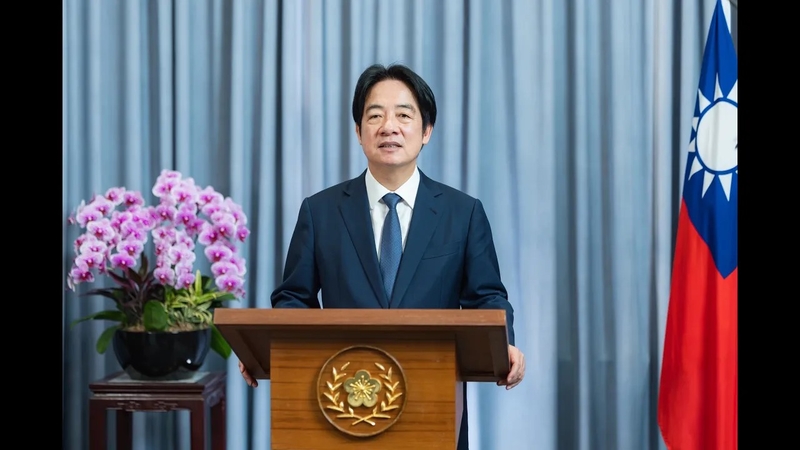
On July 15, the President of the Republic of China and the Chairman of the Democratic Progressive Party, Lai Ching-te, stated that today marks the 39th anniversary of the lifting of martial law in Taiwan. Lai emphasized that the Chinese Communist Party has been employing various tactics such as legal warfare, cognitive warfare, and united front infiltration in an attempt to undermine the confidence of the Taiwanese people in the democratic system and weaken their resolve to defend the country. He urged the public to unite in defense of democracy and prevent authoritarianism from re-invading Taiwan in any form.
As Taiwan commemorates the 39th anniversary of the lifting of martial law, Lai Ching-te reflected on the 38 years and 56 days of martial law, making it one of the longest periods of martial law in the world. During those years, the authoritarian regime of the Kuomintang severely restricted basic freedoms such as assembly, association, speech, and press for the people, and through the “Temporary Provisions Effective During the Period of Communist Rebellion” and a vast national security apparatus, monitored society and suppressed dissent.
Lai Ching-te pointed out that during that time, many intellectuals, democracy activists, and ordinary citizens in Taiwan were arrested, imprisoned, and persecuted without due process, leading to their families being subjected to surveillance, discrimination, and stigma, creating a painful period in Taiwan’s history known as the White Terror. The lifting of martial law symbolizes the relentless sacrifices and struggles of the Taiwanese people to achieve democracy, freedom, and human rights.
“In commemorating this history today, we are reminded that the greatest enemy of democracy is often not history but the forgetfulness of history; and the greatest risk to freedom is not external pressure but the loss of determination to defend freedom,” said Lai.
In recent years, Lai Ching-te highlighted that the Chinese Communist Party has continued to expand the extraterritorial application of its laws, whether through the “Anti-Secession Law” or the implementation of the “National Unity and Progress Promotion Law,” indicating their attempt to extend authoritarian will beyond their borders through legal means, resulting in long-arm jurisdiction and cross-border repression causing a chilling effect on democratic societies.
“The threat from China to Taiwan is not only military intimidation or gray-zone provocations, but also includes legal warfare, cognitive warfare, and united front infiltration, all aimed at undermining the Taiwanese people’s confidence in the democratic system and shaking our resolve to defend the country,” Lai emphasized.
After decades of continuous struggle by the people of Taiwan, thirty-nine years ago, authoritarianism was finally ended with courage. “Thirty-nine years later, we must unite to protect democracy and prevent authoritarianism from re-invading Taiwan in any form,” Lai said.
He stressed that whether authoritarianism comes from within or outside the borders, whether it employs threats of force, economic coercion, legal warfare, or cognitive warfare, “we must firmly defend freedom and democracy, safeguard national sovereignty, and ensure that democracy and freedom not only remain Taiwan’s most precious values but also become an unwavering belief for generations to come.”