
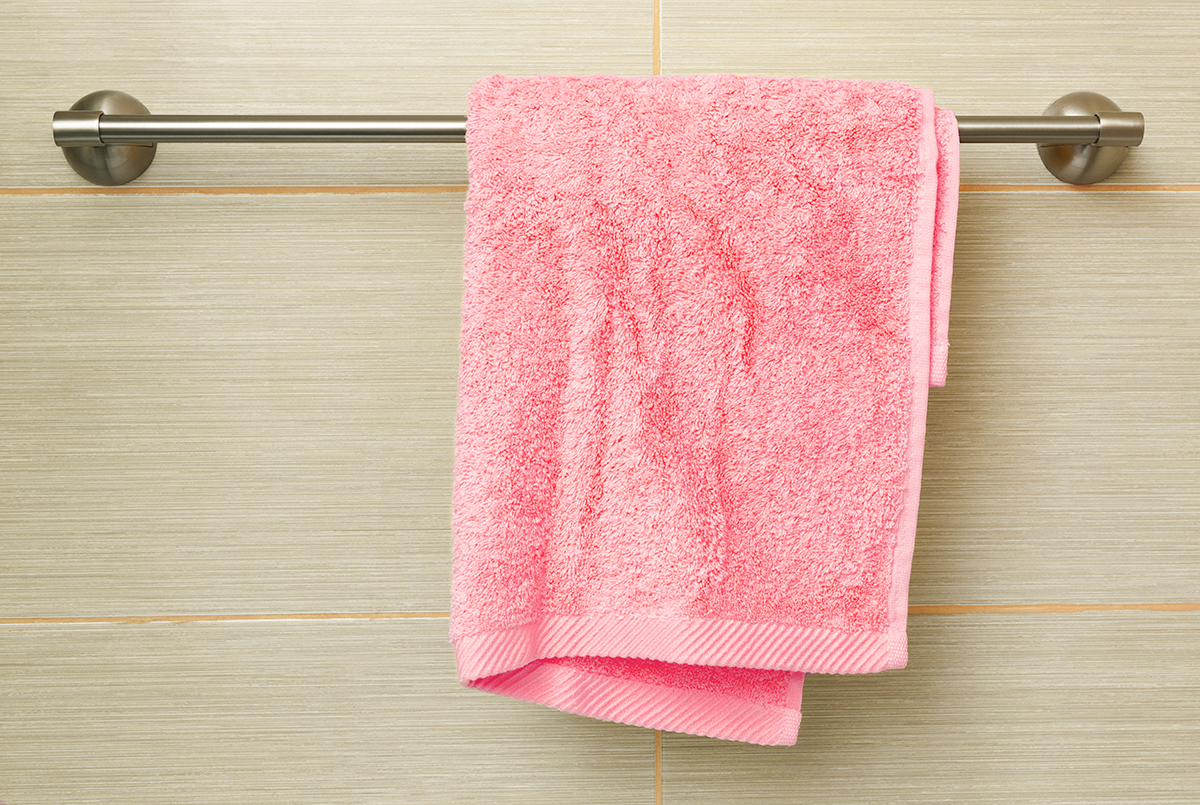
Many households have hand towels in their bathrooms or kitchens for family members to use after washing their hands. However, because hand towels come into frequent contact with everyone in the household and may not be washed as frequently as personal towels, they can potentially become a breeding ground for microorganisms that could lead to infections for everyone in the family, a fact that many people may not be aware of.
According to a report by the UK’s Daily Express, if hands are not thoroughly washed and dried with a towel, microorganisms from the hands can linger in the fibers of the towel, especially in a damp environment which provides optimal conditions for their survival and reproduction.
While the risk of getting sick from using regular household towels is generally low for healthy individuals, shared towels and towels that dry slowly can increase the probability of transferring microorganisms back onto the hands.
Faz Salloo, director of Bathroomfort, an online retailer of bathroom products in the UK and an interior design and bathroom expert, advised that hand towels in households should be washed based on their level of moisture and frequency of use, especially in busy family bathrooms where a hand towel may be used multiple times in a few hours.
To prevent the spread of disease, shared hand towels should be changed daily if someone in the household is vomiting or experiencing diarrhea, with the affected person using a separate towel that should also be washed daily until they have fully recovered.
Salloo emphasized that shared towels should be replaced regularly under normal circumstances, and more frequently if they remain damp, develop an odor, appear dirty, or are used by multiple people.
It is recommended to ensure that hand towels are fully dried after each use. Avoid crumpling them on the floor, folding and stacking them, or placing them on a towel rack among other wet towels.
Salloo further advised that after washing, hand towels should be fully unfolded and hung to dry, with ventilation provided by opening windows or turning on exhaust fans when possible, particularly in poorly ventilated bathrooms where dampness can linger longer than expected due to warm and humid summer air.
To keep the family healthy, it is important to regularly wash hand towels in water temperatures of 40 to 60 degrees Celsius to ensure thorough cleanliness. Hand towels should be replaced periodically and immediately if they become soiled.
BBC reported that the skin acts as a natural barrier against infections, serving as the body’s first line of defense against bacteria and other pathogens, making the transmission of bacteria from towels to the skin usually not a major concern. However, there is evidence that washing, vigorous rubbing, and drying with towels may disrupt the skin’s barrier function.
The potential issue lies in the fact that when drying hands, people may inadvertently pick up harmful microorganisms that can then be transferred to the mouth, nose, or eyes when touching them with contaminated hands. This highlights the importance of paying attention to the hand towels used most frequently, with kitchen towels commonly used to wipe dishes, hands, and various surfaces also serving as a significant source of foodborne pathogen transmission.
Due to the risk of spreading infections through repeated use of hand towels, hospitals and public restrooms now tend to favor disposable paper towels and hand dryers.
In terms of which is better between paper towels and hand dryers, Brian Labus, an epidemiology professor at the University of Nevada, Las Vegas, previously mentioned that flushing toilets can spread bacteria from feces, and the fans inside hand dryers can contribute to the spread of these bacteria.
From a health perspective, paper towels are considered the ideal choice as they do not spread bacteria and other pathogens. Using a hand dryer may lead to a higher likelihood of picking up a large amount of bacteria, such as E. coli, which can increase the risk of getting sick.