
The Hainan Free Trade Port is about to complete seven months of full island closure. The Chinese authorities have been continuously releasing import and export growth data, claiming that the benefits of the closure are being rapidly released. However, Hainan residents discuss online about high prices, low wages, difficulty in finding jobs, challenging to run small businesses, and the real estate market being quiet. Tourists in Sanya also reported scattered flow of visitors and hotels lowering prices, yet still struggling to have guests book.
Hainan’s island-wide closure has been in effect for nearly 7 months, and local netizens in videos express, “Living in Hainan is different from what you imagine; the reality is harsh. Job opportunities in large companies are decreasing, and running small businesses is even more challenging. There are many cars on the streets, but drivers and delivery drivers are saying that there are fewer opportunities here, making it harder to earn money.”
The Hainan Free Trade Port officially started the full island closure on December 18, 2025, with just a few days remaining before the 7-month mark on July 18. The closure is not about closing off the island or restricting personnel movement but designates the entire island of Hainan as a customs supervision special zone with the policy of “release the first line, manage the second line, and have freedom within the island.”
The real estate market in Hainan used to be very active, attracting buyers including many retirees from northeastern China. With the downturn in the real estate market, online posts about Hainan property owners lowering selling prices have been increasing, with some properties being reportedly sold at half their original price or even at a discount of up to 70%. One netizen mentioned, “The real estate market is quiet everywhere, whether it’s new or second-hand houses. Even with some money on hand, people are afraid to invest randomly but prefer to save. Wanting to spend, wanting to improve their current lifestyle, yet the pressure is high.”
According to the National Development and Reform Commission Price Monitoring Center, in the first week of June, the tourism consumption price index in Hainan increased by 0.96%. The index for accommodation and transportation rose by 2.08% and 1.89% respectively, while the shopping index decreased by 0.29%, and ticket prices, dining, entertainment, and specialty tourism remained relatively stable compared to the previous week.
During the same period, the average prices per night for standard double rooms in five-star, four-star, three-star, and below three-star hotels in Sanya were 733 yuan, 231 yuan, 169 yuan, and 138 yuan, respectively. The prices for five-star hotels increased by 2.58%, while four-star and three-star hotels decreased by 1.41% and 4.95%, respectively. In Haikou, hotels of the same grade had average prices of 586 yuan, 229 yuan, 180 yuan, and 160 yuan.
A tourist in Sanya named Chen mentioned, “This year’s tourism market is really not as vibrant as before. Even when there are visitors, they come sporadically. Even if hotels have guests, room rates don’t go up. Before the mask (pandemic), that room was around 300 yuan a day, now can’t even sell for 100 yuan, which is about a third of the original price.”
Facing high prices and scarce job opportunities in Haikou, a netizen named “Yingying” posted, “If you don’t have money, don’t come to Hainan. This place has expensive prices and a high cost of living. Some people thought of bringing one to two million yuan, bringing their children to live in Hainan but later found out that 800,000 yuan can’t even buy a house in a good school district. Do you know how much money you need to come to Hainan? Starting at 3 million yuan, a house in a good school district costs 2 million yuan. So, without money, don’t come to Hainan.”
The authorities have listed the increase in tourists as the primary achievement post-Hainan closure. Data shows that from December 2025 to May this year, Hainan received 1.344 million inbound tourists, a 93.9% increase year-on-year. During this year’s Chinese New Year holiday, the province received 12.32 million visitors, with tourists spending a total of 18.366 billion yuan, reflecting an increase of 28.9% and 30.7% respectively year-on-year. State media widely promotes this as the so-called open dividend brought by policies such as visa-free entry for 86 countries.
However, in the summary of the six-month closure, with a focus on the growth in inbound tourists, the authorities did not concurrently disclose the complete total and year-on-year change of mainland Chinese tourists visiting Hainan. The Chinese New Year holiday is only a short-term peak in visitor traffic and does not represent the overall trend of domestic tourists to Hainan in the nearly 7 months of closure. The selective disclosure by the authorities makes it difficult for outsiders to understand the complete situation of the Hainan tourism market.
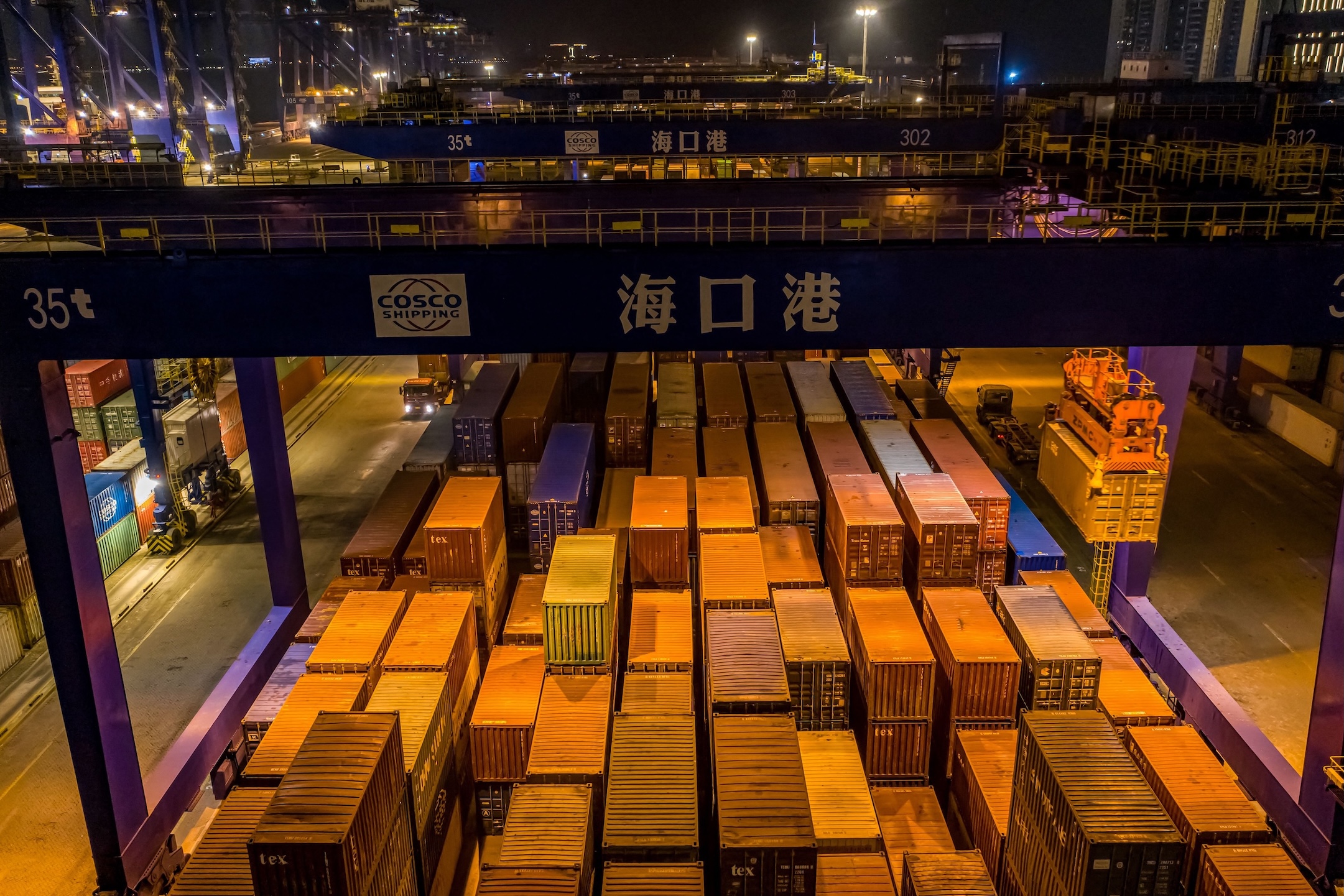
Data released by the General Administration of Customs on June 18 showed that from the closure until May 31, Hainan’s enterprise goods trade import and export volume increased by 54.6% year-on-year. The number of newly registered enterprises at customs increased by 57.8%, and the value of imported goods under “zero tariffs” doubled year-on-year. In the first five months of this year, the cargo throughput of Hainan ports increased by 12.1%, and container throughput increased by 53.9%. The authorities have wrapped up this set of data as the “bright answer sheet” of Hainan’s six-month closure.
Scholar Zhou Qiang (pseudonym) from Hainan mentioned that the official data post-closure mainly focuses on imports and exports, tax-free consumption, and enterprise registrations, but these figures fail to indicate if ordinary residents are truly benefiting: “Hainan’s local industrial foundation is weak, with long-term low wages. Many young people can only work in tourism, catering, retail, and grassroots service industries. The tax-free policy benefits large enterprises and those with purchasing power, while ordinary residents face the daily challenges of food prices, rent, and job-hunting. I believe the authorities are using trade figures to illustrate the closure’s achievements while neglecting the fact that residents’ incomes have not increased accordingly. We all know that if the government doesn’t mention it, the data is negative. If they don’t say that people’s lives are improving, it’s for the same reason.”
Zhou Qiang highlighted how the Chinese authorities have packaged the Hainan closure as a model of openness, but after nearly seven months of closure, although some trade figures have shown growth, official data manipulation remains a common practice. The most immediate feeling for Hainan residents is that income has not increased, and they cannot afford to buy houses: “No matter how good the authorities paint the data, it doesn’t change the real lives of ordinary people.”