
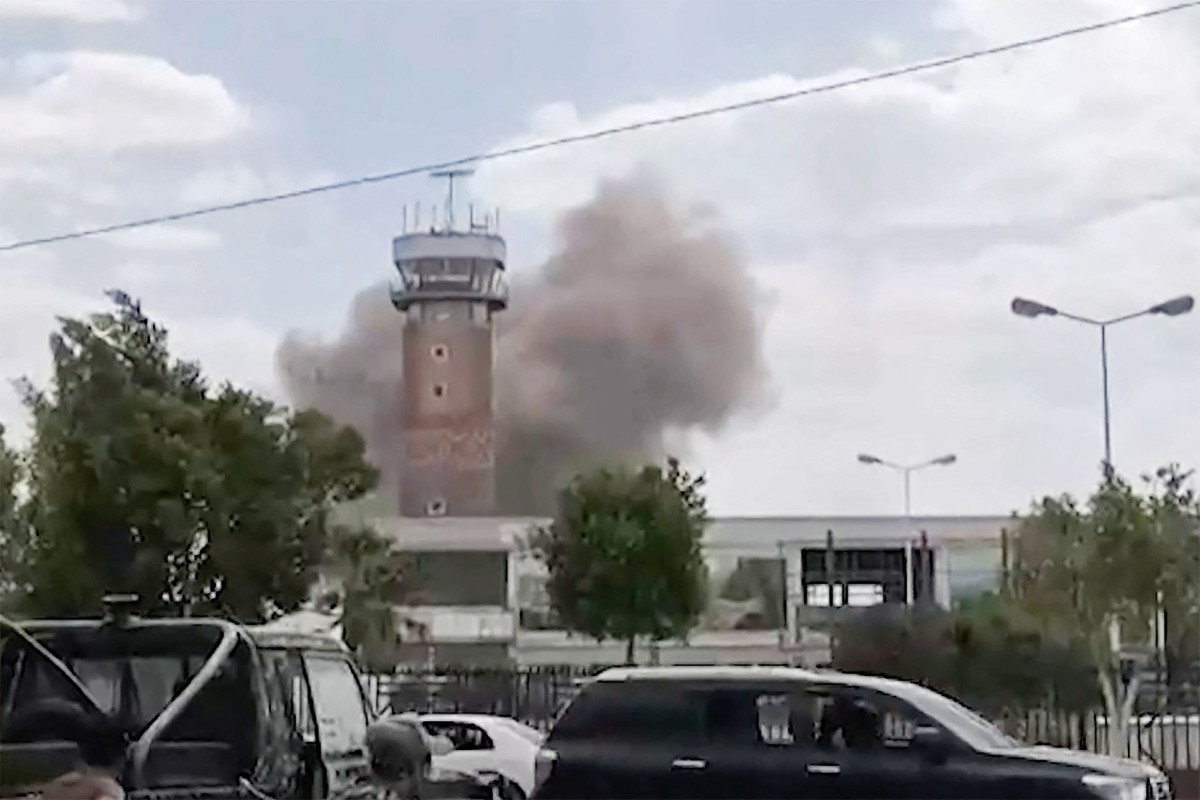
On Monday, July 13, the Houthi rebels in Yemen launched a missile towards southern Saudi Arabia, claiming the target was the Abha International Airport. Saudi Arabia stated that the missile was successfully intercepted. This marks the first time since the informal ceasefire agreement reached in 2022 that the Houthi rebels openly acknowledged launching an attack on Saudi territory, raising concerns about a possible escalation of the situation in Yemen.
According to Reuters, Yahya Saree, the military spokesperson for the Houthi rebels, stated that the target of the attack was the Abha International Airport near the Saudi-Yemen border, in response to Saudi Arabia’s earlier airstrikes on Sanaa International Airport.
The Saudi-led coalition announced on the social media platform ‘X’ that the Saudi air defense system successfully intercepted the missile launched by the Houthi rebels towards the southern region. However, they did not respond to the Houthi rebels’ allegations of Saudi airstrikes on Sanaa Airport.
The Houthi rebels, who control northern Yemen, accused Saudi Arabia of launching airstrikes on Sanaa International Airport, calling it an “open aggression.” They declared an end to the previous phase of easing tensions and warned airlines not to fly over Saudi airspace until the “blockade” on Sanaa Airport is lifted.
On the other hand, the internationally recognized Yemeni government took responsibility for the airstrikes on Sanaa Airport. With strong support from Saudi Arabia, the Yemeni Defense Ministry stated that the airstrikes aimed to prevent an Iranian plane from landing in Sanaa, violating Yemen’s sovereignty. The Yemeni government warned that they would use all available means to counter any hostile aircraft violating Yemeni airspace, blaming Iran for the incident.
The Yemeni military later revealed that the Iranian plane eventually landed at the Hodeidah Airport controlled by the Houthi rebels.
Furthermore, a Yemeni government official mentioned that the Houthi rebels are currently holding an airplane belonging to the International Committee of the Red Cross (ICRC). Hashem Osseiran, the ICRC spokesperson for the Middle East, confirmed to Reuters that the crew and staff are safe, but declined to provide further comments.
This attack signifies the first public acknowledgment by the Houthi rebels of launching missile attacks on Saudi Arabia since the informal ceasefire in March 2022. Previously, the Houthi rebels had been attacking commercial ships in the Red Sea believed to be associated with Israel, but had not openly claimed attacks on targets within Saudi territory.
Recently, amidst the mediation by the International Red Cross, the prisoner exchange negotiations between the Houthi rebels and the Yemeni government collapsed, leading to mutual accusations and escalating tensions. Following this incident, the ongoing civil war in Yemen and the surrounding regions face a renewed risk of escalation.
The U.S. State Department expressed close monitoring of the situation, reaffirming support for Saudi Arabia in maintaining national security. They also maintained the designation of the Houthi rebels as a “foreign terrorist organization.”
The conflict in Yemen began in 2014 when the Houthi rebels seized the capital, Sanaa, forcing the internationally recognized Yemeni government to relocate south. The following year, a Saudi-led coalition intervened, turning the conflict into a regional proxy war and triggering one of the world’s most severe humanitarian crises.