
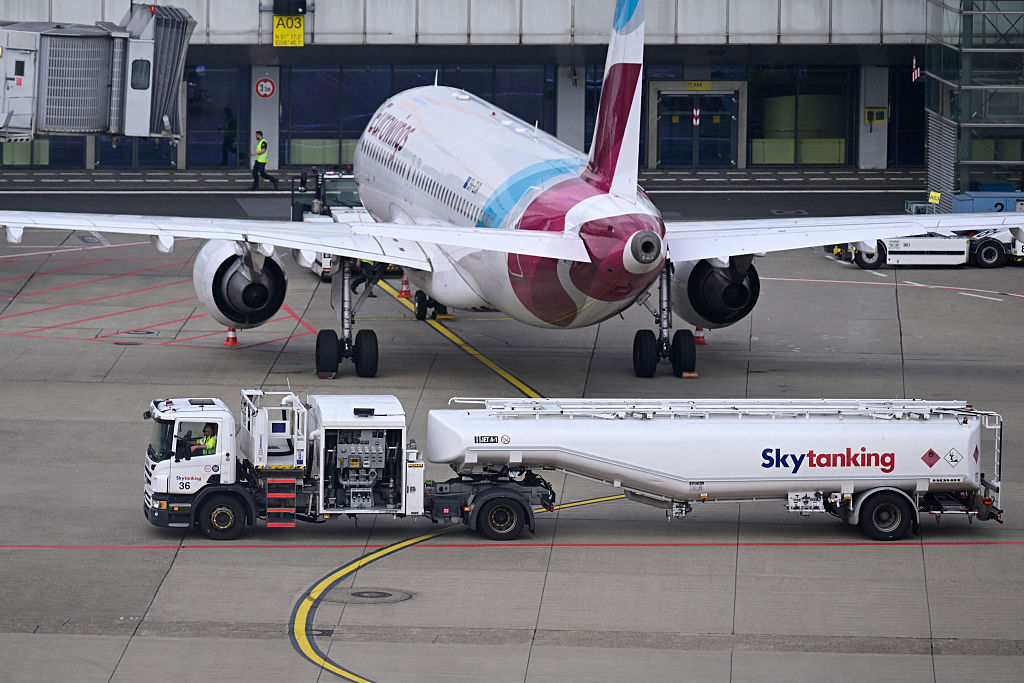
Since the eruption of the US-Iran conflict, Europe has shifted towards importing aviation fuel from the United States and Asia, and has been sustaining aviation operations by increasing refinery production and utilizing stockpiles. However, with the escalating situation in the Middle East, the risk of supply disruptions is intensifying.
For decades, Europe has been more reliant on Middle Eastern oil imported through the Strait of Hormuz than most countries, particularly the United Kingdom, France, and Germany.
The Strait of Hormuz has historically carried about one-fifth of the global maritime transportation of crude oil and liquefied natural gas. After the eruption of the US-Iran conflict, Iran blocked this strait. Some parts of the strait have been reopened in June this year. However, with both sides engaging in conflict again this month, this fragile ceasefire is facing a breakdown.
According to a report by Reuters, data released by Energy Aspects, a global energy market research and consulting firm, on June 18th, shows that in the third quarter of this year, Europe is expected to have a daily aviation fuel supply gap of nearly 600,000 barrels, while during the same period, the United States and the Asia-Pacific region will have surpluses of 116,000 barrels and 425,000 barrels respectively.
Data indicates that as of early June, Europe had stockpiles of 38 million barrels, while the United States had 99 million barrels. Reuters statistics show that this means Europe’s stockpiles can only meet less than 30 days of demand, making it the region with the tightest supply among major aviation fuel markets.
The latest monthly report from the International Energy Agency shows that by the end of May this year, aviation fuel stockpiles had increased by 10% compared to the same period last year, while refinery production had grown by 30%. This data also indicates that the stockpiles can only sustain for a month.
Janiv Shah, an analyst at consulting firm Rystad, stated, “Following the current trend, we expect the market to still face a certain level of tightness by August.”
The European Commission also acknowledges that the situation may further deteriorate.
European Energy Commissioner Dan Jorgensen stated last month that as summer vacations come to an end, the EU will face a tighter aviation fuel stock situation, and if necessary, Brussels will coordinate with member states to release national reserves.
Until the end of February, about half of Europe’s aviation fuel came from the Middle East. Since the eruption of the US-Iran conflict, Europe has turned to new suppliers such as Canada, avoiding disruptions in the aviation fuel supply chain.
According to Kpler data, in June, the overall daily import of aviation fuel in Europe reached 673,000 barrels, marking a new high since October 2025.
The United States and Nigeria have become the top countries exporting aviation fuel to Europe, while fuel from Kuwait, Canada, India, and South Korea also flows to Europe.
In June this year, imports from India to Europe reached the highest level since February. Additionally, it is expected that in August, nearly 25,000 barrels of aviation fuel produced in Kuwait will arrive in Europe daily, the first time since early March.
To alleviate supply pressures, Italian refineries increased aviation fuel production by 10% in the first four months of this year.
Meanwhile, the price of aviation fuel in northwest Europe has dropped from the record high of $215.32 per barrel set in late March to around $133.27, easing the pressure on airlines. Fuel costs typically account for 20% to 25% of operating expenses.
However, analysts predict that ticket prices are unlikely to decrease immediately in the short term, as demand remains strong and capacity is limited, especially after many airlines have reduced flights to maximize fuel supply.