
Facing an escalation in Russia’s ballistic missile attacks and the increasingly dire shortage of ammunition in Ukraine’s air defense system, at least 25 international leaders are set to gather in Paris on Monday (July 13) to attend a meeting of the “Coalition of the Willing” in support of Ukraine. The meeting aims to discuss how to secure more commitments for air defense assistance and advance the prospect of deploying multinational forces in the country.
This meeting is part of a broader allied effort, which includes forming a united stance against Russia and providing security guarantees for potential future peace agreements.
Ukrainian President Zelensky will also attend the meeting. Currently, Ukraine’s air defense system is severely lacking in ammunition, leading to an inability to effectively intercept Russia’s ballistic missiles traveling at multiples of the speed of sound in the past month.
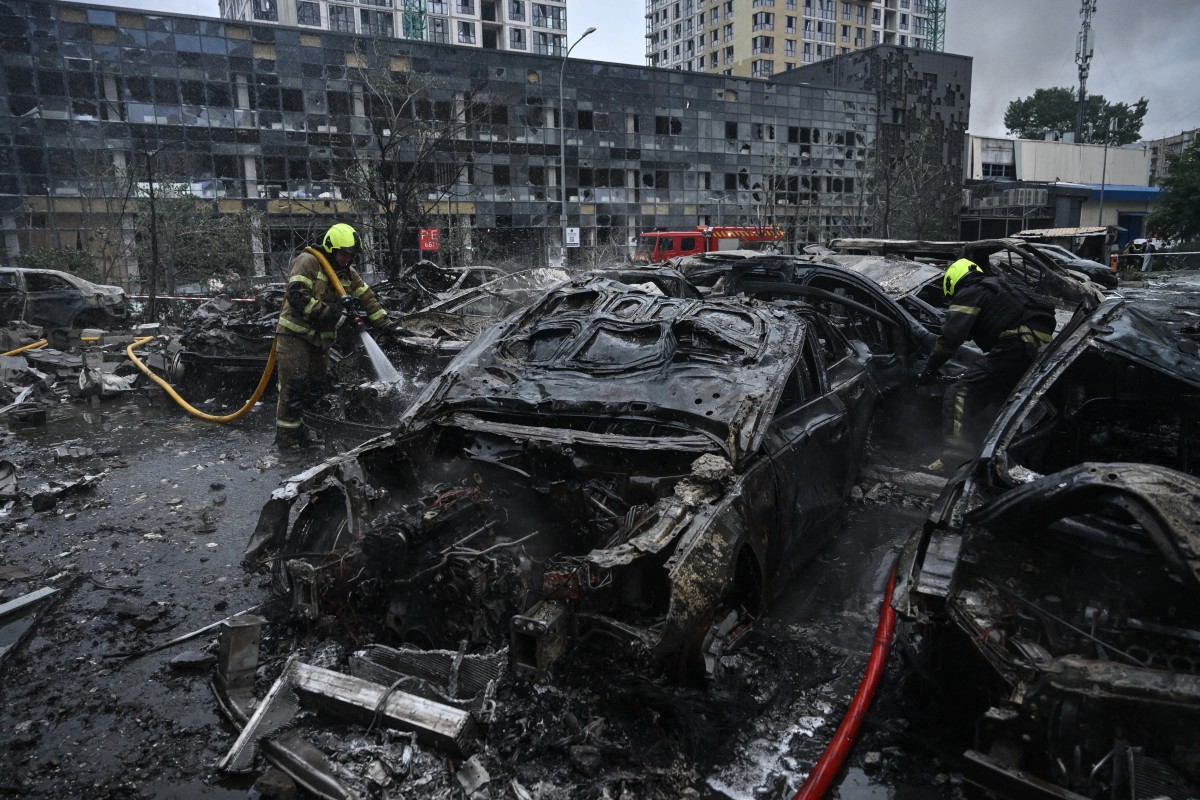
Last Saturday (July 11), Russia launched missile and drone attacks on Ukraine, resulting in 8 deaths and dozens of injuries. Zelensky subsequently called on allied nations to expedite the provision of weapons to Kyiv.
French Foreign Minister Jean-Noël Barrot stated in an interview with Ouest-France on Sunday, “Putin’s ballistic missile attacks deliberately target civilian areas, and June was one of the deadliest months since the outbreak of the war.”
Russia claims its military only targets objectives of military significance and denies targeting civilians. However, according to the UN, international human rights organizations, and numerous independent on-site investigations, Russian forces have extensively targeted non-military civilian objectives in Ukraine, resulting in severe civilian casualties.
A French presidential official mentioned that the meeting will focus on anti-ballistic missile cooperation, including seeking more American-made Patriot interception missiles and accelerating the deployment of the Franco-Italian-developed Surface-to-Air Medium-Range/Terrestrial (SAMP/T) air defense system.
European countries are also exploring collaboration with Ukraine to develop alternative solutions, such as jointly developing a new air defense system as a supplement to the SAMP/T and Patriot systems, and allowing Ukraine to play a significant role in equipment production.
In addition to bolstering Ukraine’s air defense capabilities, French President Macron is expected to announce several related arrangements on Monday, some of which may involve bilateral cooperation and joint weapon production.
Macron also mentioned that the “Coalition of the Willing” may announce joint military exercises to advance the concept of deploying a multinational force (MNFU) in Ukraine after reaching a peace agreement. This multinational force is expected to cover land, air, sea, and training pillars.
A French presidential official emphasized, “It is important to note that the MNFU consists of land, air, sea, and training pillars. To ensure the credibility of these pillars, all parties involved will continue to conduct testing at various levels.”
He stressed, “This is not about conducting exercises within Ukraine.”
Regarding economic sanctions, world leaders will also examine strategies to combat Russia’s “shadow fleet” – oil tankers with opaque ownership structures used to evade regulations and transport Russian oil.
However, internal divisions within the EU persist regarding the 21st round of sanctions against Russia. EU High Representative for Foreign Affairs and Security Policy Kaja Kallas stated that EU countries may agree on adding 250 individuals and entities to the sanctions list on Monday. This would be the largest single increase in the number of sanctioned entities by the EU to date.
She also mentioned that there are still unresolved issues in the 21st round of sanctions. Lithuanian Foreign Minister Kestutis Budrys pointed out that EU countries have yet to decide on proposed bans on maritime services and stricter restrictions on Russian liquefied natural gas (LNG).
Meanwhile, Western allies continue to enhance Ukraine’s drone strike capabilities.
A source revealed that Germany is allocating funds to procure 50,000 “Shrike” type First-Person-View (FPV) attack drones for Ukraine, with an order value of around 90 million euros.
These drones are produced by the Ukrainian manufacturer SkyFall, equipped with software from the American defense technology company Auterion, capable of autonomously tracking and hitting mobile targets in the final stages of flight.
Auterion CEO Lorenz Meier stated that some drones have already been delivered to the Ukrainian government, with the rest expected to be shipped within this year.
As the Paris meeting convenes, the Russian Federal Security Service (FSB) claimed on Monday to have thwarted a series of large-scale drone attack attempts by Ukraine on two military air bases deep inside Russian territory.
Quoting a statement from the FSB, TASS reported that Ukraine’s intelligence agencies attempted to attack the Shagol and Ukrainka air bases located in the Ural Mountains region and Russian Far East using balloons and drones, and the perpetrators of these actions have been arrested.
Reuters noted that this foiled operation appears to be similar to the 2025 attacks on Russian military air bases. According to U.S. assessments, the attacks, including those from Ukraine, reportedly destroyed around 10 Russian military aircraft.