
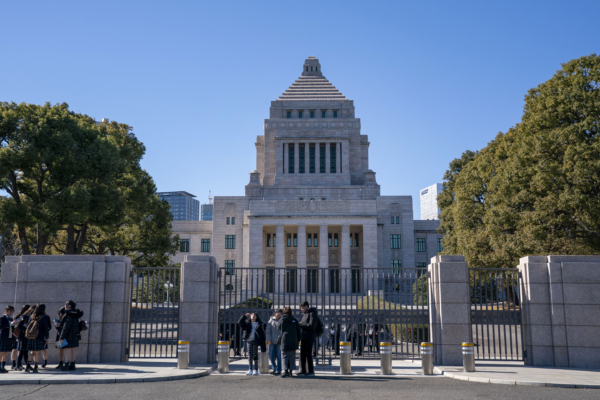
Japan’s Senate passed the “National Intelligence Council Establishment Act” on Tuesday afternoon, taking a significant step in the field of intelligence. In order to strengthen intelligence collection and analysis capabilities, Japan will establish the “National Intelligence Council” and the “National Intelligence Agency.” Against the backdrop of China’s increasing espionage activities in Japan, both the ruling and opposition parties in Japan hope that after the establishment of relevant institutions, they can effectively protect Japanese citizens and national interests.
The official website of Japan’s House of Representatives published the previously passed “National Intelligence Council Establishment Act.”
According to Article 2 of the Act, the affairs managed by the Japanese “National Intelligence Council” include engaging in important intelligence collection, investigations, and countering foreign espionage activities.
The House of Representatives in Japan conducted investigations and deliberations on related matters, including the basic policies of important intelligence activities, the key focus of relevant administrative agencies’ important intelligence activities, cooperation among relevant administrative agencies, the development and utilization of intelligence-gathering satellites, and the basic policies to counter foreign intelligence activities.
The Japanese “National Intelligence Council” is composed of a chairman and members, with the Prime Minister of Japan serving as the chairman to coordinate the council’s affairs. Members include the ministers of state, Chief Cabinet Secretary, ministers assigned special duties, Chairman of the National Public Safety Commission, Minister of Justice, Minister of Foreign Affairs, Minister of Finance, Minister of Economy, Trade and Industry, Minister of Land, Infrastructure, Transport and Tourism, and Minister of Defense.
Establishing the “National Intelligence Agency,” the Director of the National Intelligence Agency assists the Chief Cabinet Secretary and oversees internal affairs of the agency.
Following the passage of the Act, Japanese Prime Minister Sanae Takayoshi emphasized to reporters at the official residence that, in the complex and challenging international environment, the passage of this Act will help improve the intelligence foundation, enhance intelligence collection and analysis capabilities, safeguard national security, and defend the national interests of Japan.
According to a report by the Yomiuri Shimbun, some Japanese government officials hope that with the establishment of the National Intelligence Agency, Japan can utilize it for intelligence sharing with allied countries and like-minded nations to strengthen cooperation.
A spokesperson of the Chinese Ministry of Foreign Affairs stated in a press conference on May 28th that this move involves Japan’s constitutional and security policy directions, which China is concerned about. The spokesperson also condemned that Japan’s intelligence agencies historically paved the way for militarism and committed crimes.
In Japan, there have been frequent reports of China using studying abroad students as spies. The Toyo Keizai reported in October 2023 on the espionage activities of Chinese students in Japan, indicating that the Chinese authorities utilized tactics such as rewards and coercion.
A former executive of the Chinese Student Association revealed to the media that some Chinese student associations were actually under the control of the Chinese Embassy and could not disobey its orders. This student would never miss Chinese-related meetings and sometimes received orders at receptions hosted by the Chinese Embassy.
Orders from the Chinese Embassy included gathering organizational structures and research intelligence of Chinese student groups and labs, mailing addresses and residences of student associations and labs, as well as information on individuals relevant to the students’ desired exchanges.
Additionally, Chinese students were instructed to infiltrate anti-Chinese organizations, participate in their activities to gather data on activities and participant information. They were ordered to identify anti-Chinese elements through interactions with Chinese students and to collect business intelligence during internships and bring it back to China.
The main tactics employed by the Chinese Embassy and consulates to control students included providing tuition fees, various activity funds, and recommending jobs upon their return to China. Assessment criteria included responses to orders from the embassy and the degree of patriotism displayed.
In April 2021, the Tokyo Metropolitan Police Department sued two Chinese individuals for illegally producing and providing private electronic records. Between 2016 and 2017, the Japan Aerospace Exploration Agency (JAXA) suffered a large-scale cyber-attack, and these two individuals were believed to be connected to the incident.
The report suggests that the number of Chinese spies in Japan ranges from tens of thousands to hundreds of thousands.
The report concludes by emphasizing that Japan currently lacks an “Anti-Espionage Law,” resulting in lenient penalties for relevant cases. Strengthening public awareness of the crisis will help enhance Japan’s anti-espionage efforts.
In June 2024, the BBC published a report titled “The Growing Threat of Chinese (CCP) Espionage Activities, And Western Nations Struggling to Keep Up.”
The report states that as early as the 2000s, Chinese intelligence agencies expanded their activities to industrial sectors. However, at that time, Western companies were concerned about jeopardizing their interests in the Chinese market, leading them to largely remain silent.
Nikkei Business warned in a report that beside you, there may be Chinese agents working as massage therapists or tourists. The report cited numerous facts revealing the activities of Chinese spies in Japan and the tactics China employs to control spies.
In April 2025, postings on the official website of the Japanese Senate in the 217th parliamentary debate document called for vigilance in cases where China employs the Anti-Spy Law to detain Japanese and Chinese citizens in Japan. The document also highlighted instances of China establishing secret police stations overseas.
According to a report by the Yomiuri Shimbun in December 2022, the Japanese Ministry of Foreign Affairs previously disclosed that China had two secret police stations in Japan. The Yomiuri Shimbun reported on March 22, 2024 that the Japanese police conducted a search at a location in Tokyo considered a Chinese secret police station.
Professor Tomoko Ago of the University of Tokyo stated that China should not be left unmonitored, and monitoring their actions should be continued to raise vigilance.
Regarding the passage of the “National Intelligence Council Establishment Act” in Japan, the Nikkei Shimbun published an editorial on May 28th, highly praising the passage of the Act as a reform to protect citizens.
The editorial stated that intelligence work, along with diplomacy, defense, economy, and technology, is an essential pillar supporting national strength. However, the Japanese government has not taken sufficient measures since the post-war era. The passage of this Act signifies that Japan is taking a step towards strengthening intelligence capabilities to protect the country and citizens, looking forward to initiatives by the Takayoshi administration.
The establishment of the Act is just the beginning of reforms. Efforts must be made to build a system and environment similar to allied countries and like-minded nations, and gain cooperation with allied countries such as the United States and the United Kingdom.
The editorial stressed that the Takayoshi administration is studying the formulation of the “Foreign Agents Registration Law” and also needs to establish the “Anti-Espionage Law” to directly crackdown on espionage activities, essential for uncovering foreign forces hostile to Japan and their agents to protect the country and citizens.
The Nihon Keizai Shimbun pointed out in an editorial the need during the process of utilizing national intelligence work to fully consider not violating the personal privacy of citizens, hoping that the National Intelligence Agency will ensure both effectiveness and transparency.
According to a report by the Yomiuri Shimbun, the “National Intelligence Council” will establish the administrative agency “National Intelligence Agency” in the summer of this year, with a staff of approximately 700 people, intended to integrate the functions of various prefectural halls of the Japanese government. The Director of the National Intelligence Agency will be elevated to the level of the Cabinet Intelligence Officer, equivalent to the Director of the National Security Bureau.
The “National Intelligence Council Establishment Act” stipulates that the Japanese National Intelligence Agency must provide and explain necessary intelligence and data to ministries such as the Ministry of Foreign Affairs, Ministry of Defense, and Public Security Investigation Agency, for the government’s overall integration and analysis to strengthen its commanding role.
Japanese Prime Minister Sanae Takayoshi referred to the passage of this Act as taking the “first step of reform,” and the Japanese government will establish expert groups, convene expert meetings, to formulate the “National Intelligence Strategy,” and improve relevant laws for preventing espionage activities.
According to the Asahi Shimbun, the Japanese government will in the future enact the “Anti-Espionage Law” and establish a “Foreign Intelligence Bureau” for collecting foreign intelligence. The ruling party, the Liberal Democratic Party, and the Japan Innovation Party hope to enact the “Anti-Espionage Law” soon. The “Foreign Intelligence Bureau” is expected to be established no later than the end of 2027.
The report mentions that the Act passed this time does not include the “Foreign Agents Registration Law.” However, Prime Minister Takayoshi stated during a parliamentary deliberation on May 26th that it is necessary to establish a relevant system for registering individuals and groups who accept orders from foreign governments for policy-induced government activities and engage in related propaganda activities.
According to Japanese government officials, formulating the “Foreign Agents Registration Law” will help curb foreign intelligence activities domestically; engaging in such activities without registration constitutes illegal behavior and is likely to be investigated.