
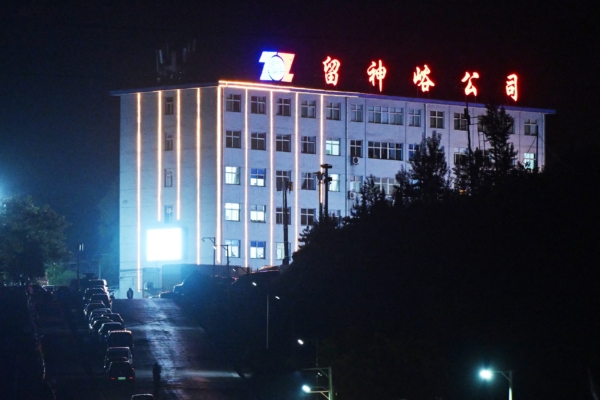
Shanxi Province, Changzhi City, Qinyuan County, Liushenyu Coal Mine experienced a gas explosion in the evening of May 22nd, resulting in 82 deaths, 2 missing persons, and 128 injuries, marking the deadliest mine accident in China in 17 years. As the rescue efforts unfolded, more and more irregularities and human errors were exposed, fueling public anger that spread on the tightly controlled internet.
Analysis indicates that the irregularities at Liushenyu Coal Mine are not isolated incidents but rather deep-rooted problems within the industry. Widespread collusion between government officials and business entities has led to inadequate supervision, even collusion between the upper and lower levels. The authorities tend to substitute fines for effective management, and the low cost of violating regulations by enterprises is the fundamental cause of mining disasters.
On May 22nd at 19:29, a gas explosion occurred at Liushenyu Coal Mine of Tongzhou Group in Qinyuan County, Shanxi Province, resulting in severe casualties. As the rescue efforts progressed, more human errors behind the mine disaster came to light. According to mainland media reports, these human errors include:
1. “Unauthorized operations”: among the 247 underground personnel at the time of the explosion, 144 carried location cards while 103 did not, exceeding 40% of the number of workers on shift underground.
2. Discrepancies between the provided blueprints and the actual conditions underground, with two concealed walkways and workfaces not marked on the blueprints.
3. The enterprise had two monitoring systems, one dedicated to meeting government online monitoring requirements known as the “safety compliance system,” and another “shadow system” used to manage workers engaging in illegal mining at “concealed workfaces.”
4. Many mine workers did not sign labor contracts directly with the coal mine but rather with outsourced teams, who then subcontracted with the mine under a contracting model based on “payment per ton of coal” or “payment per meter of advance.”
Moreover, during the prolonged period of intensive illegal production in the coal mine, the safety supervision officers dispatched by relevant regulatory bodies to the enterprise did not effectively fulfill their duties.
With various human errors and irregularities exposed, public anger ignited and spread on the internet.
An article by BBC Chinese on May 25th reported that the public demanded accountability and questioned why the accident occurred: “It’s heartbreaking, so many precious lives lost. When will safety truly be prioritized? Why did over a hundred unregistered workers suddenly appear? Was it for exceeding production targets? Cost-cutting? Or to conceal the actual number of workers in case of accidents?”
Another Weibo user wrote, “This accident not only reveals the superficial nature of local daily supervision and low costs of violations but also leads to repeated violations by enterprises.”
The article mentioned that similar posts and comments have already reached hundreds of thousands. In the past, criticism of the government during major accidents in China would usually be quickly deleted online. However, this time, most posts primarily target the Tongzhou Group.
State media reported that the relevant persons in charge of the Tongzhou Group have been subjected to “control measures,” without specifying the exact meaning. Authorities also ordered the complete cessation of operations at the four coal mines operated by the company in Shanxi.
On May 26th, Ding Haifeng, who previously worked for a subsidiary company of a coal mine group in Xiangyuan County, Changzhi City, Shanxi, told a reporter from Dajiyuan, “Two sets of blueprints, two monitoring systems” involve both profit-seeking motives for businesses to strategize against authorities to maximize benefits and a factor of lax supervision.
Ding Haifeng stated that businesses pursue profit maximization, and in case of accidents, they can easily settle by spending little money on each fatality. The collusion between officials and businesses leads to such practices. “If construction follows regular safety norms in the long term, the safety costs are too high. Besides, the government regulatory departments long engage in corruption, requiring elaborate hospitality, including private dining and bribery, for each inspection. If they don’t comply, inspections won’t pass.”
According to Xinhua News Agency, Liu Qiang, who worked as a mine safety inspector for over thirty years, served as a gas detection officer at Shaft No. 3 of Liushenyu Coal Mine around 2012. He revealed that the “dark side” of the mine’s operations had a long history. During his tenure, every three working faces underground could potentially hide a “dark face.” To keep these “dark faces” from official scrutiny, the mine operators had a whole set of evasion strategies, one of which was not providing location cards to miners.
Indeed, the human errors and irregularities exposed after the mining accident are not unique to the Tongzhou Group’s Liushenyu Coal Mine but rather standard unwritten rules and practices within the industry. The National Mine Safety Supervision Bureau of the Communist Party frequently lists discrepancies between blueprints and actual conditions and illicit mining in concealed work areas as the top stubborn issues of mine illegal activities.
In recent years, many major mining accidents have been shadowed by the presence of “concealed work areas.” According to mainland media reports, falsification of gas monitoring systems and personnel positioning systems is widespread. An expert in the coal mine construction field stated that some mines produce two sets of blueprints, known as “yin-yang blueprints,” with one set used for inspections and record-keeping while the other guides actual production activities to evade supervision.
To enforce digital monitoring, authorities demanded coal mines report underground blueprints, personnel positioning, and gas monitoring data in real-time. However, Ding Haifeng mentioned that grassroots inspections are often just formalities, verifying the records, forms, and ledgers provided by enterprises without verifying the actual number of workers underground. Therefore, to circumvent regulations, mines prevent workers from carrying cards and engage in illegal mining, which goes uncorrected over the long term.
Ding Haifeng said, “The supervisory department does not maintain continuous on-site monitoring, leading to prolonged illegal mining and misconduct going unnoticed. Coupled with favoritism in inspections, personnel benefiting from them don’t enforce regulations properly. This is the fundamental problem. From top to bottom, the system engages in corruption for profit, allowing these issues to be overlooked and resulting in the sacrifice of lives.”
According to a document from the Qinyuan County Emergency Management Bureau in 2025, Shanxi Tongzhou Group’s Liushenyu Coal Industry Co., Ltd. is a county-level directly supervised B-class coal mine subject to four annual inspections by the mine safety supervision department and law enforcement team.
An article by China Newsweekly mentioned an interviewee, Qin Jianlin, who revealed that in his coal mine, related departments conduct inspections almost weekly without prior notice, at any time, using the “four-no-two-direct” approach (no prior notification, no greetings, no listening to reports, no accompaniment, going directly to the grassroots and scene). Their license plates are registered in the mine’s access control system, providing them direct entrance.
He believed that issues of concealed work areas cannot go unnoticed by supervisory personnel. “The flaws are very obvious. Underground tracks are for transportation, and professionals can easily spot defects such as the framework’s underground condition, how long the tunnels have been in use, and whether the professionals detect issues as they descend. For example, can you not distinguish between newly laid bricks and those used for several years?”
Qin Jianlin suggested that there may be issues with the vertical ventilation system. “Whether a supervisory department can detect it depends on their subjective willingness.”
In 2025, Liushenyu Coal Mine was fined for concealing work areas, but the penalties were not effectively deterrent, and the enterprise continued illegal production. Xinhua News Agency reported that during prolonged intense illegal production at the mine, safety supervisory officers sent to enterprises by relevant regulatory bodies did not effectively fulfill their duties.
According to Tianyancha’s information, Liushenyu Coal Mine has been administratively penalized six times since 2017, with total fines amounting to 515,800 yuan, with five of the penalties occurring in the past five years, with two instances in 2025.
In December 2025, the mine was fined 20,000 yuan by the Qinyuan County Emergency Management Bureau for the urgent stop protection slackline of the monkey car’s three extraction area tracks pinned by the cable hook at multiple locations such as 37#, 117#, and 127#, and for having broken roof plate at the 2311 track smoothly without reinforcement measures.
In July 2025, Liushenyu Coal Mine was fined 30,000 yuan for workers in the midnight shift not wearing reflective work clothes.
Ding Haifeng stated that a 50,000 yuan fine is too minimal, “You could be fined a hundred times, and it wouldn’t match the profit from just one or two days of production. If this accident had not been this major, they might have covered it up, and ordinary people might not know the truth. For them, if one or two people die, it’s like, one person costs 700,000 yuan, two people cost 1.4 million yuan, and they consider it settling the matter. The cost of violating laws is too low for them.”
Mr. Zeng, who had lived and worked in Shanxi for many years, told Dajiyuan that the public’s anger over the Liushenyu Coal Mine disaster is primarily directed at the Tongzhou Group, but this does not mean that the responsibility of the government regulatory departments is being overlooked. As the investigation of the accident progresses and details are revealed, public attention has gradually shifted from “direct wrongdoing by enterprises” to “systemic failures in the regulatory system.”
He analyzed that currently, public and media inquiries mainly focus on the following three points:
1. Substituting fines for proper management and low costs of violations: the involved coal mine had been fined twice in 2025 within five months for major safety hazards, but the fines were only tens of thousands of yuan. For a coal mine producing millions of tons annually, such symbolic penalties cannot effectively deter misconduct, exposing the regulatory authorities’ practice of only penalizing units and not individuals, as well as a lack of mandatory production stoppage orders, indicating weak governance.
2. Qualification assessment equals nominal: the mine maintained a “Level 2 Standardized Safety Production” qualification despite being listed on the national disaster-prone coal mine blacklist.
3. The frontline supervision collapse: China implements a system of stationed “mine safety surveillance officers,” but in reality, some of them have limited professional capabilities, reside alongside enterprises long-term, compromising their independence, leading to superficial daily monitoring, with last-line defenses on the verge of failure.
Mr. Zeng believed that the mining disaster revealed numerous issues, including intentional falsification by enterprises using outsourcing as a “fig leaf” to evade supervision, systemic evasion in the on-site safety inspection system, the persistence of local enforcement in a state of “substitution of fines for management” and “loose” practices, and the rigidity of qualification assessment standards failing to play a dynamic filtering role.