
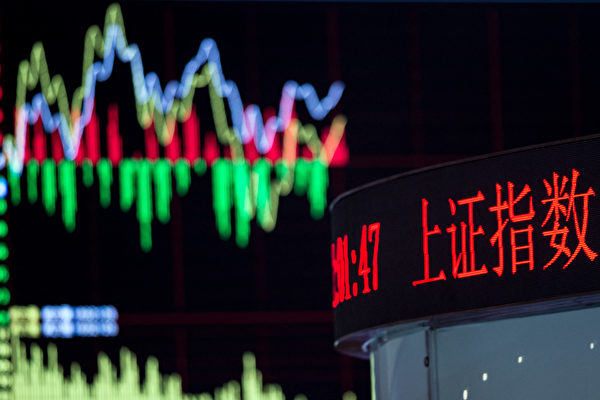
On May 27th, the A-shares market in China experienced a general decline. The Shanghai Composite Index opened lower and failed to hold above the 4100 point mark, with the STAR 50 Index dropping over 3% and nearly 4500 individual stocks seeing declines. Analysts have pointed out that market data has revealed a shift from localized activity to overall caution in the current market trend.
By the close of trading, the Shanghai Composite Index fell by 1.25% to 4093 points, the Shenzhen Component Index dropped by 0.88% to 15,736.47 points, the ChiNext Index rose by 0.07% to 4045.77 points, the BeiGene 50 Index fell by 2.38%, and the STAR 50 Index dropped by 2.8%. Among the stocks traded, 974 saw increases while 4489 saw decreases.
The total trading volume of the Shanghai and Shenzhen stock markets was 3.24 trillion yuan, a decrease of 51 billion yuan from the previous trading day. The net outflow of main funds in the market was 122 billion yuan, indicating a noticeable exit of funds.
On the market front, the precious metals sector declined, with Sichuan Gold falling by over 8%; the computing power rental sector weakened, with Lotus Holdings hitting the limit down; the robotics sector trended lower, with companies like AFT and Dingzhi Technology falling by over 7%; the semiconductor sector adjusted, with Tojing Technology plunging by over 11%; sectors like communication services, titanium dioxide, petroleum processing and trading, and small household appliances were among the top decliners. However, liquor stocks rallied in the afternoon, the film and television distribution sector was active, the power sector showed strength, and a few sectors like coal, beverage manufacturing, and supercapacitors saw increases.
Market analyst “Sharp Scissors” analyzed that the Shanghai Composite Index opened lower, traded lower with noticeable volatility throughout the day, and failed to stabilize or rebound effectively towards the end of the session. The closing position was near the intraday low, indicating clear weakness. The Shenzhen Component Index followed suit with a synchronous decline, showing a continued downward trend, reflecting the overall bearish sentiment following the Shanghai Composite Index’s weakness. While the ChiNext Index was the only core index to close higher for the day, it appeared to be a weak uptrend with significant pressure towards the end of the session, lacking real buying momentum and unable to reverse the market’s bearish tone.
Other key indices also showed weakness, further confirming the day’s bearish trend: the CSI 300 Index closed at 4908.17 points, down by 0.80%, indicating a weak performance of blue-chip stocks, with heavyweight sectors failing to provide support. The STAR 50 Index suffered a significant daily decline of 2.80%, becoming the worst-performing core index of the day, highlighting the concentrated selling pressure faced by high-tech growth and innovative companies, with risk aversion sentiment rising rapidly.
In measuring the true strength of the A-shares market, factors like trading volume, overall market gains and losses, and profit and loss effects across the board are more reflective than individual index movements. The market data on May 27th thoroughly exposed the shift from localized activity to overall caution in the current market trend.
“Sharp Scissors” summarized six key points from the market on that day:
1. Fragmented indices: Shanghai, Shenzhen, CSI 300, and STAR 50 indices all fell, with only the ChiNext Index showing a slight increase. The lack of coordination among indices indicated no unified market direction.
2. Universal stock declines: Over 4400 individual stocks saw decreases, with fewer than a thousand showing gains. The discrepancy between index performance and actual stock movements resulted in a poor experience for average investors.
3. Spread of loss effects: Rather than isolated sector corrections, the majority of stocks across the market weakened simultaneously, with short-term hotspots quickly fading and chasing funds generally suffering losses.
4. Decline in risk appetite: Funds actively abandoned high-flexibility, high-growth, and high-valuation stocks, flocking to defensive sectors like liquor and coal, with risk aversion dominating over optimism.
5. Shrinking volume without resistance to declines: Despite remaining at high levels, trading volumes showed no signs of rising with declining volumes, indicating that funds were mainly exiting positions rather than entering new ones.
6. Lack of trend or coordination: There were no sustained mainstream hotspots for the day, with sectors rapidly rotating and a significant divide between long and short positions, lacking a unified bullish force.
Additionally, it is noteworthy that over 500 listed companies in the A-shares market announced plans for share reductions totaling over one trillion yuan.
According to data from Oriental Fortune, since April 2026, there have been over 500 listed companies in the A-shares market whose major shareholders have proposed reduction plans. Wind data shows that the total planned reduction amount (calculated based on the closing price of the day the reduction announcement was made and the upper limit of the shareholder reduction quantity) for these 500+ listed companies exceeds 1000 billion yuan.
Wind data further reveals that these 500+ listed companies cover various industries including semiconductors, chemicals, machinery, and electrical equipment, with some companies issuing multiple shareholder reduction announcements.