
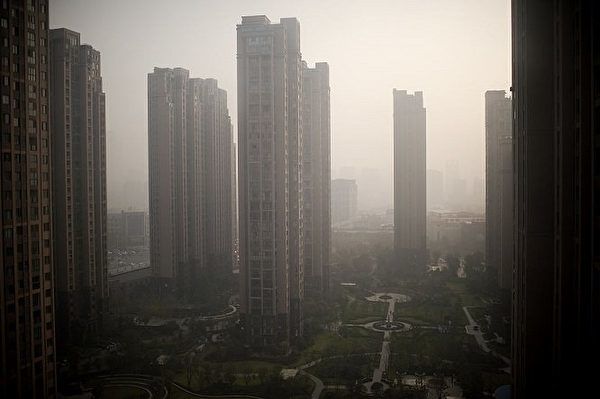
China’s real estate market crisis has been long-lasting, putting significant pressure on Chinese property developers. This year, several privately-owned developers who completed debt restructuring are once again facing liquidity challenges.
China Aoyuan Group, based in Guangzhou, failed to repay a total of 1.83 billion RMB in onshore bonds on June 30 and has suspended the payment of principal and interest on all offshore financing debts that have matured or will mature since March 30.
In March 2024, Aoyuan completed its first round of offshore debt restructuring, involving $6.1 billion and reducing debt by about 50%. However, less than a year after the completion of the restructuring, due to continuous poor sales and inability to pay due interest, the company initiated the second round of restructuring in April 2026. The company is currently working on an onshore debt restructuring plan and seeking opinions from various parties.
According to a report by Nikkei Asia on Monday, R&F Properties, also headquartered in Guangzhou, announced plans to complete offshore debt restructuring by the end of 2026. In 2022, the company reached an agreement with bondholders to restructure $4.9 billion in bonds by extending the maturity date. However, the company failed to make timely payments on the restructured bonds and proposed alternative solutions, including cash payment of 5% of the bond face value (the remaining amount will be restructured through new notes, convertible instruments, etc.).
Zhenro Properties, based in Shanghai, has faced difficulties in advancing its restructuring plan since defaulting on its offshore debts in 2022. Its Hong Kong subsidiary received a petition for liquidation last week.
Sunac China completed a $9.6 billion offshore debt restructuring last year but has recently missed several bank loan repayments domestically. In a recent announcement, the company stated that after negotiations with creditors, they agreed to extend the loans.
Previously reported by Da Ji Yuan, industry leader China Vanke is also facing severe challenges. In the first half of this year, Vanke reached partial repayment extension agreements with bondholders. The company announced last week that it expects net losses to expand to between 12 billion and 15 billion RMB.
From 2024 to 2025, Vanke incurred significant losses totaling over 138 billion RMB, with a further loss of 5.952 billion RMB in the first quarter of 2026.
On July 2, Vanke appointed Huang Yu, Deputy Director of the Shenzhen Municipal Committee’s Financial Committee Office and Deputy Director of the Local Financial Regulatory Bureau, as CEO, which has sparked online attention.
Since former CEO Zhu Jiusheng left in January 2025, the CEO position at Vanke had been vacant for 17 months.
In addition to debt issues, Vanke is currently facing severe operational challenges: sales continue to weaken, with total contract sales in the first half of 2026 down nearly 50% year-on-year.
Beijing has set this year’s economic growth target at 4.5%-5%, with China’s economy overly reliant on exports. Morgan Stanley predicts that China’s net exports will contribute nearly 40% to economic growth in 2026. Government stimulus measures for real estate consumption remain relatively limited, making the situation even more difficult for small and medium-sized developers.
According to S&P Global data, the total amount of offshore bonds due for Chinese real estate developers in 2026 is as high as $22 billion (including completed and pending restructuring companies). Market expectations suggest that there may be more restructuring or default cases in the coming months.