
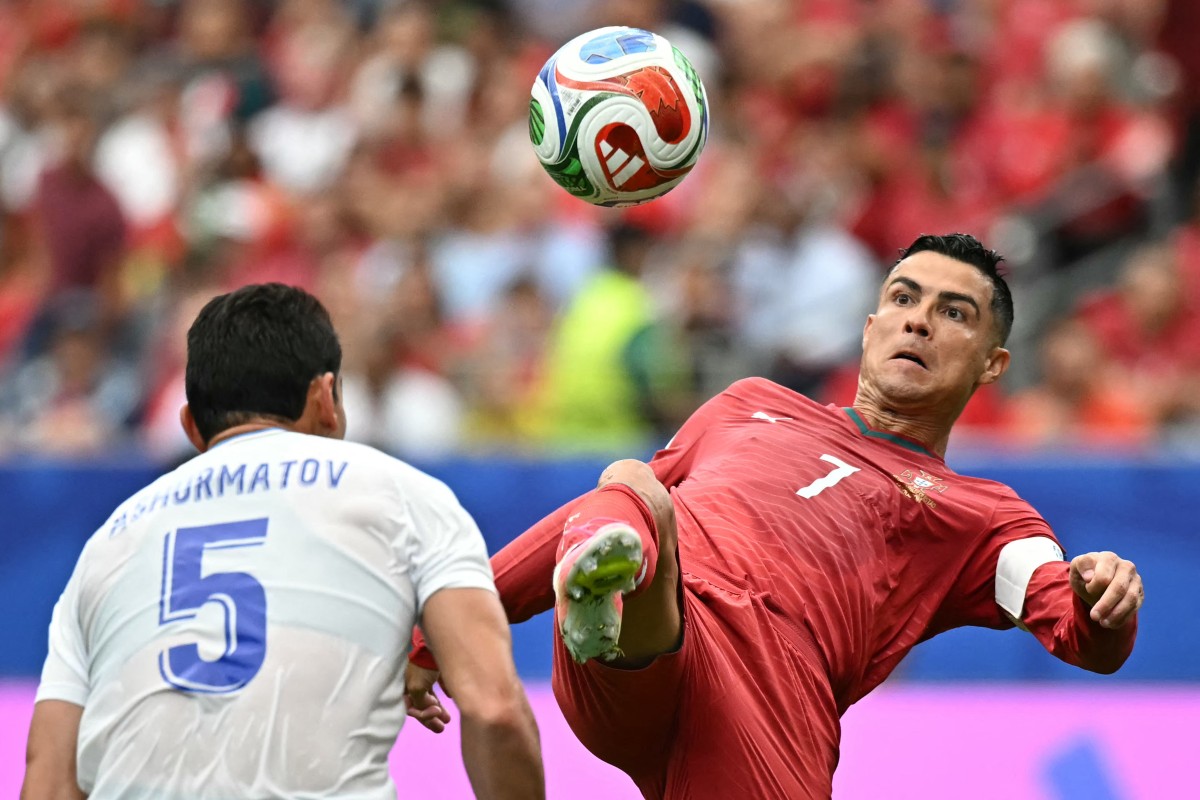
The FIFA World Cup, organized by the International Football Federation (FIFA), is currently underway with great excitement. In a typical football match, when the ball is kicked into the audience, spectators are required to throw it back onto the field. According to FIFA regulations, staff are prepared inside the stadium to receive the ball from the fans. Therefore, the lucky spectators who get hold of the ball only have a fleeting moment of excitement, perhaps with just a brief chance to take a quick selfie with the ball.
Many fans are curious as to why the ball must be immediately returned to the field. This question raised by fans is more out of curiosity rather than a demand for reform. Some spectators feel that after spending thousands of dollars on tickets, flights, and hotel bookings, if they manage to pick up the ball, it would be great to take it home!
Jack Goodwin, an English fan, expressed to the Associated Press that he spent his entire house deposit to bring his father from London to the United States to watch the game, and if he could get hold of the kicked ball, he should have the right to take it home.
Most football fans who pick up the ball kicked into the stands willingly throw it back. Some fans mention that they come to the stadium to watch the game, not to take the ball home, so they do not mind whether they can take the ball kicked into the stands back home.
Unlike football fans, when a baseball is hit into the stands, spectators eagerly climb and jump over seats to search for the ball. In the United States, it is a tradition that if a baseball fan picks up a ball during the game, they are allowed to take it home as a souvenir.
FIFA has not explained why the rule banning fans from taking the ball home is so strictly enforced. Speculations about this vary, some say it’s due to tradition, others cite economic reasons, some mention football technicalities, and some believe it is to ensure smooth progress of the game, among other theories.
Charles Cutton, a football historian, explains that the main reason is that FIFA has no rules allowing fans to take the ball home, considering footballs are expensive. In the past, there was usually only one ball in a match, so when a ball flew into the stands, the audience had to throw it back onto the field for the game to continue. Nowadays, there are multiple spare balls placed around the field.
Fans interested in purchasing FIFA match balls can buy them from authorized suppliers or temporary stands, ranging in price from $60 to $180. The exact cost of FIFA match balls is currently unknown, but some believe FIFA should have more balls ready to ensure the game can continue even if a ball picked up by a fan from the stands is not returned.
The tradition of not allowing fans to take the ball home is primarily related to the evolution of football itself. The World Cup match ball this year, the Adidas Trionda, is the most advanced football to date, completely different from the hand-stitched, leather, 32-panel footballs used in the past.
Professor Jud Ready from the Georgia Institute of Technology explains that FIFA match balls have evolved from natural materials like leather to the current polymer materials due to cost and performance reasons. Polyurethane does not absorb moisture like leather.
The Trionda is a polyurethane football with a four-panel design, featuring a 500Hz motion sensor inside the ball. The sensor sends real-time data to the Video Assistant Referee (VAR) system, which assists referees in making decisions such as offside calls or determining whether the ball crossed the goal line.
Ready further explains that the World Cup match ball is equipped with a radio frequency transmitter acting like a GPS and an accelerometer to measure kicking force.
With a high accuracy rate of 99.99%, the sensors, along with cameras, can precisely locate the position of any object on the field, even down to the tip of a player’s shoe, enough to judge offside calls and more. Such high-tech equipment, communicating with professional stadium infrastructure and referees, would serve no purpose if taken home by fans.
Moreover, match balls must be wirelessly charged using a system similar to smartwatches before the game. Because of the intricate process involved, match balls seem unlikely to become fan memorabilia, though anything is possible, perhaps one day this might change.