
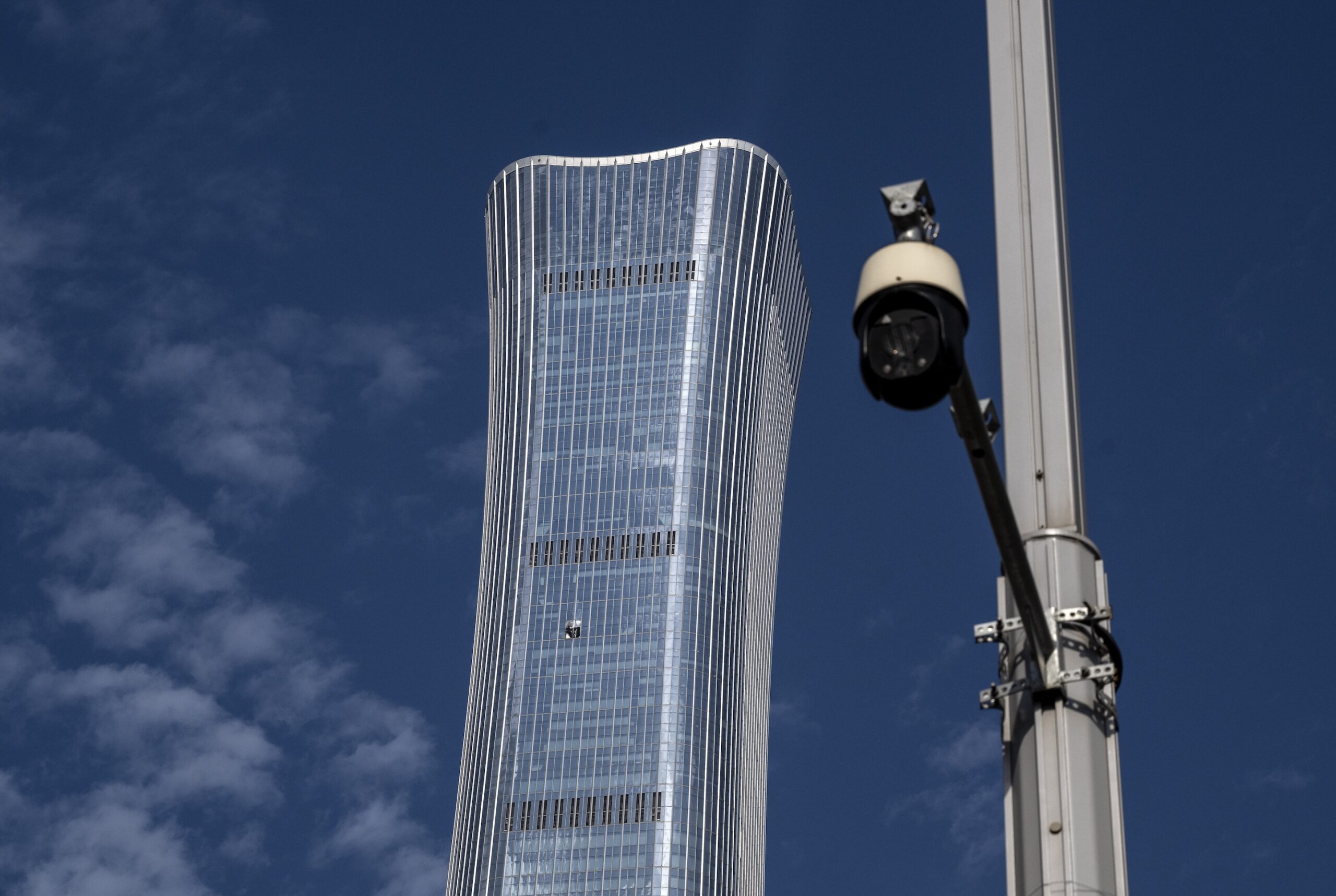
In a significant incident last month, the CITIC Tower (China Zun), Beijing’s tallest building, was struck by a small plane, sending ripples through the upper echelons of the Chinese Communist Party. Reports indicate that the authorities have demanded an upgrade in surveillance over the low-altitude airspace within a 300-kilometer radius around Beijing, with all pilots now required to undergo rigorous background checks.
According to a report by the Hong Kong-based South China Morning Post on July 10, a senior aviation analyst revealed that following the collision at the CITIC Tower, the authorities tightened the low-altitude airspace surveillance within a 300-kilometer radius of Beijing, mandating mandatory background checks for pilots. The 300-kilometer range is within the flight range of most small aircraft.
The unnamed analyst mentioned that this regulatory measure has impacted activities such as manned aircraft flying near the Great Wall tourist attractions, aerial sightseeing in Beijing’s suburban mountainous areas, and agricultural flights in the Pinggu District in the eastern part of Beijing. However, it is expected to have minimal impact on drones and unmanned aerial taxis, as they were previously prohibited from flying in most areas.
The analyst pointed out that the restrictions apply to general aviation activities below 1,000 meters, while commercial flights remain unaffected. This enhanced surveillance primarily targets activities such as private leisure flying, some business aviation transportation, and flight training, which are core areas of China’s burgeoning “low-altitude economy.”
Moreover, any aircraft planning to fly below 1,000 meters in the central Beijing area (with Tiananmen Square as the central point) must undergo background checks by the Chinese Ministry of Public Security. While the new regulations have not been formally published, internal notifications have been circulating within the aviation community.
The individual mentioned that pilots undergo scrutiny during license applications, but this time, general aviation is facing strict scrutiny once again.
Earlier on June 26 this year, a small plane collided with the 108-storey CITIC Tower in Beijing, located just a few kilometers from the Chinese leadership’s office in Zhongnanhai. The official statement reported one fatality and thirteen injuries from the incident. Following the event, the Chinese authorities swiftly ordered a nationwide halt to all general aviation operations except for rescue missions.
On July 2, Beijing authorities reported that the pilot who crashed into the “China Zun” was a 66-year-old divorced man living alone, who had long-term insomnia and anxiety, with his diary containing expressions hinting at “ending life.” The report described the incident as a case of endangering public safety caused by personal reasons, but there are doubts from the public regarding this explanation.
The aircraft involved is owned by Dongshi Shuangyue Company, affiliated with the Dongfang Fashion Pilot School Co., Ltd., the first listed top-tier pilot training institution in mainland China headquartered in Beijing’s Daxing District.
Yuan Hongbing, a scholar in Australia, informed Epoch Times that the establishment of an aviation pilot school in Beijing must have deep backgrounds in various sectors from the central authorities to the party, government, and military. This pilot school was approved with the aim of training dual-use aviation talents for both military and civilian purposes, serving as a civilian flight reserve for the authorities, and is a jointly run unit for military-civilian cooperation. Personnel in the industry and those learning to pilot are individuals within the Communist Party’s privileged system, including officials’ family members.
Four informed sources previously revealed to Epoch Times that the preliminary conclusion of the authorities’ investigation into the event was “deliberate pilot aircraft collision,” and it has now been internally classified as a terrorist attack.
The sources indicated that the authorities may continue to downplay the nature of the event under the guise of an “accident investigation,” concealing vulnerabilities in Beijing’s airspace defense and suppressing external inquiries into related social risks.