
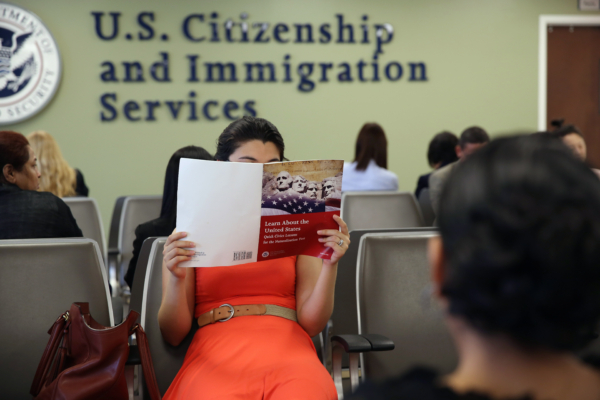
On May 21st, the United States Citizenship and Immigration Services (USCIS) announced that foreign nationals in the United States seeking a green card must generally leave the country and apply from their home country, unless there are “special circumstances” present. Immigration officials will determine if applicants qualify for these special circumstances. This change will have a significant impact on individuals currently in the U.S. on non-immigrant status who wish to transition to permanent residency.
According to USCIS spokesperson Zach Kahler, the agency is aiming to adhere to the original intent of the law to ensure the proper functioning of the immigration system. Going forward, foreign nationals temporarily in the U.S. seeking green cards would typically need to return to their home country to apply unless there are highly exceptional circumstances.
The memorandum emphasizes that the design of the immigration system has long been for non-immigrant visa holders (such as students, temporary workers, and tourists) to depart the U.S. after completing their intended visit rather than using temporary stay as the first step towards obtaining a green card. It reiterated that the practice of adjusting status within the U.S. has deviated from the original purpose of the law and strict enforcement of related regulations will be implemented in the future.
The USCIS stated it will continue to exercise discretion on a case-by-case basis and remind immigration officials to strictly adhere to the legal framework and court precedents when processing applications.
New York immigration lawyer Liu Ruhua, in an interview, noted that the policy memorandum is an internal policy guidance document issued by the USCIS to immigration officials. He described this memorandum as having a “tremendous impact, almost shutting down the path for adjusting status within the United States.” It will greatly affect applicants, particularly those holding legitimate entry visas such as B1/B2 tourist/business visas, F-1 student visas, and H-1B work visas, who were originally eligible to adjust status in the U.S.
Historically, the U.S. immigration law did not prohibit eligible individuals from applying for a green card while in the U.S. As per the current system, as long as the applicant entered the U.S. legally and met criteria for family-based or employment-based immigration, they could typically submit an I-485 adjustment of status application within the U.S.
Liu Ruhua highlighted that a significant number of individuals annually adjusted their status within the U.S., even exceeding the number obtaining immigrant visas through overseas consular procedures. Many who previously qualified for green cards while in the U.S. due to marriage, family relationships, or employer sponsorship chose to adjust their status domestically. This was especially common for spouses, parents, and unmarried children under 21 of U.S. citizens, who could still apply for adjustment of status even if they overstayed, as long as their entry was legal. However, the new memorandum has changed this long-standing practice.
“Immigration authorities now interpret adjusting status within the U.S. as an ‘exception’ or ‘special relief’, rather than a standard procedure,” stated Liu Ruhua. The significant change in this policy is shifting from the past practice of “implicitly allowed to apply for a green card within the U.S.” to only a few individuals being eligible to stay in the U.S. for adjusting their status under “extremely special circumstances”.
However, the definition of “extremely special circumstances” has not been clearly defined yet. Liu Ruhua mentioned that factors like serious illness of family members, humanitarian reasons, medical conditions, and long-term marriages are currently unclear whether they qualify as “extremely special circumstances”.
In recent cases, immigration authorities and law enforcement agencies have started considering “overstaying” as a disadvantageous factor. There have been instances in San Diego, California, where applicants were detained during fingerprinting or interviews.
Whether this memorandum will be challenged, overturned in court remains to be seen. However, Liu Ruhua noted that the real impact is already emerging – individuals with shorter stays such as B1/B2 tourist visas, visa waiver entries (such as Taiwanese citizens) face uncertainties as their statuses near expiration amidst the lack of clear explanations in the policy. This often forces applicants to make quick decisions whether to continue with their applications, depart and wait, or face potential risks in the future.
For instance, Liu Ruhua shared the case of a client from Taiwan who entered the U.S. on a visa waiver to reunite with her American husband and was preparing to apply for a green card within the U.S. On the same day when she was undergoing immigration medical examinations, the immigration agency suddenly released the new policy. Upon reviewing the memorandum, Liu Ruhua advised her to pause and not rush to proceed.
“I told her, ‘A new memorandum has just been released, and you still have over ten days of legal stay. It’s better to wait and see for now,” Liu Ruhua explained. “If the policy worsens in the future, submitting your application now would increase risks. But if you return to Taiwan first, you can still apply through consular procedures in the future and reunite with your American husband under the visa waiver.'”
After hearing this advice, the young couple ultimately decided to halt the immigration medical exams and reconsider whether to proceed with their green card application as originally planned.
Regarding the memorandum, Liu Ruhua observed that Chinese immigration intermediaries, immigration companies, and immigration attorneys have reacted swiftly and fervently on platforms like “Little Red Book”. Discussions have shifted from topics like “preparing marriage green card documents” and “obtaining work visas” to questions such as “dare we still apply now?”, “what if we get arrested during the interview?”, “should we return to our country first?”, and “will the memorandum be halted by the courts?”.
Liu Ruhua also pointed out that certain categories designed for adjusting status within the U.S., including asylum-approved individuals (A5 card), VAWA (Violence Against Women Act) green card self-petitioners, U visa crime victims, and T visa trafficking victims, fall under congressional-protected humanitarian categories and should generally remain unaffected by this policy.
Many lawyers and applicants are currently in a state of caution. Whether the new policy will be retroactively applied to pending I-485 cases is still unclear.