
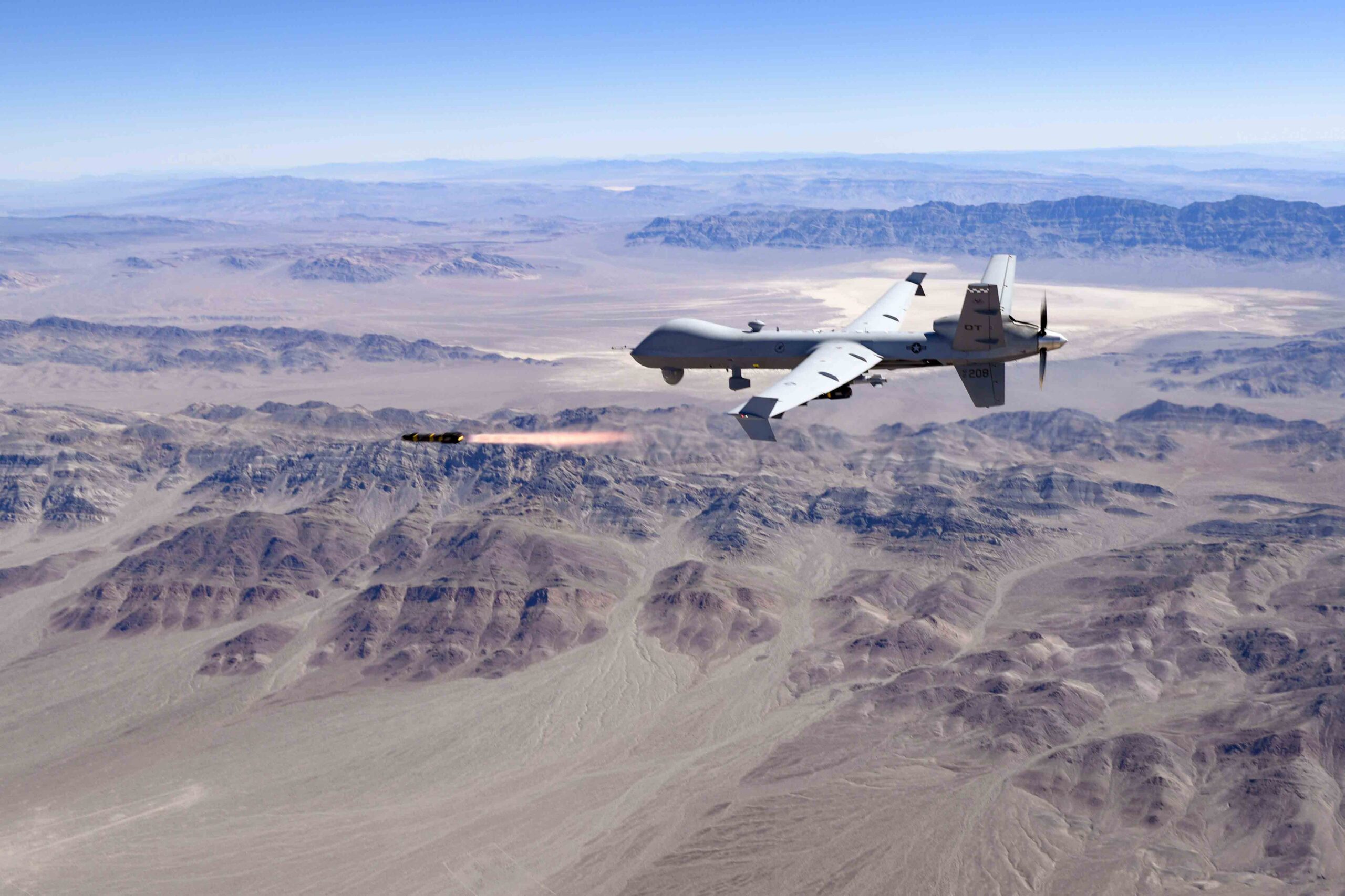
The Pentagon is seeking a low-cost alternative to the MQ-9 Reaper drone, planning to develop a similar drone that can be deployed on a large scale and withstand combat losses. This is the most representative adjustment made by the U.S. military’s operational system in response to actual battlefield environments.
On July 7, 2026,
the U.S. Defense Innovation Unit (DIU) issued a tender notice
to develop a low-cost, long-endurance drone aiming to eventually replace the MQ-9 Reaper drone. The project, known as the “Modular Multi-role Aircraft” (MMA) drone, is planned to achieve initial operational capability by 2031.
A report by the Congressional Research Service pointed out that during the “Epic Fury Operation”,
the MQ-9 drone carried out numerous high-risk missions
, with approximately 30 MQ-9 drones shot down. Currently, the U.S. Air Force has around 135 Reaper drones, each costing about $30 million. Such a high loss rate is clearly unsustainable. The Defense Innovation Unit warned that adversaries are using low-cost air defense capabilities to build multi-layered defense systems, especially when facing opponents like Iran with air defense capabilities weaker than those of China or Russia, the loss rate is unacceptable.
Many people are familiar with the MQ-9 Reaper drone due to a successful targeted strike operation. In the early hours of January 3, 2020, near Baghdad International Airport, a MQ-9 drone from the U.S. Central Command (CENTCOM) launched multiple AGM-114 Hellfire missiles, hitting the convoy of Iranian Revolutionary Guard Corps “Quds Force” commander Qasem Soleimani who had just arrived from Damascus, Syria to Baghdad, causing Soleimani and his companions to be killed on the spot. Since then, the MQ-9 has become a representative weapon for high-value target elimination missions conducted by the U.S. military. After this landmark operation, the MQ-9 has carried out multiple targeted strike missions.
The MQ-9, developed by General Atomics, is a long-endurance drone. Since its service entry in 2007, it has been a critical asset for U.S. Air Force intelligence collection and precision strike capabilities. The role of the MQ-9 drone can be attributed to its long-range remote control capability, over 24 hours of endurance, advanced intelligence, surveillance, and reconnaissance systems, as well as the ability to carry and launch up to 8 AGM-114 Hellfire missiles and AGM-114 R9X missiles. With technological upgrades, the procurement and maintenance costs of the MQ-9 have continued to rise. Currently,
the fully equipped MQ-9 has a unit cost exceeding $30 million
, with costs for certain specialized configurations nearing $50 million.
However, these powerful drones were initially designed to meet the needs of counter-terrorism wars over two decades ago. At that time, the main adversaries of the U.S. were terrorist organizations and ISIS that severely lacked air defense capabilities, making the MQ-9 almost immune in these asymmetric conflicts. Despite lacking stealth capability, its strong intelligence, surveillance, reconnaissance capabilities, and precise strike capabilities could be fully utilized. However, the shortcomings of non-stealth, low speed, and delayed response to incoming threats made this expensive drone vulnerable when facing nation-level adversaries. Even Iran’s outdated air defense systems could make it an easy target.
Before General Atomics closed the MQ-9A production line in 2025, the U.S. Air Force had already decided to stop procuring these drones. However, for the U.S. Air Force, the decision on the fate of the MQ-9 is not so simple. The MQ-9 is no longer suitable for modern battlefield environments, but its mission capabilities are essential. For some time, the U.S. Air Force has been searching for alternative solutions, but options have been limited.
The recent U.S.-Iran conflicts further demonstrated the vulnerability of high-value single platforms, as adversaries used low-cost air-to-air missiles, resulting in significant losses for the MQ-9 drone.
The Defense Innovation Unit pointed out
that the joint forces excessively relied on these low-density, high-value aircraft, which has become difficult to sustain when facing opponents deploying low-cost air defense capabilities. This has prompted the Pentagon to change its approach and seek new equipment systems capable of adapting to high-loss environments.
“Expendability” is the core concept of the Modular Multi-role Aircraft project, meaning that future drones must consider combat losses from the initial design stage. This will break the past equipment procurement approach of pursuing ultimate performance, as the military will use quantity and cost advantages to counteract enemy air defense firepower, thereby enhancing the overall combat capability and resilience of the U.S. military.
The tender documents indicate
that by deploying a large number of drones with risk tolerance capabilities, even in situations of significant drone losses, the joint forces can overwhelm enemy defenses through numerical superiority.
However,
“expendability” does not mean low performance
. The Modular Multi-role Aircraft project maintains relatively high performance requirements for drones to ensure they can fulfill core MQ-9 missions.
According to the tender requirements, the new drone must have a payload capacity of at least 2800 pounds. Although lower than the MQ-9’s 3800 pounds, it is sufficient to carry various advanced sensors, full-motion video equipment, and precision-guided munitions. To power the onboard sensors and equipment, drones are required to provide a minimum of 25 kilowatts of power and 5 kilowatts of cooling capacity to support the effective operation of internal and external payloads. These power and thermal management indicators suggest that these low-cost drones will also have the potential to be modified into airborne electronic warfare platforms and intelligence, communication nodes.
“Modular”
means maintaining the flexibility to equip various effective payloads
, enabling the military to easily interchange different payloads and upgrade equipment. In the traditional model, different aircraft are designated for various mission requirements, such as reconnaissance aircraft, attack aircraft, or electronic warfare aircraft. Modular design allows the same aircraft to switch rapidly between different tasks. Frontline commanders can mount reconnaissance full-motion video sensors on drones for surveillance based on actual situations, or switch to precise guided bombs for strike missions. This plug-and-play modular design not only simplifies logistical support but also significantly enhances the unit’s responsiveness.
Long endurance is a key indicator
, with the military requiring the new drone to have an operational radius of at least 2300 nautical miles under full payload, no aerial refueling conditions, and be able to complete a single ferry range of over 8000 nautical miles. These performance requirements indicate that the Pentagon hopes this cost-effective drone will have global deployment capabilities. Especially in the vast Pacific region, an 8000 nautical mile range allows drones to take off from the U.S. mainland, the second island chain, or other secure areas far from the frontlines to strike targets in the western Pacific Ocean. This reduces logistics pressure on forward airfields and lowers the risk of equipment destruction.
Moreover, the new drones are required to be operational in severe interference environments; able to take off and land on runways of 6000 feet or shorter, and with a flight speed of at least 200 knots (approximately 230 miles per hour). It is crucial that these systems are cost-effective and easily produced on a large scale.
The application of artificial intelligence and command and control is also a key focus of this tender. Currently, the MQ-9 drone requires one pilot and one sensor operator for ground operations. In future high-intensity, large-scale drone operations, if this labor-intensive control model continues, it will not only affect operational effectiveness but also create personnel stress. Therefore, the Defense Innovation Unit requires the new project to have a higher level of autonomy, enabling one operator to control multiple drones or even an entire fleet simultaneously. Focusing manpower on mission decision-making.
Based on the basic tactical and technical requirements proposed by the Defense Innovation Unit for the “Modular Multi-role Aircraft” drone project, the new drone should have mission capabilities comparable to the MQ-9, but the unit price may be far lower than $30 million.
The Defense Innovation Unit (DIU) has set forth an extremely challenging timeline, requiring the completion of full-scale prototype flight tests within 21 months of contract award, aiming to achieve Initial Operational Capability (IOC) by the 2031 fiscal year when at least 20 deployable, operationally capable drones will be delivered to combat units.
The Defense Innovation Unit emphasizes
that the continued existence of multi-role air weapons systems for launching weapons, gathering intelligence, conducting electronic warfare missions, or relaying communications, will force adversaries to remain on high alert. This ongoing pressure will deplete the enemy’s energy, forcing them to expend expensive air defense missiles and resources at a rate far surpassing replenishment capabilities.