
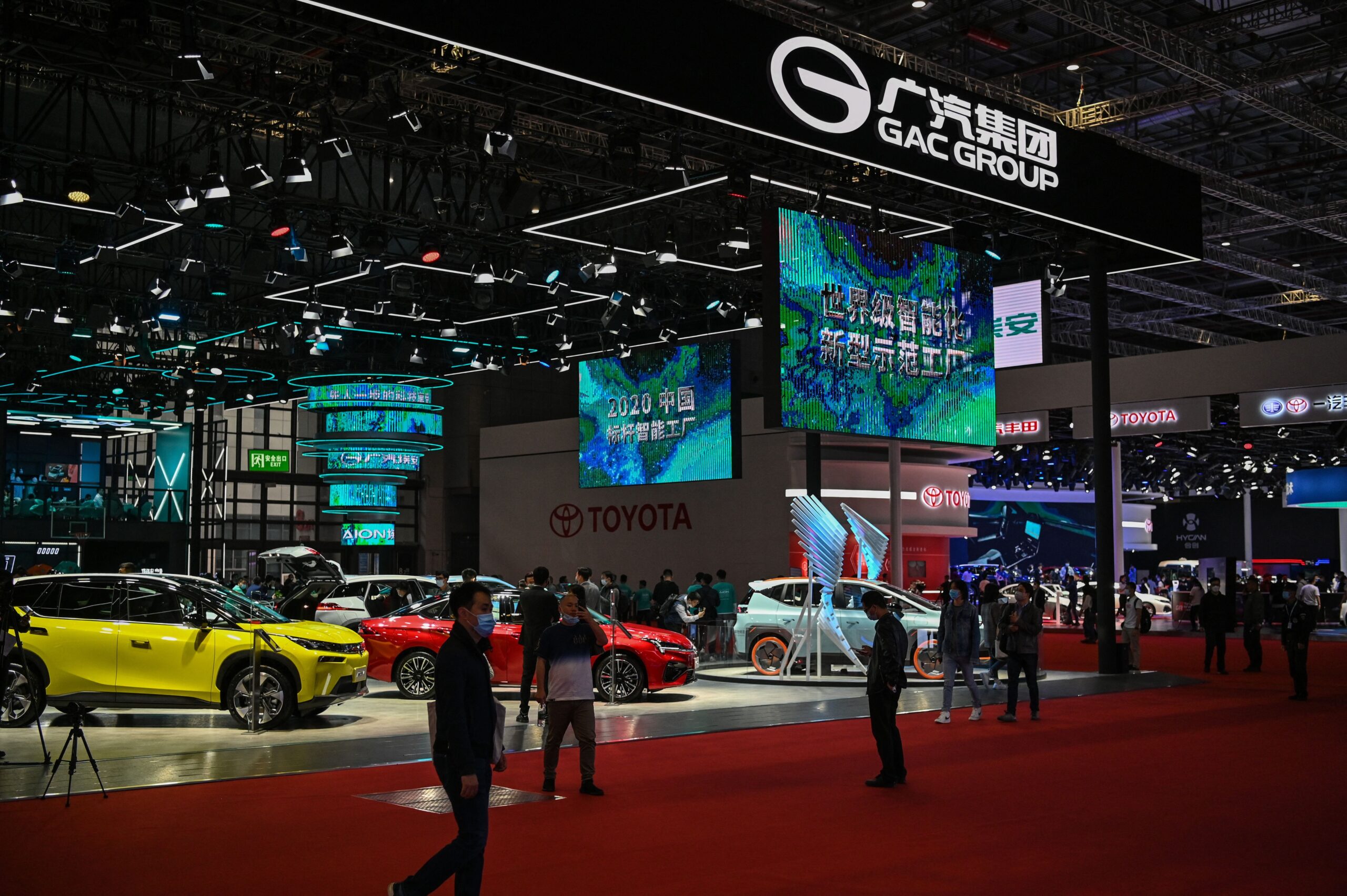
Guangzhou Automobile Group and Jianghuai Automobile recently disclosed their mid-year performance forecasts for 2026, both traditional car companies showing significant losses. The industry believes that the ongoing price war in the Chinese passenger car market, pressure on joint venture brands, and rising raw material costs are the main reasons for the industry-wide financial loss.
On the evening of July 10th, Guangzhou Automobile Group announced that it expected a net loss of 40.6 billion to 45.7 billion yuan for the first half of the year, and an adjusted net loss of 48 billion to 56 billion yuan, a significant increase in losses compared to the same period last year.
Based on previous quarterly data, Guangzhou Auto’s second-quarter losses are estimated at approximately 34 billion to 39 billion yuan, nearly double compared to the same period last year.
The company explained that increased investments in independent brand sales, declining returns on joint venture brands, and exchange rate losses are the three main reasons for deteriorating profits.
Not only facing profit pressure, but Guangzhou Auto’s stock price also continued to decline. The company, in response to investor concerns on the interactive platform, attributed the stock price fluctuations to multiple factors such as the macro environment and market sentiment.
At the same time, Jianghuai Automobile’s interim performance forecast indicated a net loss of approximately 7.4 billion yuan and an adjusted net loss of about 9.86 billion yuan for the first half of the year, with adjusted losses expanding compared to the same period last year.
There were hopes that Jianghuai’s high-end brand, Zun Jie S800, could reverse the company’s overall loss situation, but based on sales volume and revenue contribution, the brand still struggles to support Jianghuai, which relies on traditional low-margin businesses for over 80% of its overall performance.
The market also noted that important shareholders of Jianghuai Auto significantly reduced their holdings before the performance forecast was disclosed.
The struggles of these two car companies are not isolated cases. According to the China Association of Automobile Manufacturers’ joint information branch’s latest sales data report on July 9th, in June 2026, retail sales of narrow passenger cars in China reached 1.602 million vehicles, a 23.2% decrease compared to the previous year. The cumulative sales from January to June were 8.701 million vehicles, down 20.2% year-on-year.
Among the top ten manufacturers, nine experienced a decline in sales year-on-year, with only Leap Motor achieving positive growth. BYD had the largest decline, down 38.5% year-on-year to 991,000 vehicles, but still secured the second position. Geely Auto ranked first with 1.021 million vehicles sold; however, sales also decreased by 16.7% compared to the same period last year.
Traditional joint venture brands continued to face pressure: FAW-Volkswagen decreased by 25.0%; SAIC-Volkswagen decreased by 27.2%; GAC-Toyota decreased by 6.3%; FAW-Toyota decreased by 27.4%.
Independent brands also struggled, with Changan, Chery, and Geely all experiencing double-digit declines.
Data from the China Association of Automobile Manufacturers shows that the Chinese passenger car market in the first half of 2026 is still in a deep adjustment phase. Influenced by factors such as weak consumer demand, ongoing price wars, and gradually reduced subsidy policies, cumulative retail sales of narrow passenger cars have declined by over 20% year-on-year, squeezing profits for car companies and maintaining industry-wide operating pressure without significant relief in sight.