
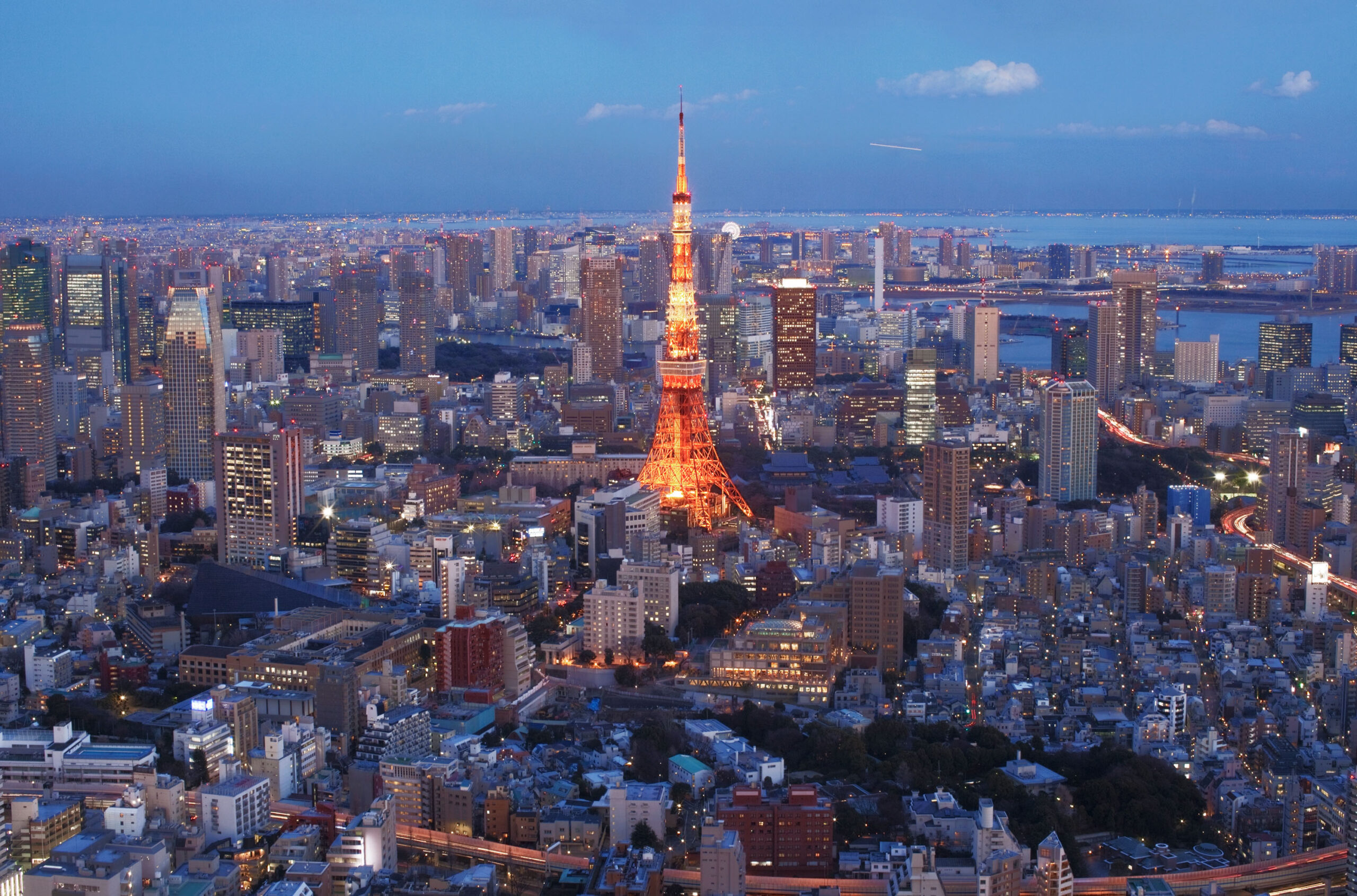
In Tokyo’s Shinagawa district, a renowned hub for world-class companies comparable to Beijing’s Zhongguancun and Wangjing upscale commercial areas, a real estate seminar targeting Chinese tycoons was in full swing inside a hotel conference room.
As the seminar reached its midpoint, the Japanese speaker on stage glanced at the audience of over 20 people and half-jokingly posed a question: “Has anyone bought the luxury residence in the Tokyo Bay area worth 520 million Japanese Yen (approximately 24 million Chinese Yuan)?” This property had become a popular topic in Japan in 2023. A hushed murmur spread through the audience, and then a middle-aged man at the back calmly raised his hand. What stunned everyone was not only that he had purchased it, but that he paid the full amount in cash.
This scene was reported in a recent article by Japan’s “President Online,” showing a glimpse of affluent Chinese individuals throwing down 500 million Japanese Yen in cash to buy luxury homes in Tokyo. The speaker on stage was Masahiro Makino, a seasoned authority in Japanese real estate.
Makino explained that with the slowing down of the Chinese economy and escalating political risks, an increasing number of Chinese affluent individuals have chosen to relocate to Japan in the past 2-3 years and have been splurging on high-end residential properties.
Furthermore, a well-known media figure in the Chinese community in Japan, Kei Nakajima, expressed a similar opinion in another interview program, stating that post-pandemic, there has been a surge of Chinese tycoons moving to Japan and investing heavily in upscale residential properties. Beyond mere overseas property investments, the driving force behind this trend is a “cross-sea escape” concerning “asset security” and “political freedom.”
Makino, a former executive at the Japanese real estate giant Mitsui Fudosan, and a senior manager at J-REIT (Japanese Real Estate Investment Trust Fund), who later founded the Oraga Research Institute, described feeling “surprised and puzzled” when invited to attend this seminar. He received a call one day from an employee of a Chinese travel agency with whom he had no prior contact, requesting his expertise to explain the Tokyo housing market to a group of affluent Chinese individuals planning to visit Japan.
When asked why they chose him, the travel agency mentioned that several of his Japanese real estate books had been translated into Chinese and were popular. These Chinese tycoons had specifically requested to hear his professional analysis and insights.
During the preliminary discussions with the Chinese travel agency, it was revealed that these clients had a strong interest in purchasing luxury homes in Japan and were eager to fully understand the Tokyo housing market trends. After the seminar, they were scheduled to visit high-end areas like Tokyo Bay and Roppongi to inspect high-rise residential towers.
Regarding the first real estate seminar targeting Chinese affluent clients, Makino noted that the key difference between Chinese clients and Japanese people is that the Chinese clients are quick to raise questions and are highly interested in the Tokyo real estate market.
In recent years, the term “immigration” has become popular in China, extending beyond a narrow sense of “immigration” to signify leaving the high-pressure environment in China to seek a more free and stable life. The term “immigrating to Japan” has also become a recognized phrase in Japanese society.
Regarding the trend of Chinese individuals “immigrating to Japan,” especially the increasing proportion of affluent individuals, Makino remarked that the reasons for Chinese people moving to Japan are no longer just economic factors but more importantly, concerns about the political environment.
He analyzed that with the tightening of China’s “Counter-Espionage Law,” continued speech control, and the repeated crackdown on private entrepreneurs, many affluent individuals have started worrying about the safety of their assets and personal freedom. The experiences of prominent entrepreneurs like Jack Ma have intensified the uncertainty among entrepreneurs about the future.
“Amid the intertwining of economic slowdown and political risks, many people are choosing to transfer their assets and families to Japan, hoping for a more stable legal environment, secure asset protection, and a freer living and educational environment,” Makino stated.
Supporting Makino’s perspective, Kei Nakajima, a seasoned Japanese media figure who has long followed the Chinese community in Japan, echoed similar views. Nakajima, who studied at Peking University and The Chinese University of Hong Kong, is fluent in Chinese and has conducted extensive research on the Chinese community in Japan and Sino-Japanese relations. With over ten related works, Nakajima holds influence among readers interested in Chinese, Japanese society, and issues related to the Chinese diaspora.
In her 2024 book “Chinese in Japanese Society,” Nakajima deeply analyzes the waves of Chinese migration to Japan over the past thirty years, dividing the influx into three stages. She mentioned in an interview on the “PIVOT” YouTube channel with 4 million followers that the three transformations of Chinese migration to Japan are a barometer of China’s economic and political climate changes.
Nakajima described the first stage in the 1990s as the era of “economic immigrants.” At that time, Japan’s economy was far more advanced than China’s, and numerous Chinese individuals primarily came to Japan with dreams of “making money.”
The second stage from the 2000s to 2010s evolved as China’s economy grew, shifting Chinese migration to Japan into a quest for “development opportunities.” During this period, a large number of highly educated young Chinese people chose to study or work in Japan to escape the increasing competition back home and explore openings for personal growth.
The third stage post-pandemic in the 2020s marked an unprecedented “exodus of business and cultural elites.” Concerning this phase, Nakajima emphasized a crucial point in time – 2022, when Chinese authorities abandoned lockdown measures in response to the pandemic.
Nakajima bluntly stated that a significant number of Chinese elites in Tokyo had no intention of moving to Japan before the pandemic. The pandemic that swept through China and the subsequent political factors and pursuit of freedom significantly increased the number of Chinese individuals immigrating to Japan.
Around 2022, approximately 19,000 Chinese individuals moved to Japan for political reasons, primarily concentrated in Tokyo. Despite not being a large proportion compared to the 820,000 Chinese individuals in Japan (based on 2024 data), this group wields significant influence within the Chinese community, with many serving as opinion leaders. These new immigrants are reshaping Tokyo and the dynamics of the Chinese community in Japan.
Nakajima described these individuals as the “true cultural elites of China,” reminiscent of cultural and political elites like Sun Yat-sen who once sought refuge in Japan during the late Qing Dynasty and early Republic of China era.
In her interviews, Nakajima revealed that among the Chinese elites who relocated to Japan, while not at the top tier of the Chinese industry like Jack Ma, they hold considerable financial resources, social status, and influence. This group includes former CEOs of large corporations, senior executives, and company founders, totaling around a hundred individuals.
“They moved to Japan to escape the political shadow of the Xi Jinping regime, seeking a more free and secure living environment,” Nakajima noted, “and also for their children to escape the education centered on ‘Xi Jinping Thought’ and enjoy better quality education.”
A statistic from the Global Urban Real Estate Research Institute in Japan corroborated this trend. The analysis revealed that from 2017 to 2024, the number of Chinese residents in Tokyo increased by around 70,000, representing a 38.4% growth, indicating a significant shift towards the central districts of Tokyo. This indicates a change in residential preferences among Chinese affluent individuals, focusing on regions with quality housing and superior educational and living environments.
The Institute pointed out that these districts have become preferred residential areas for high-income Chinese families who value not just the quality of the residences but also the superior educational and living environments in these areas.
While the specific reasons for the migration of Chinese affluent individuals and elites to Japan vary, the key themes highlighted by Kei Nakajima and Masahiro Makino revolve around “political factors” and “economic decline,” prompting Chinese elites to instinctively choose to leave China.
Reflecting on the man who dropped 500 million Japanese Yen in cash to purchase the residence, Makino posed a follow-up question: “Do you have an idea of how many Chinese individuals have bought such properties?” The middle-aged man replied, “To my knowledge, it’s definitely over 100 people.”
For this luxury property with over 900 units, the percentage of Chinese buyers exceeded 10%, leaving Makino feeling “truly shocked.”
Through his understanding of the current situation, Makino predicted the emergence of a “Chinatown lite” in Japan, a scaled-down version of a Chinese neighborhood within Japan.
The middle-aged man who bought the residence revealed to Makino that he was currently in Japan for tourism but had plans to permanently relocate to Japan in the near future. The house purchase was made in advance for his future residence in Japan.
According to the report from “President Online,” these “astute” tycoons purchasing luxury homes in Tokyo’s core area is no longer driven solely by investment motives as was common in the 2010s, but stems from the realization of the precarious situation in China, as they seek out a “safe haven” for themselves and their families within Japan.