
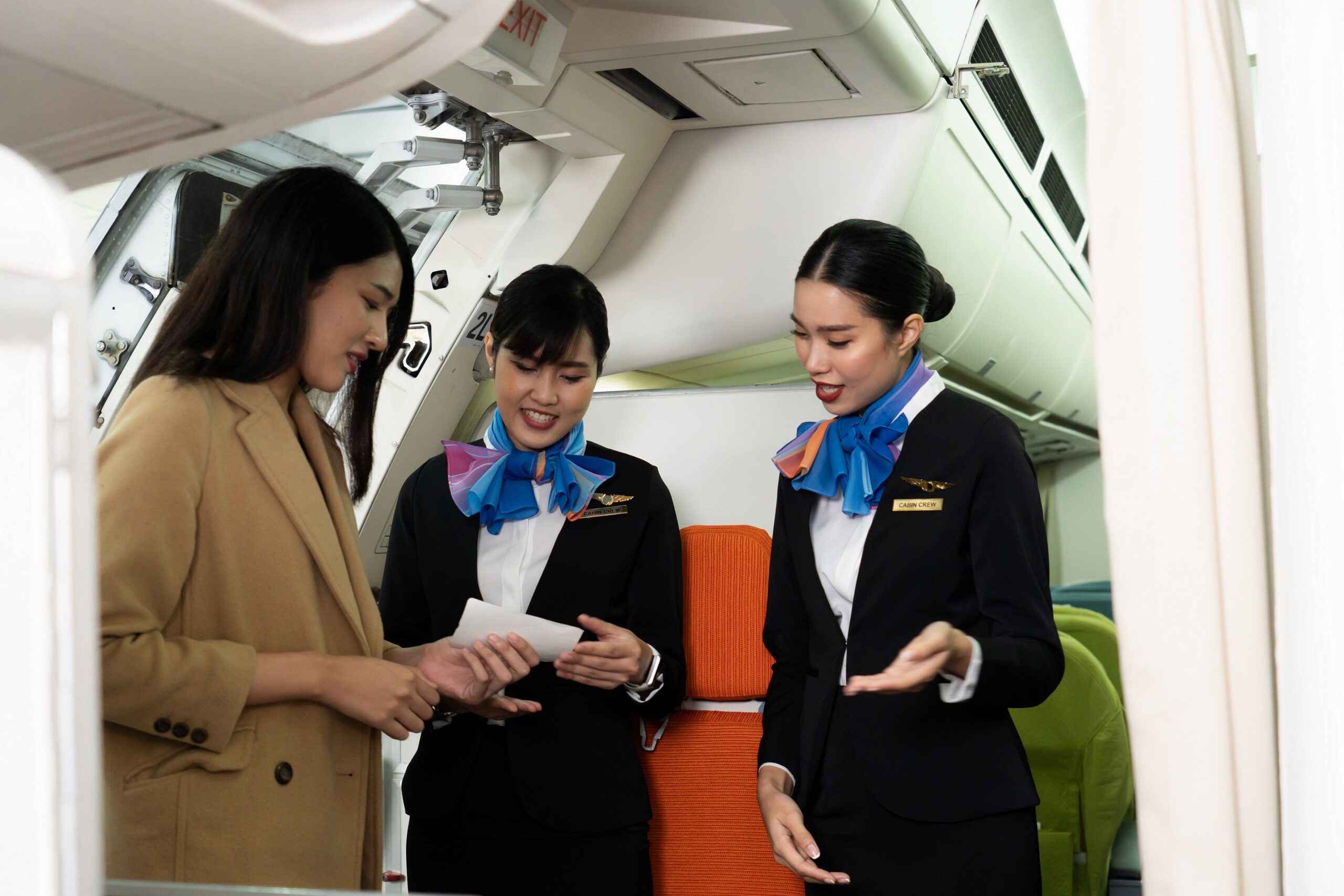
Most people have experienced the process of taking a flight, from arriving at the airport to boarding the plane, which can be anxiety-inducing and nerve-wracking. Sometimes, certain behaviors unintentionally exhibited by passengers can be off-putting to others, especially actions taken at the boarding gate that may not sit well with flight attendants.
No one boards a flight with the intention of irritating the cabin crew, but there are behaviors that passengers engage in that can irk flight attendants, often unwittingly. A recent interview conducted by travel magazine “Travel + Leisure” with two veteran flight attendants delves into common passenger habits that can create extra work for the cabin crew and even lead to flight delays in certain situations, providing insights for passengers who are about to board a flight.
Here are some habits that flight attendants hope passengers will avoid before takeoff:
The reasons why people want to change seats are usually understandable: to sit with their travel companions, to switch from a middle seat to a window seat, or to avoid being close to the restroom. Many frequent travelers might see this as simply poor planning before the flight, but that doesn’t stop some passengers from blocking the aisle during boarding while attempting to negotiate seat changes.
Flight attendants find this behavior unwelcome, not just because it slows down the boarding process.
Then, there’s the situation that seems too good to pass up: boarding is complete, the cabin doors are about to close, and you spot a perfect, empty seat up front. The temptation to switch from seat 28F to 16A is right in front of you. But before you discreetly “upgrade” your seat, be aware that flight attendants are definitely keeping a close eye on such moves.
“Never switch seats on your own – it will drive everyone crazy,” said travel show host and former flight attendant Bobby Laurie. He worked for US Airways and Virgin America for ten years (both airlines have now ceased operations).
“Most airlines charge extra for seats with spacious legroom, and nearly every airline equips cabin crew with mobile devices that show which seats should remain vacant and which passengers have purchased specific seats.”
As airlines increasingly charge for checked baggage, more passengers opt to carry only carry-on luggage, posing challenges for cabin management as the aircraft’s design does not provide overhead bin space for every seat to accommodate a carry-on. While it’s well-known that passengers who board earlier get first dibs on coveted overhead bin space, efficiently utilizing these spaces is equally crucial.
Content creator Kelsie Rogers worked for a major American airline for three years, and she mentioned that the behavior of passengers that most troubles her often involves the way carry-on luggage is placed in the overhead bins.
“People will move other passengers’ belongings around or place bags horizontally, preventing the bin from closing,” she said, “and they don’t even check to see if the bins are properly closed.”
She also pointed out that many overhead bins have diagrams showing the correct way to stow luggage, but passengers often overlook these illustrations in their eagerness to claim space. Rogers added that while it might seem harmless to shift items to fit in carry-on luggage, flight attendants prefer passengers leave this task to the cabin crew to handle.
Stopping in the aisle to rearrange your backpack, fetch electronic devices, or search for snacks, leaving others waiting behind you, is not acceptable behavior. “Don’t stand in the aisle rummaging through your backpack,” Rogers said, “head to your seat first. Once there is a bit more space, you can put your items back in the overhead bin.”
Although Laurie acknowledges that passengers with tight connection times before boarding may not have time to visit the restroom, he points out that some passengers have ample time waiting at the boarding gate but only remember they need to use the lavatory once onboard, which confuses flight attendants.
“You step onto the plane and suddenly you think ‘now’s the time,'” he said, “there are always a few flight attendants rushing to speed up boarding and others busy with meal service, so if these areas get long lines, it can really disrupt the workflow.”
Rogers is a bit more understanding, mainly because she grasps the peculiar psychology of suddenly needing to use the restroom right after boarding. “I know many flight attendants find it frustrating when passengers request to use the restroom before takeoff, but I can understand that feeling,” she said.
However, she still recommends that passengers address restroom needs before the boarding gate closes. “Everyone must return to their seats for us to take off,” she added.
Laurie also mentioned that requesting beverages before takeoff can delay the departure process. While providing drinks before takeoff is usually part of first-class service, the cabin crew’s staffing is not enough to accommodate such service for all passengers in the cabin before takeoff.
“People often ask for water because they need to take medication,” Laurie said, “of course, flight attendants will fulfill their needs, but if we start serving drinks before takeoff, we would have to walk through the cabin again to collect trash.”
It’s best to have your water bottle filled before boarding or purchase a beverage at the airport.