
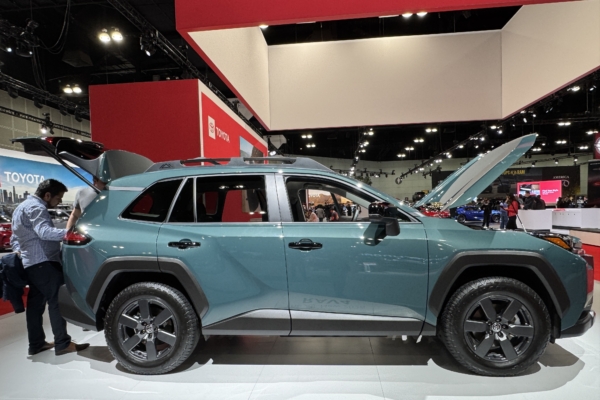
Since the start of the pandemic, the U.S. automotive industry has been experiencing continuous price hikes, with no signs of reversal. A recent report revealed that budget-friendly entry-level car options are gradually disappearing, while the high-end car market is rapidly expanding. Trucks that were once affordable for average working families have now become luxury items.
According to the U.S. automotive trading website Edmunds, the average transaction price (ATP) for new cars in 2025 reached $48,402, compared to $37,310 in 2019. This means that purchasing a new car that was affordable six years ago now requires an additional $11,000, representing a 30% increase in prices.
Experts suggest that the pricing issues in the new car market are unlikely to improve in the short term. Especially in recent years, with shifts in consumer preferences and the greater profit margins in high-end vehicle models, automakers are releasing fewer entry-level car options, thereby narrowing the choices available to consumers.
Edmunds’ website points out that new cars priced at $20,000 have disappeared, and those priced at $25,000 are also becoming scarce. After comparing actual sales data from 2025 and 2019, researchers discovered the following:
– In 2019, new cars priced at $25,000 or below accounted for almost 21% of total new car sales, but now only make up 4.7%.
– The percentage of new cars priced at $30,000 or below in 2019 was 40%, but by 2025, it had decreased to 15%.
– In 2019, new cars priced at less than $35,000 constituted the mainstream market, making up 54% of total sales, whereas now they comprise less than 30%.
In 2019, 85% of compact sedans were sold for prices not exceeding $25,000. By 2025, this proportion had dropped to 37%. Models such as Mitsubishi Mirage, Honda Fit, and Toyota Yaris, which were once the go-to choice for budget-conscious consumers, have mostly been discontinued.
In the automotive market, SUVs and trucks have become the preferred vehicle types among consumers, with prices continually on the rise for both categories.
According to Edmunds’ data, as early as 2019, large SUVs were already quite pricey, with nearly 59% of them priced above $60,000. By 2025, this figure had risen to 95%. Affordable large SUVs are no longer available.
Full-size pickup trucks exhibit a similar trend. In 2019, only 8% of full-size pickup trucks were priced above $60,000, whereas this figure has now reached nearly 50%. Additionally, approximately three-quarters (77%) of heavy-duty pickup trucks currently on the market are priced above $60,000.
The data indicates a clear shift towards higher price points in the new car market: more than one in five new cars now have prices exceeding $60,000.
Edmunds research personnel suggest that many consumers who cannot afford to buy new cars are turning to the used car market, only to find that it is more supply-constrained than ever before. Quality used vehicles are in short supply, prices remain high, and used car loan interest rates are typically higher than those for new cars.
Based on various data, Edmunds has concluded that the primary target demographic for the new car market is consumers with good credit and higher income levels. In order to save money, consumers may need to compromise on certain high-end vehicle features, consider purchasing a used car, or opt for longer loan terms. In the first quarter of 2026, new car loans with terms of 84 months or more accounted for 22.9% of all financed vehicle purchases, reaching a historic high.
Ivan Drury, Director of Market Insights at Edmunds, mentioned that extending loan terms helps maintain monthly payments at affordable levels but often comes with higher long-term costs and additional financial risks. He noted that currently, consumers are weighing their options among various expenses.