
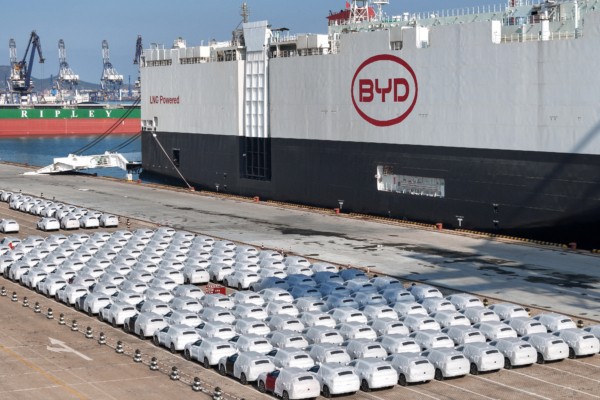
In recent years, the Chinese electric vehicle industry has experienced remarkable expansion thanks to substantial policy subsidies and capital injections. However, the industry is now caught in a vicious cycle of overcapacity and weak domestic demand, leading to a downward spiral of aggressive price reductions. To survive, Chinese car manufacturers are exporting surplus capacity overseas, driving a surge in exports but also facing trade barriers in Europe and the US, triggering national security concerns over Chinese “connected vehicles”.
Competition in the Chinese automotive market has intensified, with reports showing that 177 car models implemented price cuts in 2025. From January to May 2026, the average price cut for electric vehicles was approximately 12.5%, and for conventional fuel vehicles, it was even higher at 14.6%, indicating intense price competition becoming the norm in the industry.
Despite aggressive discounting, the market remains lackluster. Data from the China Association of Automobile Manufacturers revealed a significant year-on-year drop of 20.4% in domestic car sales in May. Bloomberg highlighted the severity of the issue, stating that China’s total automotive production capacity reached 55 million vehicles last year, yet domestic sales were only around 23 million vehicles, highlighting a substantial supply-demand imbalance at the root of market turmoil.
Wang Xia, the president of the China Chamber of Commerce for Import and Export of Machinery and Electronic Products, disclosed that despite the introduction of hundreds of new car models between January and May, the profit margin for the auto industry in the first quarter plummeted to a historic low of 3.2%, reflecting a rare triple decline in sales volume, revenue, and profit margin.
American economist David Huang, in an interview with media, pointed out that the price war is just the surface manifestation of a deep-seated structural crisis in the Chinese automotive industry, driven by severe overcapacity, weak domestic demand, and overall industry consolidation.
He emphasized that, “What appears as a price war is essentially an outward expression of the deep-rooted structural crisis in the Chinese automobile industry.”
Sun Guoxiang, a professor specializing in international affairs and business at Nanhua University in Taiwan, indicated that the price war waged by Chinese car manufacturers is not only about gaining market share and increasing sales volume but also reflects the pressures of overcapacity, weak demand, and product homogenization in the industry.
Sun analyzed, “The previous logic was to expand scale first and then pursue profits; now it has turned into selling more may not necessarily lead to profits, and in fact, the more you sell, the more losses you incur.”
He warned that if the price war continues long-term, it will not only squeeze the interests of research and development, after-sales services, and supply chains but also accelerate the exit of weaker car manufacturers, leading to a harsh industry reshuffling.
In addition to the structural imbalance of supply and demand, the gradual phasing out of long-standing official subsidies by the Chinese government has put a strain on car companies that heavily relied on policy incentives to survive.
Professor Sun pointed out that the high growth of China’s new energy vehicles in the past was largely built on subsidies, purchase tax incentives, and local government support. However, with policies evolving, the purchase tax exemption for new energy vehicles in 2026 to 2027 has been halved, and the maximum tax reduction per vehicle has been lowered to approximately 15,000 RMB.
This signifies, “The end of the subsidy-driven era and the beginning of an industry elimination game.”
In response, Chinese economic analyst Wang He predicted that in the future, “90% of electric vehicle manufacturers will disappear, with only a few able to survive.”
While policy protection is tightening, sourcing chain costs are rapidly increasing. Zhang Xinghai, founder of Salee Group, analyzed at the Chongqing Automotive Forum on June 13 that storage chip prices have surged nearly fivefold, coupled with soaring prices of components like lithium carbonate, resulting in an increase of 15,000 to 20,000 RMB per vehicle in production costs, exacerbating business pressures.
Li Bin, chairman of NIO, also issued a stern warning at the forum, urging the entire industry to prepare for a domestic retail volume decline of 15% to 20% this year, signaling that the Chinese automotive industry has entered the “most brutal final stage.”
The inescapable dilemma of overcapacity in the domestic market has forced Chinese car companies to turn their attention to international markets. Wu Jian, a member of the executive committee of GAC Group, bluntly stated that the Chinese automotive industry has reached a point where “going international is imperative,” emphasizing the need to “expand volume domestically and gain profits internationally.”
Despite a 20.4% drop in domestic sales in May, exports during the same period surged by 68.7%. However, behind this wave of export growth lies significant structural risks.
David Huang analyzed that a substantial portion of the reported export growth is attributed to foreign car manufacturers like Tesla and Volkswagen producing in China and then exporting. For Chinese indigenous brands heavily reliant on official subsidies, massive exports pose substantial risks: escalating trade frictions, exacerbating domestic overcapacity if the export market reverses, and continuous decay in corporate profits with accumulating debts.
David Huang criticized the core of China’s industrial policies, stating, “New energy vehicles are a false proposition. China generates power from a large number of coal-fired power plants… The past reliance on subsidies, mythology, painting grand illusions, policy support, and propaganda collectively created a virtual prosperity and valuation.”
Professor Sun also noted that the surge in exports reveals that car manufacturers are swiftly redirecting unabsorbed domestic production capacity to overseas markets.
He cautioned that while car companies may prolong their lifespan through exports in the short term, the medium term may lead to transforming China’s domestic overcapacity issue into a global trade and industry security concern.
The strategy of the Chinese Communist Party, tacitly approving and even encouraging the overflow of internal production pressures outward, has triggered sensitivities in the international community.
China’s low-cost exports and dependence on subsidies have raised significant industrial security concerns. In efforts to counter and mitigate these risks, the US has substantially increased tariffs on Chinese electric vehicles to 100%, and the EU has imposed anti-subsidy taxes ranging from 7.8% to 35% on Chinese-made electric cars.
Beyond economic trade frictions, national security has become a key line of defense for Western democratic nations against Chinese automobiles. According to a report by the Atlantic Council’s senior researcher Joseph Webster, modern electric vehicles have become substantial “mobile data collection platforms,” causing democratic nations to be highly vigilant towards “connected vehicles” from China that pose potential network security threats.
The report highlighted that such risks are not merely theoretical speculations, as recently discovered in Norway and Denmark, Chinese bus manufacturer Yutong’s vehicles were found to have embedded backdoor codes for remote vehicle disconnection.
In response, Wang He analysis suggested that Western countries, currently experiencing tense relations with the Chinese government, strategically emphasize overall “de-risking.” Hence, democratic nations are unlikely to permit Chinese products with information security concerns that continue to collect various data in large numbers domestically.
In summary, experts assert that the Chinese automotive industry is undergoing a tumultuous transition from “high-speed expansion” to “ruthless elimination.” Faced with dwindling domestic demand, a retreat of official subsidies, and escalating manufacturing costs, companies’ survival spaces have significantly contracted. Attempting to alleviate internal pressures by exporting surplus capacity globally not only fails to address the industry’s structural ailments but exacerbates trade frictions and national security contradictions with free and democratic nations.