
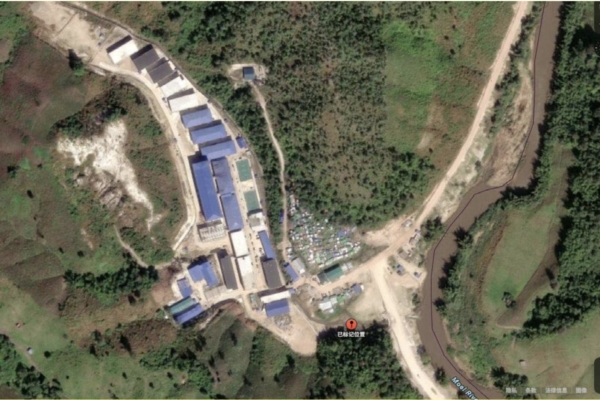
On Monday, June 8th, the international human rights organization Amnesty International released a new report pointing out the Cambodian government’s inadequate high-profile crackdown on scam parks over the past year. More than 70% of the fraud parks were unaffected, and a large number of victims were left stranded inside the parks.
The organization released a report entitled “People Fallen Through the Cracks of the System: Cambodia’s ‘Crackdown’ on Scam Parks and its Failure to Protect Victims.” The report found that as of April 2026, out of 86 scam parks identified by Amnesty International, only 24 (about one-fourth) showed evidence of government intervention.
Under international pressure, Cambodia launched what was claimed to be the largest-ever anti-scam operation in July 2025, pledging to eradicate criminal networks perpetrating large-scale fraud against victims worldwide. Since then, authorities claimed to have shut down over 200 scam centers and arrested many high-ranking gang leaders.
However, after nearly a year of monitoring and investigation, Amnesty International found a significant gap between the Cambodian government’s official statements and the actual enforcement efforts.
Montse Ferrer, the Joint Regional Director for Asia-Pacific at the organization, stated: “Among the identified scam parks, over 70% seemed unaffected by the crackdown. In some cases, the ineffective police interventions failed to identify victims, leaving them to suffer severe human rights violations. Meanwhile, the government praised its own actions.”
The report revealed that even when government interventions occurred, their effectiveness was often limited, sometimes undermined by collusion between park managers and the police, or merely reactive measures taken under public pressure. In three separate cases where police did intervene in the parks, victims interviewed by Amnesty International reported continuing human rights abuses at those locations during the same period.
Between July 2025 and April 2026, Amnesty International interviewed 73 survivors from scam parks, hailing from countries such as Bangladesh, Brazil, China, Colombia, Ecuador, Eritrea, Ethiopia, Ghana, Indonesia, Kenya, Liberia, Madagascar, Morocco, Niger, Uganda, and Venezuela.
Many individuals reported being lured to Cambodia under the guise of legitimate work, only to find themselves detained in heavily guarded parks where they were coerced into participating in online fraud schemes.
These scam parks were found to involve widespread practices of enslavement, human trafficking, forced labor, and torture, operating similarly to prisons under the control of organized crime groups.
The report indicated that collusion between the police and park managers weakened the government’s efforts to combat the issue. Multiple survivors stated that police frequently visited a park in Prey Veng (labeled PV01), including assisting in moving bodies and drinking coffee with managers, without making any arrests of staff throughout the entire crackdown.
Elise, a young woman from Kenya (pseudonym), recounted being assaulted in the PV01 park and witnessing the death of a woman. She said, “We tried to wake her up, but she was already dead… the police came here to take away the body.” She added that the police did not release others still trapped in the park.
Survivor testimonies also revealed that park managers would sometimes receive advance notice of police interventions, allowing them to escape and relocate to other locations. This suggests a possible coordination or collusion between the two party…
(Continued below)