
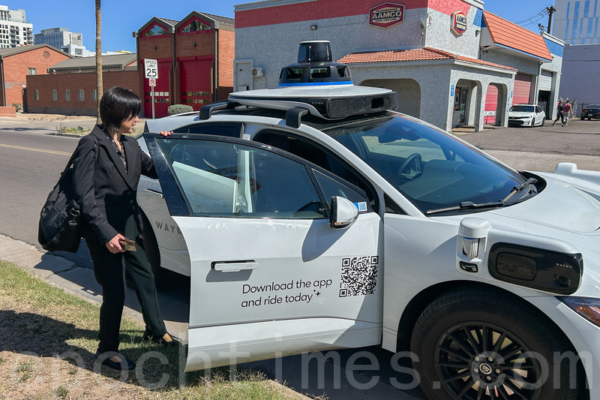
Waymo, the pioneering self-driving taxi company that has taken the lead in the commercialization of autonomous vehicles, recently announced its plans to expand its operations to four additional cities, including San Diego. The company, focused on autonomous driving technology, is a subsidiary of Alphabet, Google’s parent company, and currently stands as the most advanced autonomous driving company in the United States. With services already available in 11 cities across the country, Waymo is now set to introduce fully automated and driverless taxi services in San Diego, Las Vegas, Denver, and Tampa, Florida.
In a press release on July 8th, Waymo disclosed that the initial services in the newly added cities will be limited to company employees, with plans to make them accessible to the general public in the latter half of the year. By simply installing the Waymo app, individuals will be able to summon their autonomous taxi 24 hours a day, seven days a week.
Waymo commenced testing on the streets of San Diego, including downtown areas, since last year. In November, the company indicated its pursuit of permits while engaging in discussions and collaborations with local communities and governments.
The company’s objective, as previously stated, is to achieve a milestone of “1 million trips per week” by the end of 2026. Waymo’s fleet of autonomous taxis in cities like Phoenix features the all-electric Jaguar I-PACE SUV. This year, Waymo introduced new vehicle models including Ojai and Hyundai’s IONIQ5 electric SUV. Ojai is a modified version of Geely’s luxury electric car Zeekr, and in San Diego, the Waymo autonomous taxis will be utilizing this model.
The autonomous taxi market is rapidly evolving in the United States, with Waymo expanding into new cities like San Diego. Tesla has also successfully expanded its Model Y self-driving taxi services from Texas and California to Florida’s Miami. Tesla’s cybercab, a driverless taxi without a steering wheel, entered mass production in April this year and is scheduled for road testing by the year-end. Another player, ZOOX, following years of road tests, recently unveiled its production-ready design.
Tesla introduced the concept design of the cybercab in 2024, featuring no steering wheel, pedals, or rearview mirrors, specifically tailored for Tesla’s self-driving taxi system. Anticipated to be available for private ownership as well, the cybercab is projected to be sold for $30,000 by 2027. While Tesla’s CEO, Elon Musk, confirmed the initiation of mass production of the cybercab in April, detailed production specifics have yet to be publicized by July.
ZOOX, owned by Amazon, officially launched its autonomous driving vehicle in Las Vegas in September 2025, offering free test rides to the public. In 2026, ZOOX announced expansion plans including commercialization and quantified production.
Unlike Waymo and Tesla’s self-driving vehicles, ZOOX’s autonomous taxi resembles a “cabin” with no steering wheel, pedals, and accommodates up to four passengers seated facing each other. The design allows the vehicle to move in two directions without the need for U-turns.
Presently, all autonomous driving taxi services, including Waymo, operate within a specified coverage area approved by the respective cities, leaving a significant market share for human-driven taxis. Uber’s CEO, Dara Khosrowshahi, predicted at a summit in late 2024 that while the next 5-7 years will still require numerous Uber drivers for passenger and delivery services, the autonomous driving vehicles will pose a societal challenge in 10-15 years.
Nevertheless, given the current trajectory of autonomous driving taxis’ development, concerns arise regarding their impact on the industry and society, possibly accelerating in a shorter timeframe than anticipated. These vehicles might occasionally experience malfunctions such as sudden halts leading to traffic congestion or unintended entries into restricted areas. Accidents involving Waymo, Zoox, and Tesla’s autonomous vehicles have been reported, some resulting in casualties.
On July 8th, the National Highway Traffic Safety Administration (NHTSA) issued a public warning to companies developing autonomous vehicles, urging immediate improvements in the vehicles’ ability to discern emergency situations. A distinct and recurring pattern observed by NHTSA in recent months involves autonomous vehicles failing to correctly interpret on-site circumstances during accidents, fires, and law enforcement operations, leading to accidents like encroaching emergency scenes or obstructing the pathway of ambulances, fire trucks, or police cars, and the failure to identify and react to police lights, smoke, or fire.
NHTSA emphasizes the need to prevent incidents where autonomous vehicles impede emergency vehicles. The agency stated, “Autonomous vehicles that cannot safely interact with frontline emergency personnel pose a threat to public safety.” #