
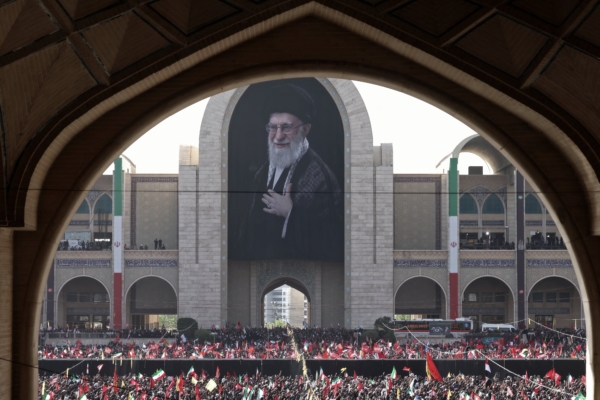
Iranian officials on Saturday (July 4) launched a six-day funeral ceremony for the late Supreme Leader Ayatollah Ali Khamenei. The ceremony, delayed by about four months due to the war, began on the first day at the Grand Mosalla prayer grounds in Tehran. However, beneath the grand mourning scene, analysts believe this ceremony is a carefully orchestrated political performance.
Sanam Vakil, head of the Middle East and North Africa Program at Chatham House, told CNBC that the funeral will be “a carefully crafted display of mourning, continuity, and regime control,” mobilizing a large number of mourners but also potentially revealing underlying tensions.
Alex Vatanka, a senior fellow at the Middle East Institute, also stated: “This is essentially a political event depicted as a religious one. Its design aims to demonstrate legitimacy internally and a tough stance externally.”
To support the scale of participation, authorities provided transportation, food, and accommodation arrangements, hoping to mobilize millions of people in the large funeral processions over the coming days.
Authorities announced that highways around Tehran would be transformed into temporary parking lots, with schools, mosques, universities, and sports centers used to accommodate visitors. Flights are expected to be affected, and access to major cities will be strictly controlled.
Reuters pointed out that Iran has been heavily impacted by severe sanctions in recent years, leading to an economic paralysis, with nationwide protests in January forcefully suppressed by security forces, resulting in the deaths of thousands.
However, this week, Tehran is attempting to set aside these deep-seated issues, rallying millions of people to attend the funeral in hopes of showcasing power.
At the same time, Tehran’s streets are heavily guarded, with military and police vehicles deployed along major roads, and members of the Basij militia, a paramilitary group affiliated with the Iranian Revolutionary Guard, patrolling on motorcycles.
With foreign dignitaries attending the funeral in Iran, Tehran also seeks to avoid a major security breach similar to the assassination of Hamas political leader Ismail Haniyeh in Tehran in 2024.
Furthermore, the continued absence of Mojtaba Khamenei, the son of the late Supreme Leader and the new Supreme Leader, has become a major focus.
Since succeeding his father, he has yet to make a public appearance; the world also continues to watch whether he will show up.
Naysan Rafati, senior analyst on Iran at Crisis Group, told CNBC that Iran is currently facing “serious economic problems, significant social dissatisfaction… and a relatively untested new Supreme Leader who has yet to appear.”
Reuters also quoted analysts pointing out that support for Iran’s clerical leadership is extremely weak, and despite official declarations of unity, there is uncommon internal division.
While the funeral spanning five cities in Iran and Iraq showcases Tehran’s mobilization and organizational capabilities, it also highlights the internal divisions, social unrest, security pressures, and uncertainties that Iran faces during this period of power transition.