
The European Union will impose a fee of 3 euros on imported goods valued at less than 150 euros starting from July 1st. Logistics companies are advising shippers to start preparing now to ensure that documents and billing services are accurate, facilitating smooth delivery of goods after July 1st.
The European Commission has issued clearer implementation rules on June 8th regarding the cancellation of tariff exemptions for imported goods valued at less than 150 euros. From July 1st, 2026, the EU will impose a temporary tariff of 3 euros per item on low-value goods imported from outside the EU (valued at up to 150 euros), eliminating the previous tariff exemptions. This temporary tariff policy of 3 euros will be in effect for two years (from July 1st, 2026, to July 1st, 2028), after which the EU will impose normal tariffs on goods based on their type.
To enhance traceability and facilitate customs authorities in detecting and preventing unsafe or non-compliant goods, starting from November 1st of this year, products must have a Product Identification Code (PID). The declaration of Product Identification Codes can begin from July 1st. The EU pointed out that there is evidence suggesting that a significant portion of low-priced e-commerce imported goods do not meet EU safety and compliance standards, posing risks to consumers and damaging the fair competitive business environment.
The 3 euro temporary tariff is not calculated per entire package but based on the types of goods (HS Code) within the package. For instance, if there are three identical T-shirts in a package, only 3 euros would be required. However, if the package contains a T-shirt and a book, which are two different types of goods with separate customs tariff codes (HS codes), then a total of 6 euros in temporary tariff would need to be paid. It should be noted that if the package contains the same product but from different countries of origin, they will also need to be calculated separately, resulting in higher temporary tariff payments.
The European Commission explained that the initial introduction of the minimum tax exemption was to avoid excessive administrative burdens on customs authorities, businesses, and individuals. However, with the digitization of customs procedures, electronic data for all imported goods can now be obtained, rendering the exemption no longer reasonable. Furthermore, the exemption no longer reflects the actual market conditions. In 2025, nearly 59 million such duty-free low-priced items were directly sent from third countries to EU consumers, creating unfair competition that traditional retailers cannot compete with.
Imports of goods from third countries that do not meet EU standards also create unfair competition for legitimate EU businesses. Throughout the year 2025, the EU conducted special inspections on cosmetics, personal protective equipment (PPE), dietary supplements, toys, and electronic products, revealing shocking non-compliance situations: over 60% of inspected products failed to meet EU standards due to missing labels, banned ingredients, or lacking safety documents.
The European Commission stated that the 3 euro temporary tariff aims to create a fair competitive environment, ensuring that all enterprises exporting goods to the EU market, whether in bulk or individually, must pay tariffs and comply with relevant regulations.
Market reactions widely believe that this adjustment by the EU is primarily targeting the influx of low-priced Chinese goods through platforms such as Shein and Temu. Last year, about 90% of the e-commerce products imported by the EU below 150 euros came from China, covering fast fashion, beauty products, and electronics.
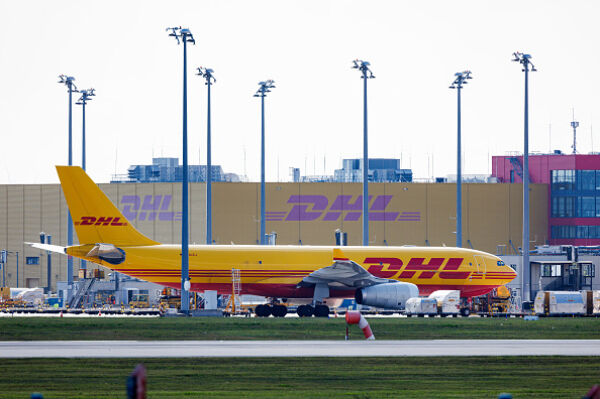
DHL Express has published a relevant article on its official website titled “2026 EU Customs Reform: What the end of the duty-free threshold means for your shipments,” reminding senders (sellers) to pay attention to this new regulation and prepare early. DHL Express also strongly recommends that buyers (recipients) choose the Duties and Taxes Paid billing service to ensure smooth delivery. Duties and Taxes Paid is a service where the seller bears and pays the tariffs and taxes in advance, rather than having the EU buyer pay them upon receipt.
Additionally, DHL Express mentioned that from November 1st, the EU is expected to charge approximately 2 euros for each batch of goods for regulatory handling fees. The specific scope and billing details are yet to be finalized.