
Europe is currently experiencing an industrial sovereignty survival battle. With the influx of Chinese electric cars, key components, and chemicals, the European Union is facing a daily trade deficit of 1 billion euros, with local industries being impacted by China’s “weaponization of trade”. In order to reverse this decline, the EU is considering tough measures, including mandatory diversification of supply chains for European companies and imposing punitive tariffs.
Facing China’s increasing use of trade as a weapon, the European Commission is preparing to take active legislative intervention. According to a recent report by the Financial Times, the EU is currently discussing a “risk-free” supply chain bill, which would require key industries such as chemicals and industrial machinery to diversify their procurement of core components.
The new measure draft stipulates that companies will not be allowed to purchase more than around 30-40% of critical components from a single supplier in the future, and the rest must be procured from at least 3 suppliers, not all from the same country.
Officials stated that EU Trade Commissioner Maros Sefcovic hopes to address the EU’s daily trade deficit with China, which reaches up to 10 billion euros (about 11.6 billion dollars), and protect European companies from the impact of China’s “weaponization of trade”.
Last year, after Beijing imposed export controls on key components like rare earth magnets, some car production lines in Europe were forced to stop production.
It was revealed that Sefcovic plans to impose a series of punitive tariffs on Chinese chemicals and mechanical products to curb the massive increase in imports.
In April of this year, Sefcovic signed a memorandum of understanding with U.S. Secretary of State Marco Rubio to strengthen critical mineral security cooperation between the two countries.
According to the plan, this early-stage bill will be submitted to the European Commission for discussion on May 29 and is expected to receive endorsement from member state leaders at the European Council in late June.
Trade analysts and industry representatives have issued warnings recently: Europe is facing a “China Impact 2.0,” threatening the survival of local factories and potentially leading to what could be seen as a “de facto colonization” of European industries by Beijing.
This is reminiscent of the crisis the United States faced 25 years ago when China’s entry into the World Trade Organization led to a surge in imports, squeezing domestic industries and causing the loss of up to 2.5 million jobs.
Jens Eskelund, President of the European Chamber in Beijing, told The Guardian that while the focus may be on finished products like electric vehicles (EVs), the real issue lies in the vast number of components hidden within the industrial chain. He bluntly stated, “In a sense, Europe’s dependence on China is increasing every day.”
Data reveals alarming levels of dependence. According to data released in mid-May by the trade observation website Soapbox, the EU imports 52% of amino acids used extensively in flavorings and pharmaceuticals from China by value, but this percentage soars to 88% by volume. In the area of polyhydric alcohols used in plastics, cosmetics, and paints, the volume share is even higher at 96%.
The site’s trade consultants pointed out that the risk lies not only in cheap imports but also in low-cost supplies which render EU domestic production economically unviable, leading the EU to rely on the source that replaced its own.
Oliver Richtberg, Director of Foreign Trade Affairs at the German Mechanical Engineering Association (VDMA), emphasized that the low prices of Chinese products stem from massive state subsidies and an undervalued currency by as much as 30-40%.
Richtberg highlighted that when Chinese suppliers can offer goods at 90% of the quality and 30-50% of the price of others, buyers have no rational choice but to opt for them, which is detrimental to European industries.
As the economic locomotive of Europe, Germany is at the heart of this storm. A report titled “China Impact 2.0: The Cost of Germany’s Complacency” published by the European think tank “Center for European Reform” in May issued a stern warning: “Germany remains hesitant, despite China eating half of Germany’s industrial lunch and preparing to start on dinner.”
Data shows that China’s trade surplus with Germany doubled from $12 billion to $25 billion between 2024 and 2025; during the same period, China exported $118 billion to Germany while Germany’s exports to China decreased to $93 billion.
Moreover, since 2019, Germany has lost approximately 250,000 industrial jobs, with the automotive manufacturing industry seeing the most significant decline, losing about 51,000 jobs in just 2024-2025.
The CER report revealed that Beijing’s “Ten Thousand Giants” policy targets Germany’s most competitive ecosystem of “Mittelstand”, the backbone of the German economy.
The report pointed out sharply that the German political class attributes economic troubles to energy prices and bureaucracy but overlooks the Chinese factor, akin to the phenomenon of “phantom limb pain” in amputees—where the lost limb represents export demand, now severed under immense pressure exerted by China.
Andrew Small, Director of the Asia Program at the European External Action Service, highlighted that this has evolved into a security issue for Germany, and the measures adopted by the EU so far pale in comparison to the scale of imports. He believes Beijing is adopting delaying tactics to allow exports to continue flowing until European industries are completely devoid of the ability to fight back.
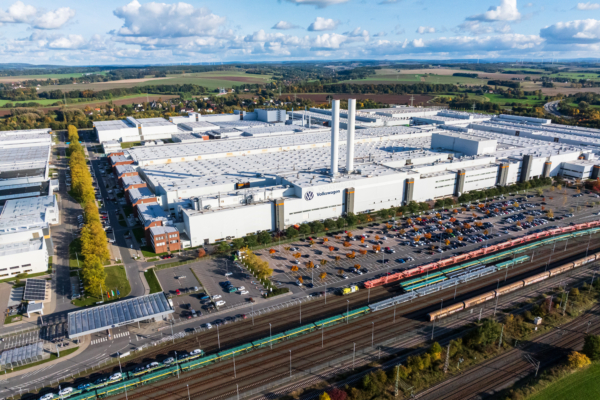
Germany’s automotive strongholds such as Wolfsburg and Stuttgart, emblematic of Germany’s mechanical and engineering achievements, are feeling the shift of power balance.
According to data from Berlin automotive analyst Matthias Schmidt, Chinese cars accounted for 8.6% of the Western European market in the first quarter of 2026, nearly double compared to the same period last year.
The sales of Chinese electric and hybrid cars to Europe have nearly doubled from $11 billion in the first quarter of 2025 to $20.6 billion in the same period this year. This figure constitutes one-third of China’s total global exports of electric vehicles.
When considering the UK, Norway, and Switzerland in the statistics, Europe collectively accounts for 42% of China’s electric vehicle sales.
Although the EU has imposed up to 35.3% anti-subsidy tariffs on some Chinese electric car brands, currency fluctuations have offset some of the effects.
On the other hand, according to The Guardian, some European car manufacturers facing overcapacity have opted for a strategy of “opening the door to wolves.” For example, groups such as Nissan, Ford, and Stellantis are considering or have already agreed to sell or lease idle production capacity in Europe to Chinese companies such as Chery, Geely, or Lixiang Motors to avoid plant closures and layoffs.
Meanwhile, emerging Chinese forces are displaying formidable momentum. Xiao Guang Cheng, General Manager of the Northeast Europe region at Xiaopeng Motors, sharply criticized the factories offered by well-established German car companies as “a little old” during a meeting in May. Li Ke, Executive Vice President of BYD, told Bloomberg that their company prefers to operate independently, stating, “It’s too difficult to have to ask for permission from others. We don’t have that gene. We run fast, and we can make decisions in five minutes.”
BYD’s large automotive plant in Hungary is about to start production; however, this project is facing several allegations of violating EU labor and environmental laws.
In 2025, China recorded a record $1.2 trillion global trade surplus, testing the resilience of the EU. In the first quarter of 2026, imports of Chinese electric cars have driven its historic high trade surplus with Europe, reaching $83 billion. China’s total exports to Europe were approximately $148 billion, while imports were only $65 billion; the 2025 trade surplus amounted to a high of 360 billion euros (approximately 419 billion dollars).
The European Commission’s “Industrial Accelerator Act” proposed in March of this year aims fundamentally to revitalize “Made in Europe” and increase the share of manufacturing in the EU’s GDP from 14.3% in 2024 to 20% by 2035.
Beijing has criticized the EU for pursuing “protectionism” and threatened to take “countermeasures.”
In February, German Chancellor Friedrich Merz stated that the significant trade gap is “unhealthy,” hoping to reduce the trade deficit that has “quadrupled in five years.”
Currently, the EU has proposals like the “Industrial Accelerator Act” and an updated version of the “Network Security Act,” but they are not expected to take effect until 2027 or later at the earliest. This makes the debate scheduled for the 29th of this month crucial for emergency measures for member state industries, as EU officials are under immense pressure to regain industrial sovereignty and economic control on the precipice of deindustrialization.