
Many are questioning whether the Chinese economy is really rebounding as claimed by the Chinese Communist Party. According to official statements, the performance of the Chinese economy is said to be improving steadily. However, is this really the case?
During the Central Economic Work Conference on December 11-12, Chinese leader Xi Jinping declared that the economy is making progress and that the country’s main goals for economic and social development are about to be successfully achieved. It might sound relieving to hear the confident announcement from the Chinese leadership about the healthy development of the economy, suggesting that China is on track to build a larger, more economically dynamic, fairer, and prosperous nation for everyone.
Moreover, the Communist Party also asserts that more stimulus measures will be introduced to drive China’s economic development. The question arises: What is the truth behind these claims? Are the main goals of economic and social development truly about to be achieved?
The reality is far from what Xi Jinping portrayed with his statement about a “stable economy” propelling the country towards these lofty goals. The general lack of confidence in the Chinese economy is evident as the market’s response to this conference has been negative, indicating that the people do not buy into the Communist Party’s rhetoric.
Many economic observers have pointed out similarities between the current state of the Chinese economy and Japan’s economic situation in the early 21st century, a comparison worth noting. Challenges faced by China, such as high unemployment rates, particularly among young workers, and structural deficiencies in the economy, are becoming apparent.
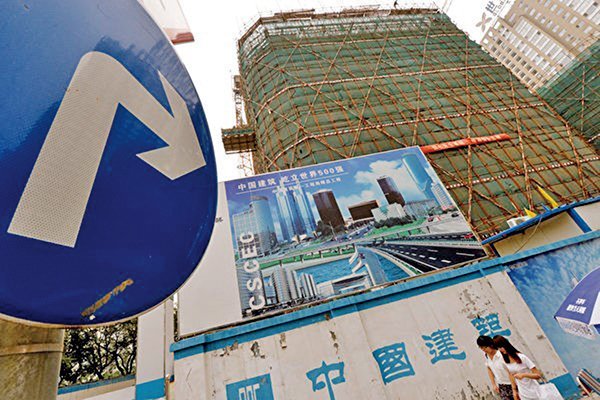
China’s overreliance on the real estate sector, accounting for one-third of GDP for the past few decades, has resulted in catastrophic consequences, including unmanageable public debt, oversupply of vacant buildings, and collapsing property values. Aging demographics and population decline exacerbate China’s real estate deflation crisis, undermining confidence in the Communist Party’s ability to reverse the economic downturn.
Furthermore, China’s economic freedom is lacking, and the Communist Party’s control over the economy continues to expand. These factors contribute to the unsustainable nature of China’s economic growth and stability.
It is undeniable that the Chinese government aims to rescue the economy through more capital injections. However, history and reality demonstrate that excessive use of stimulus measures often falls short of achieving the stated goals.
Beijing University Economics Professor Zhang Weiying and other Chinese economists understand that structural reforms are necessary to unleash the full potential of the Chinese economy. Increasing consumer confidence and income-driven domestic consumption require substantial efforts. Establishing entrepreneurial confidence hinges on reform direction rather than the intensity of monetary policy stimuli.
In essence, for China to achieve long-term growth and success, fundamental economic and political reforms are imperative to boost consumer confidence, drive demand, increase spending, and foster economic growth in a sustainable manner, following basic macroeconomic principles.
While the Chinese government has recently introduced a proposal titled “Promoting the Development of Private Economy”, which aims to stimulate the growth of private enterprises, it mandates private companies to adhere to Communist Party leadership and participate actively in building a socialist modernized country, subjected to government and societal supervision during operational activities. However, this proposal essentially embodies past erroneous policies leading to various problems and reinforces Communist Party control.
In summary, the Chinese government’s reluctance to implement substantial reforms while maintaining the status quo in the state-controlled planned economy signifies a lack of innovation and change. Despite the external appearance of change, the core remains the same, akin to the saying “same old wine in a new bottle” or the Chinese proverb indicating the Communist Party’s approach as “changing soup but not medicine.”
The potential for genuine reform towards a dynamic, growth-oriented economy driven by internal consumption, innovation, and a thriving middle class depends on the extent to which China is willing to transform its economic landscape through comprehensive reforms.
And that is the ongoing challenge facing China in its quest for sustainable economic development and prosperity.