
When it comes to the O-1 visa, one of the most common questions people ask me is, “Am I talented enough?” Some have a doctoral degree, some have founded companies, some have published books, and some have worked in the industry for over twenty years. However, in the O-1 visa application, the truly important question is not “How talented are you?” but rather “Can you prove that you are highly talented?” This may seem like a mere difference in wording, but in reality, it is a crucial turning point for many applicants.
Many people, when first introduced to the O-1 visa, tend to focus on their own experiences. They think: I have worked many years; I have completed various projects; I have good abilities; my peers in the industry know me.
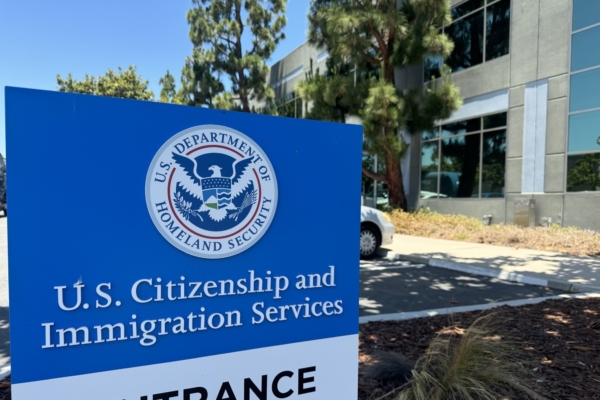
However, the U.S. Citizenship and Immigration Services (USCIS) does not know you. The adjudicating officer will neither meet you nor interview you. They only see a submitted application file.
In other words, the immigration agency evaluates not the applicant in person but the evidence submitted by the applicant.
People often liken USCIS to a review committee — the reviewers do not know you or your story; they can only judge whether you truly belong to the field of outstanding talents based on the materials you submit.
Therefore, the essence of an O-1 application is not a competition of abilities but rather a presentation of evidence.
According to immigration regulations, applicants typically have two ways to prove their extraordinary abilities.
The first way is by obtaining top international awards.
For example: Nobel Prize; Oscar; Pulitzer Prize; Olympic gold medal, etc.
Obtaining such world-class achievements usually suffices to demonstrate the applicant’s international standing.
However, in reality, such cases are extremely rare. The vast majority of O-1 applicants take the second route: proving their professional achievements through a combination of multiple pieces of evidence. This is also the most common application model in practice.
According to relevant guidelines, O-1 applications are usually evaluated from various angles regarding the applicant’s professional accomplishments.
Here are several common types of evidence:
– Awards represent recognition by peers. It doesn’t necessarily have to be an international award. Industry awards, professional awards, national awards also hold value in many cases. Of course, the prestige of the award is crucial.
The immigration agency does not only look at whether you have won awards but also at who awarded it, how competitive the process was, what the judging criteria were, and the social impact.
Therefore, proving the significance of the award is often as important as actually winning it.
Many people might say, “I am also a member of a certain association.”
However, what is more crucial to the immigration authorities is: What are the requirements for joining this association?
If membership only requires paying a fee, the proof is usually limited. If it necessitates peer recommendation, expert evaluation, professional achievement review, the value of the evidence increases significantly.
Because it signifies that your professional ability has gained recognition within the industry.
This has become a crucial type of material in many recent cases.
If your work has been reported by mainstream media, industry media, or professional publications, it often effectively proves your influence.
But it’s important to note: the immigration agency looks at the content of the reports.
If your name only appears in event photos, the proof is usually limited.
If the report focuses on your professional achievements, research outcomes, business innovations, or artistic works, the value is entirely different.
Therefore, the depth of media coverage is often more essential than the quantity.
This standard is frequently overlooked, yet it holds strong persuasive power. The reason is simple: when someone is invited to evaluate others’ work, research, or projects, it indicates that they themselves hold a certain professional status.
For example: peer reviewer of research papers; competition judge; professional awards panelist; entrepreneurship competition mentor, etc. These can all serve as compelling evidence.
In many successful cases, this often proves to be the most weighty component. What the immigration agency truly wants to know is: Have you done something that others have not?
For example: patents; research outcomes; innovative methods; business models; technological breakthroughs; artistic creations; educational systems, etc.
However, merely stating that you are innovative is not enough. What is more important is:
– Has this innovation had a practical impact?
– Has it been adopted?
– Has it been cited?
– Has it changed certain practices?
All of these require evidence support.
Many professionals publish articles. But what the immigration agency is more concerned about is: Do these articles hold professional value? Are they published on influential platforms? Are they cited? Do they impact the industry?
Hence, publication itself is crucial, but being acknowledged by peers often holds more weight.
At times, the market serves as the most direct evaluation.
If someone’s income significantly surpasses the industry average, it often reflects their professional value. Of course, this standard may not apply to everyone. For example, academics might rely more on research outcomes and academic impact. But in the business sphere, income evidence often carries considerable weight.
Many applicants’ affiliated institutions themselves hold influence. However, the immigration agency doesn’t just look at the institution but also at the role the applicant plays within it.
For example: core manager; technical lead; principal researcher; key project lead, etc.
The key is not how impressive the title sounds but whether the project would be substantively impacted without you.
Many people think that as long as they meet three criteria, they will definitely be approved.
In reality, this is one of the biggest misunderstandings about the O-1 review system. In practice, even if an applicant formally satisfies three or even four criteria, they can still be rejected in the end because of a lack of logical connections between the evidence.
For instance: an ordinary award, an article with little impact, a regular membership, even though they formally meet three criteria, they may still fail to truly prove the applicant’s outstanding position in the industry.
In O-1 reviews, there is a very important but often overlooked concept: Final Merits Determination.
Simply put, after confirming that you formally meet several criteria, the immigration agency will ask once again: Do these materials, when put together, truly prove that you are an exceptional talent? This step often serves as the real turning point for many cases.
For instance: media reports proving your influence; professional articles demonstrating your professional output; review experience showing peer recognition; original achievements proving your innovative capability. When these materials support each other, they form a complete chain of evidence. And this kind of evidence chain is often more persuasive than just stacking materials.
It’s important to note that there is no one-size-fits-all standard answer.
Scientists differ from entrepreneurs. Artists differ from researchers. Professors differ from athletes. The research field might prioritize papers, citations, and research outcomes more. The business field might value market influence, company performance, and innovation capability more. The art field might place greater importance on works, media exposure, and market recognition.
Therefore, a successful application is never about applying a template but about finding the evidence combination that best reflects your professional value.
The O-1 visa is not about proving how talented you are but about proving that others have recognized how talented you are. The most convincing materials often do not come from self-introduction but from third-party recognition. Therefore, if you plan to apply for an O-1 visa in the future, the most important preparation is not hastily gathering materials but continually accumulating achievements, building influence, and leaving records during routine activities. Because what the immigration agency ultimately sees is not your story but your evidence.
This article serves as a general information summary of immigration regulations and practical observations and does not constitute legal advice or specific legal recommendations for any individual case. The actual outcome of a case depends on individual facts and applicable laws. If it involves personal matters, consulting a qualified immigration lawyer is advised.