
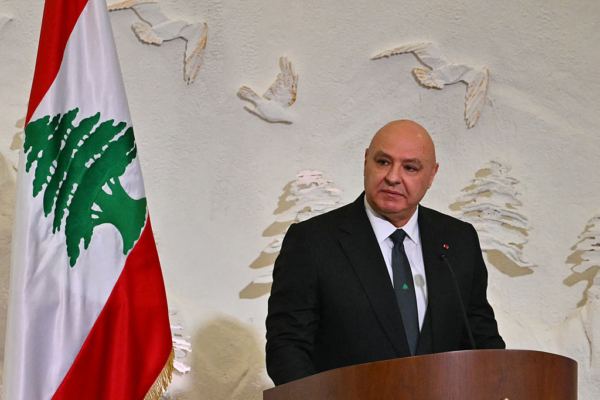
Lebanese President Joseph Aoun harshly criticized Iran on Friday, accusing the country of using Lebanon as a bargaining chip in negotiations with the United States, against the will of the Lebanese people.
In an interview with CNN, Aoun vowed to do whatever it takes to free Lebanon from conflicts, stating that the Lebanese people are “fed up” with the wars between Israel and Hezbollah.
Hezbollah in Lebanon, supported by Iran, has engaged in multiple conflicts with Israel since its establishment in the 1980s. Following the outbreak of the Iran-Israel war, Hezbollah fired at Israel on March 2nd to express support for Iran. This led to Israeli military actions in Lebanon aimed at eliminating the threat posed by Hezbollah, dragging Lebanon into a wider conflict in the Middle East.
Despite the ceasefire between the US and Iran since April, Iran’s demands to end the war agreement are linked to Israel’s withdrawal from Lebanon, further entangling Lebanon in the broader conflict.
President Aoun criticized Iran’s Islamic Revolutionary Guard Corps, asserting that “this is not your country but ours.”
“They are using Lebanon as a bargaining chip in negotiations with the US,” he said. “This is unacceptable.”
He called out Iran, saying, “You are not seeking to help us… the Lebanese people are paying the price for this… while you are only pursuing your own interests.” He emphasized that “our interests… do not align with yours.”
Facing the urgent need to diminish Iran’s influence in Lebanon, President Aoun, supported by the US, directed his government to engage in direct talks with Israel for a ceasefire. Aoun emphasized that Lebanon and Israel now have a “golden opportunity” to end hostilities and ensure the security and well-being of both Lebanese and Israeli citizens.
However, Hezbollah rejected the new ceasefire agreement reached between Lebanon and Israel. Hezbollah leader Naim Qassem criticized Lebanese-Israeli negotiations as “surrender,” stating that the ceasefire agreement was fully rejected by the Lebanese people.
President Aoun countered this claim by stating that he had spoken with Lebanese people from various religious sects, including Shia Muslims, and they all expressed being “fed up” with the wars between Hezbollah and Israel.
“They are the people of Lebanon, not Naim Qassem’s people,” Aoun publicly criticized the Iran-backed Hezbollah leader.
Despite this, President Aoun does not agree with Israel’s military strategy to dismantle Hezbollah, stressing that only after the Israeli forces withdraw, the Lebanese government can “handle” the Hezbollah issue through negotiations to end the conflict.
Israel has expressed its desire to achieve peace and normalization of relations with Lebanon. The major dispute lies with Hezbollah, and negotiations between Israel and Lebanon will focus on disarming Hezbollah. Israel insists that the Hezbollah issue must be resolved before any peace agreement is signed between Israel and Lebanon to ensure Israel’s security and protect Lebanon’s sovereignty.
The Israeli government has set conditions for its withdrawal from Lebanon, which include the disarmament of Hezbollah. The government led by Aoun in Lebanon has stated its commitment to fulfill this condition. However, aside from public criticisms and symbolic measures to weaken Hezbollah’s capabilities, Aoun has not taken concrete actions to disarm Hezbollah, fearing it could lead to direct conflict with Hezbollah and trigger a civil war in Lebanon.