
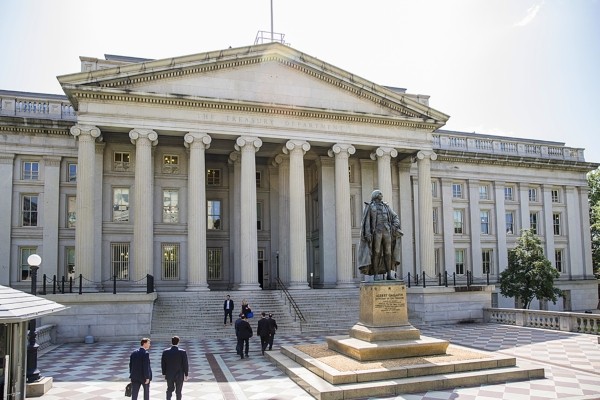
The U.S. Department of the Treasury announced on Friday a new round of sanctions related to Iran, aimed at further targeting Iran’s illegal exports of liquefied petroleum gas and shadow banking networks. Among the entities subject to sanctions is a Chinese entity.
According to the announcement, on Friday, the U.S. Department of the Treasury’s Office of Foreign Assets Control (OFAC) added a network consisting of individuals, entities, and vessels to the sanctions list. This network is responsible for transporting hundreds of millions of dollars’ worth of Iranian liquefied petroleum gas (LPG) to end-users in South and East Asia, with the LPG intentionally disguised as Omani LPG.
The announcement stated that this network used subsidiary companies in the UAE and China, foreign bank accounts, and Iran’s shadow fleet to transfer millions of barrels of Iranian LPG while concealing its origin from Iran, thereby circumventing U.S. sanctions. OFAC took this action to expose these co-conspirators who provide Iran with an economic lifeline and use commercial infrastructure to conceal their activities.
“Iran’s economy is struggling, and its military strength has been significantly weakened,” said U.S. Treasury Secretary Scott Bessent. “Through the ‘Economic Fury’ action, the Treasury will continue to cut off Iran’s shadow fleet, shadow banking networks, and channels involved in global trade.”
The Treasury Department imposed sanctions on 12 entities, including Shanghai Qianye Energy Technology Co., Ltd in China. Six LPG transport tankers were also added to the sanctions list, including four under the flag of Panama.
Furthermore, on Friday, the Treasury Department imposed sanctions on Iran’s foreign exchange company Mehrdad Geramian Nik and Partners Company and its leadership, accusing the company of transferring hundreds of millions of dollars in foreign exchange on behalf of sanctioned Iranian banks.
“Iran’s foreign exchange system heavily relies on specific intermediaries and middleman companies that use overseas shell companies and subsidiaries to mask connections with Iran, evade sanctions, and transfer funds through accounts opened abroad for Iranian bank clients,” the U.S. Treasury Department stated.
“Iran’s foreign exchange companies facilitate billions of dollars in foreign exchange transactions annually, enabling the Iranian regime and its armed forces to evade sanctions, abuse the international financial system, and transfer funds from the sale of oil and petrochemical products. OFAC has recently taken multiple actions aimed at dismantling Iran’s intermediary networks, including actions against institutions such as Radin Exchange, Arz Iran Exchange, Opal Exchange, and Amin Exchange. Today’s actions will further restrict the Iranian regime’s access to funds used for developing weapons, supporting terrorist proxies, and diverting proceeds from the sale of oil and petrochemicals to enrich regime insiders overseas at the expense of the Iranian people.”