
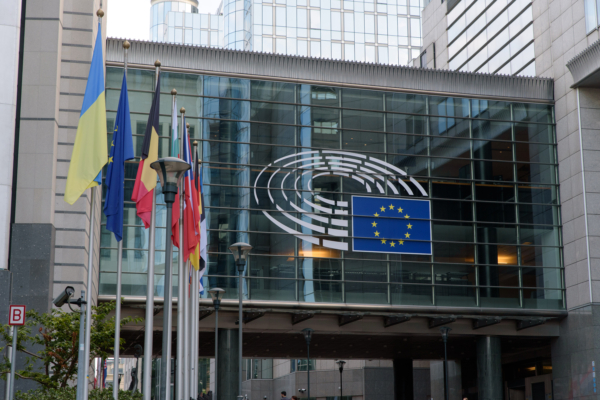
The escalating trade tensions between Europe and China have been a topic of concern, with the European Commission stating recently that the current trade and investment relationship between the two sides is unsustainable.
Last week, the European Commission, responsible for trade affairs within the European Union, held a closed-door meeting with senior officials to discuss the next steps in dealing with China. Following the meeting, the Commission issued a statement saying that while both sides will continue to engage in contacts and dialogues, the current trade and investment relationship is unsustainable.
The European Commission publicly announced its intention to take “stronger, more forceful, and consistent response measures.”
According to a report by Bloomberg on June 3, insiders revealed that attendees of the meeting included commissioners responsible for various policy areas within the EU, all of whom agreed on the need to make the European public aware that trade tensions with China could worsen. The EU is reportedly preparing to warn citizens and businesses about the possibility of a trade war with China, considering new restrictive measures to reshape the imbalanced economic relationship between the two sides, while also being aware of potential retaliatory actions by the Chinese government.
Many politicians, policymakers, and intellectuals in the EU have shown a rare unity in their stance, suggesting that the EU may be at a disadvantage if it fails to swiftly transform, enhance industrial competitiveness, and establish a modern defense foundation.
Currently, the EU is studying new policy tools to address China’s “improper state subsidies” and the issue of overcapacity in Chinese production.
The Chinese government has denied the accusations, asserting that their subsidy policies comply with World Trade Organization (WTO) rules. During a recent routine press briefing by the Ministry of Foreign Affairs, a Chinese foreign spokesperson stated that the EU’s measures were aimed at aligning with the US to restrict China’s access to high-end chips and other key technological products.
Former Director-General of the EU Directorate-General for Trade (DG TRADE) Sabine Weyand, who stepped down at the end of May, emphasized in her farewell speech to the European Parliament the need for the EU to announce new measures to address China’s macroeconomic imbalances.
Weyand pointed out that China’s share of global industrial production is expected to rise from the current 30% to 45% by 2030, while its consumption share remains around 13%. She stressed that this imbalance is unacceptable to the world, calling for the EU to use its existing trade tools in a coherent and consistent manner.
Weyand also criticized the Comprehensive Agreement on Investment (CAI) between China and the EU, negotiated over seven years and completed at the end of 2020. She likened it to “expired food in the fridge,” highlighting issues related to human rights abuses in Xinjiang, inadequate protection of labor rights, and subsequent mutual sanctions that led to the indefinite suspension of the agreement by the European Parliament in 2021.
Recently, the Chinese government has engaged in discussions with EU leaders and proposed the possibility of restarting the agreement. Additionally, China has suggested initiating negotiations for a free trade agreement with the EU.
However, EU officials, including Finnish Foreign Minister Elina Valtonen, have expressed concerns that China’s close relationship with Russia could be a hindrance to reaching a potential agreement.
Speaking at the UBS Asian Investment Conference in Hong Kong at the end of May, former US senior diplomat and current visiting professor at the European Academy, Michael Koplovsky, noted a shift in European attitudes towards China.
Koplovsky remarked that a few years ago, China was widely seen as a partner, and a crucial market for European goods.
Now, however, Europeans are becoming more skeptical and cautious of China. With the EU taking actions to promote trade diversification and considering robust measures to protect domestic industries from Chinese competition, Chinese companies may face stricter scrutiny in the EU market.
Koplovsky attributed this shift in perception partly to China’s rapid expansion in strategic areas such as solar energy, wind power, batteries, and electric vehicles. Chinese enterprises in these sectors now pose challenges to European industries.