
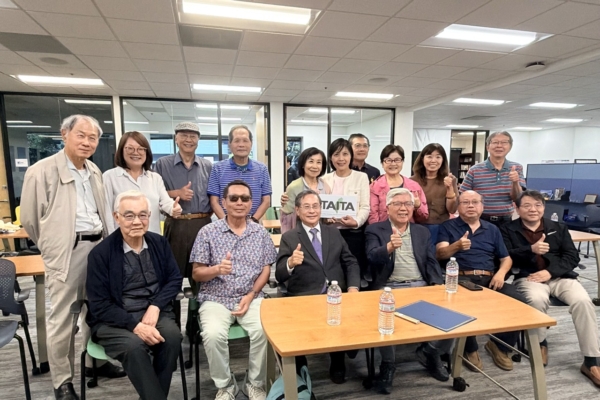
Silicon Valley Taiwan-American Industry Technology Association (TAITA-SV) held a seminar on “The Key to Taiwan’s Biomedical Industry Development: 13579 and Investment Strategies” at the Industrial Technology Research Institute (ITRI) in San Jose on June 18 (last Thursday). The seminar invited former Minister of Health, Chairman of the Development Center for Biotechnology (DCB), Tu Hsing-che as the keynote speaker to share insights on the trends, innovative research and development capabilities, precision medicine development, and investment strategies in Taiwan’s biomedical industry as it aims to expand into the international market.
President of TAITA-SV, Liu Jia-ning, mentioned that Tu Hsing-che, with a background in medicine, public health, and policy, can analyze the challenges and opportunities faced by Taiwan’s biomedical industry from a macro perspective. The aim of the seminar was not to provide investment advice directly but to help participants understand the long-term investment and high-risk nature of the biotech industry. They discussed how Taiwan can support quality teams through the concept of a “national team” and investment portfolios to promote areas such as CDMO, precision medicine, and preventative healthcare management, seeking the next wave of growth engines for Taiwan.
Tu Hsing-che expressed to the Epoch Times that his visit to Silicon Valley aimed to inform Taiwanese expatriates about the current state and challenges of Taiwan’s biomedical industry. He highlighted the spirit of investment and risk-taking ethos of Silicon Valley, which he believes can be brought back to Taiwan to help the biomedical industry flourish and become a beacon for the nation. He also welcomed individuals from Silicon Valley with experience in research and investment to collaborate with Taiwan’s biotech centers and facilitate more industry connections through a single-window mechanism.
During the seminar, Tu Hsing-che used the term “key code 13579” to illustrate potential directions for the government’s promotion of the biomedical industry, including establishing a major biotech company, focusing on innovative research and development, setting up a biomedical national team fund, bringing in licensed production and manufacturing capabilities, and advancing Taiwan’s biomedical industry through various innovative and transformative strategies.
He also referenced the “Smart Healthcare Integration with Health Care” direction in the “Healthy Taiwan Policy,” pointing out that Taiwan possesses world-leading ICT industries. If Taiwan can integrate medical, biotech, and information and communication technology in the future, it will not only enhance public health but also strengthen the development of the healthcare industry, positioning the biomedical industry as a trillion-dollar industry for Taiwan’s future.
Moreover, Tu Hsing-che addressed Taiwan’s health insurance and long-term care reform. He mentioned that health insurance reform could move towards a “family responsibility physician system” and value-based payment models to prioritize the health maintenance by doctors rather than relying primarily on the volume of disease treatments for income.
Regarding investment strategies, Tu Hsing-che proposed a “multilayered diversified investment portfolio strategy.” He emphasized that investing in the biomedical industry carries high risks and a longer growth period, requiring private funds to fully comprehend the industry’s characteristics before investing. By selecting targets through a professional team and using the Venture Studio approach, investors can potentially increase return on investments. Additionally, through a multilayered and diversified investment approach, the risk of single investments can be mitigated, providing a sense of security for investors participating in the development of the biomedical industry.