
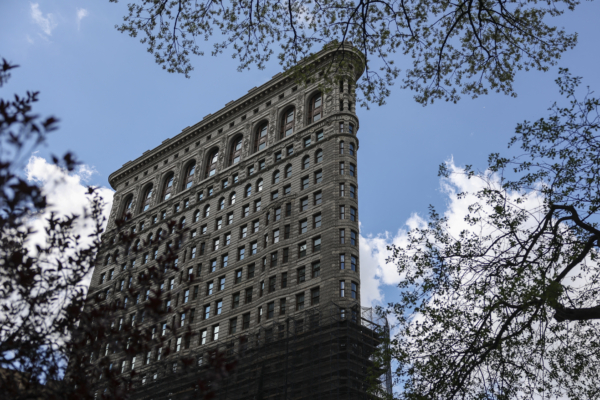
With the explosive growth of the artificial intelligence (AI) industry, top office buildings in Manhattan, New York, have become the battleground for these tech newcomers. Recent industry data shows that AI companies are taking over Manhattan, transforming from niche tenants in the past to becoming the core engine supporting the revival of New York’s commercial real estate market.
In early June of this year alone, AI company Altana made a significant move by signing a lease for an office space in Midtown Manhattan covering a whopping 62,000 square feet, three times the size of its current office in Williamsburg. Prior to that, another AI startup Sierra secured a 94,000-square-foot office space on East 26th Street, while AI video generation company Synthesia completed a lease deal for 50,000 square feet in the Flatiron District.
Leading real estate services firm Cushman & Wakefield revealed staggering statistics: in just the first quarter of 2026, AI companies in New York City signed leases totaling a massive 1 million square feet. This indicates that the leasing activity in the first three months of this year alone has surpassed the total for the entire previous year.
Real estate analysts point out that New York City is solidifying its position as one of the world’s top three AI hubs, behind only the San Francisco Bay Area and surpassing London, UK.
This frenzy of office space grabbing is injecting new vitality into the core area of Midtown Manhattan, which had been quiet due to remote work during the pandemic. Data shows that in the past year, 90% of New York’s AI leasing activities were for new leases rather than renewals, indicating a substantial new demand in the market. Currently, the most active leasing areas are concentrated in the southern part of Midtown Manhattan, especially around Madison Square, the Flatiron District, Union Square, as well as the World Trade Center vicinity and Chelsea.
Currently, the two largest AI tenants in New York City are Harvey AI and Palantir, occupying massive office spaces of 219,000 and 206,000 square feet, respectively.
A report released by JLL in May shows that New York City is home to nearly 1,100 AI startups, with the median salary for local AI company positions reaching $155,000.
However, this tech boom is not without concerns. New York City Comptroller Mark Levine issued a forward-looking warning in an official report in May, metaphorically describing the situation as “a freight train approaching on the tracks.”
The Comptroller’s office outlined two starkly different prediction scenarios.
The optimistic, mainstream view suggests that New York will steadily move towards an AI-driven economy, adding tens of thousands of private sector jobs each year over the next five years, creating over 260,000 high-paying jobs in total, which will significantly boost the city’s revenue.
The pessimistic outlook warns that if the adoption rate of AI, productivity returns, and corporate profits fall short of market expectations, this surge could quickly collapse. It may lead to a stock market crash, causing the loss of tens of thousands of private sector jobs in New York within a year.
Additionally, commercial real estate data company CoStar presents another viewpoint: if the widespread adoption of AI significantly boosts employee productivity, companies may end up hiring fewer people; “when you have fewer people, the demand for office space naturally shrinks,” this economic paradox is making many real estate analysts cautious about the long-term growth of commercial real estate.
Real estate experts caution that the influx of high-paid AI newcomers may further exacerbate New York’s already severe housing crisis in the future, driving up property prices and rents in the five boroughs and gradually squeezing out ordinary citizens from the market.