
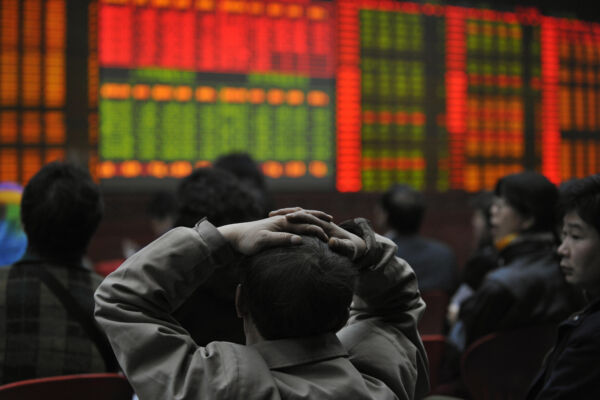
An increasing number of Chinese investors are turning to overseas stock markets, with an estimated total of $1 trillion bypassing Chinese government regulations and flowing out last year, sparking concerns about controlling capital outflows. In order to curb these outflows, the Chinese government has recently launched a comprehensive crackdown on offshore trading platforms like Futu and Tiger Brokers, causing anxiety among brokerages and investors and potentially reshaping how Chinese people enter overseas markets.
For decades, the Chinese government has strictly limited capital outflows, allowing individuals to only purchase $50,000 USD each year for purposes such as overseas travel, education, and other non-investment uses. Chinese citizens and businesses looking to exchange foreign currency for overseas stock market trading can only do so through strictly regulated channels like the Shanghai-Hong Kong Stock Connect and Shenzhen-Hong Kong Stock Connect or the Qualified Domestic Institutional Investor (QDII) program. Retail investors can also directly invest in some Hong Kong-listed stocks through mutual recognition mechanisms between the mainland and Hong Kong. Any other overseas transactions not approved by the China Securities Regulatory Commission and other authorities are considered illegal.
Since 2022, the Chinese government has prohibited unauthorized overseas brokerages from assisting mainland Chinese investors in opening new trading accounts. On May 22 this year, Chinese authorities charged Hong Kong-based Futu Securities and CNEX Securities, as well as Singapore-based Tiger Securities, three of the largest and most active brokerages, with operating in mainland China without proper licenses, imposing a total fine of $330 million USD and confiscating all “illegal proceeds.”
This means that existing mainland clients of these brokerages can only liquidate their positions and withdraw funds, and are not permitted to make any new purchases or deposits. Additionally, all related websites, applications, and servers targeting the mainland must be completely shut down within two years. Currently, only Chinese citizens holding permanent residency in Hong Kong and Singapore, as well as those with investment or work visas, are exempt from forced liquidation.
An index compiled by Bloomberg shows that the amount of capital fleeing China to evade capital control measures reached an estimated $1.04 trillion USD last year, setting a record high since data collection began in 2006, causing panic within the Chinese government.
Chinese authorities argue that these brokerage platforms have weakened the central bank’s ability to monitor transactions effectively, leading to difficulties in detecting illegal activities such as money laundering or fraud, or protecting investors.
While cracking down on offshore brokerage platforms, the Chinese government is also making efforts to encourage capital to flow back into the domestic market. In 2025, Chinese authorities initiated a large-scale taxation campaign targeting overseas capital gains and other foreign income.
Despite the Chinese government’s strong measures to prevent overseas brokerages from soliciting mainland investors since 2022, they have been unable to halt the trend of private capital outflows. To transfer wealth abroad, Chinese individuals have been exploring various channels. Those transferring small amounts of funds often utilize their annual $50,000 USD forex quota. For larger transfers, they may employ underground banks that are seemingly impervious to crackdowns by the Chinese government (even in recent nationwide operations that shut down over a hundred underground banks).
Regardless of the method, these fund transfers usually involve cross-border fund matching: individuals pay Chinese yuan to local brokerages, while their overseas partners provide an equivalent amount in foreign currency, bypassing the domestic banking system. Another method involves purchasing insurance policies issued by Hong Kong companies in Chinese yuan, then canceling the policies to receive refunds in foreign currency.
The immediate impact of the Chinese government’s recent crackdown is evident. After the measures were announced on May 22, the stock price of Futu Securities in New York plummeted by 28%. The parent company of Tiger Securities, UP Fintech Holding, also saw its stock price drop by over a quarter. According to Bloomberg Billionaires Index, Futu Securities’ founder and CEO Li Yip saw his fortune shrink from $17 billion to $4.7 billion USD within a day.
Chinese companies listed in New York as American Depositary Receipts (ADRs) are also under pressure, with the Nasdaq Golden Dragon China Index falling after the news was released. As mainland investors often rely on unofficial channels to purchase stocks of companies like TAL Education Group and Pinduoduo Holdings that are not listed in Hong Kong, ADRs that are not listed in Hong Kong could be particularly vulnerable. On the other hand, many large Chinese companies, including Alibaba Group, are listed in Hong Kong and can be traded through mechanisms like the Shanghai-Hong Kong Stock Connect.
Bloomberg reports that the Chinese government’s recent crackdown may increase the pressure for Chinese companies listed in the United States to consider relocating internally, while its impact on the Hong Kong stock market might be minimal. China International Capital Corporation estimates that mainland investors hold approximately HK$200 billion to HK$250 billion worth of Hong Kong assets through trading applications like Futu and Tiger Securities, with only a small portion being stock investments. In comparison, the daily trading volume on the Hong Kong stock market is around HK$260 billion.