
On the 4th anniversary of the Russia-Ukraine war on Tuesday, Ukrainian President Zelensky delivered a speech to the nation, emphasizing Ukraine’s successful defense of its independence and vowing not to betray the sacrifices of the people on territorial issues.
Despite Russia still controlling parts of the territory, recent analysis shows that Russian forces only managed to secure around 0.8% of Ukraine’s land in 2025, as the conflict reaches a stalemate characterized by high-tech attrition.
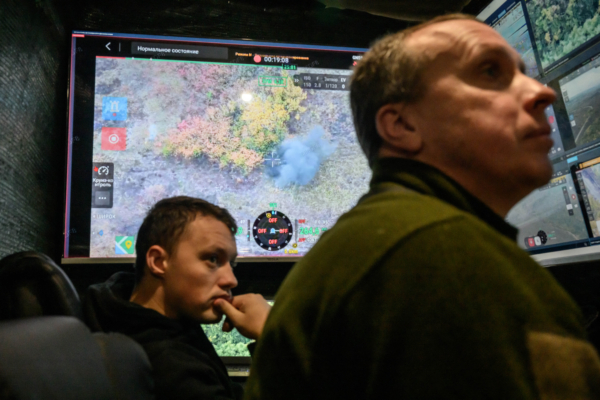
As the war enters its fifth year, the cheap and precise use of “First Person View” (FPV) drones now dominates the skies, fundamentally changing the nature of combat.
According to a research report released this month by the French Institute of International Relations (IFRI), casualties from drones have skyrocketed from less than 10% in 2022 to 80% last year.
This shift in technology has brought about brutal medical challenges. With drones monitoring supply routes around the clock, rescue vehicles struggle to approach the front lines, leading to an average evacuation time of over three days for wounded soldiers.
Colonel Viacheslav Kurinnyi, the chief of the military hospital in Kharkiv, warns that this means the crucial “golden hour” in battlefield medicine no longer exists. He emphasizes that any country preparing for war must recognize that there will no longer be a “golden hour,” and at best, maybe a “golden day.”
On the political front, peace talks mediated by the United States have stalled due to territorial issues. Moscow insists that Ukraine must cede the final 20% of land in the Donetsk region, a demand firmly rejected by Kyiv in exchange for peace.
Zelensky affirmed in his speech, “Putin has not achieved his goal. He has not defeated the Ukrainian people, nor has he won this war.”
He urged negotiators, “Do not let the efforts of these years go to waste, do not diminish all the struggles, courage, dignity, and everything Ukraine has gone through.”
While the frontline progresses slowly, Ukrainian civilians endure immense suffering. Russia’s systematic bombing of Ukraine’s energy infrastructure, also known as the “Kholodomor” strategy, has left over a million Ukrainians facing water and power shortages in temperatures below -20°C.
To break the stalemate, Ukrainian Defense Minister Fedorov has set a new strategic goal to eliminate 50,000 Russian troops monthly, aiming to force Russia into politically risky mobilization or back to the negotiating table through high casualties. Currently, Ukraine claims to cause 35,000 Russian casualties monthly.
However, the Ukrainian military itself faces severe challenges, with Fedorov admitting that 200,000 soldiers have gone AWOL due to the intense pressure on the front lines.
Currently, Ukraine relies on intelligence and military aid from Western allies to maintain resilience. However, without significant technological breakthroughs, the outcome of this conflict, the most devastating in Europe since World War II, remains uncertain in the short term.