
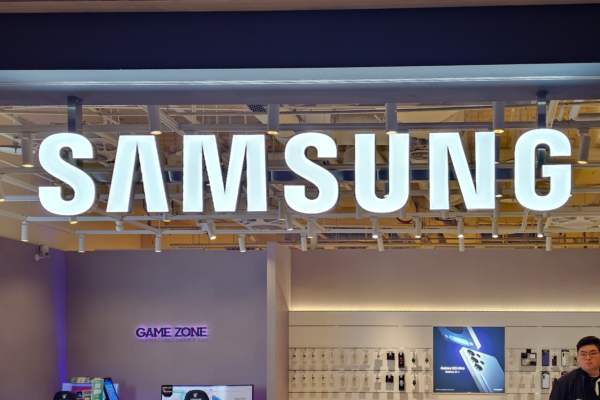
Samsung Electronics’ official WeChat account used to release promotional content for household appliances in mainland China was recently found to have entered a self-initiated cancellation freeze period, with the account’s functions disabled and unable to be directly searched on WeChat.
According to a report by “Daily Economic News” on June 23, netizens discovered that Samsung Electronics’ official WeChat account is currently in a frozen state. The account’s information previously stated, “This public account has entered a self-initiated cancellation freeze period, and its functions are unusable.”
Chinese media reporters searched for “Samsung Electronics” and found that the official service number of “Samsung Official” and the official public account of “China Samsung” are still being updated normally. The Samsung Electronics WeChat account that entered the cancellation freeze period had been consistently publishing promotional articles for Samsung household appliances.
The news of Samsung Electronics withdrawing from the mainland China market first appeared in May. On May 6, Samsung Electronics announced on its official website that in response to changes in the market environment, the company decided to stop selling all household appliances in the mainland China market, including televisions and displays.
According to previous reports by “Daily Economic News,” the products Samsung stopped selling include televisions, displays, large commercial displays, air conditioners, refrigerators, washing machines, dryers, washer-dryer combos, garment care machines, audio systems, projectors, vacuum cleaners, and air purifiers. Samsung stated that mobile phone products are still being sold normally, and for users who have purchased Samsung household appliances, the company will continue to provide after-sales service.
“Daily Economic News” also cited a report by The Paper, stating that Samsung’s China region had undergone strategic adjustments. After the adjustment, the China region may only retain complete organizational units for the two core businesses of mobile phones and storage, with the possibility of integration or withdrawal for other business segments. An insider mentioned that the relevant adjustments had been approved at the headquarters level, but had not been officially announced at that time. The person also indicated that Samsung’s white goods had previously faded out of the Chinese market, colored TVs were also going to exit, and the display business was affected by the reorganization as it belonged to the same department as the consumer electronics.
Public records show that Samsung Electronics entered the Chinese market in 1992 and established factories, initially entering the market for colored TVs, refrigerators, washing machines, etc., with a high-end foreign brand image. According to “Daily Economic News,” in 2005, Samsung’s colored TVs had a market share close to 20% in the Chinese market, once ranking first in the industry. However, as the competitive landscape in the mainland home appliance market changed, Samsung’s share in the Chinese market continued to decline.
According to a report by “New Express” on May 8, data from the big data technology company AVC Cloud Network showed that as of the first quarter of 2026, Samsung’s offline sales market share in the mainland Chinese colored TV market had dropped to only 3.62%; in the refrigerator and washing machine markets, the market share was 0.41% and 0.38% respectively. In the TV market, in 2025, the combined shipments of Samsung, Sony, Philips, and Sharp, four foreign brands in mainland China, were less than 1 million units.
The report also mentioned that foreign home appliance brands have been continuously “declining” in the Chinese market in recent years. Toshiba’s TV business was sold to Hisense, Sharp was acquired by Foxconn, Whirlpool’s Chinese business was acquired by Galanz, Panasonic’s TV business was operated by Skyworth, and Sony’s TV business established a joint venture with TCL.