
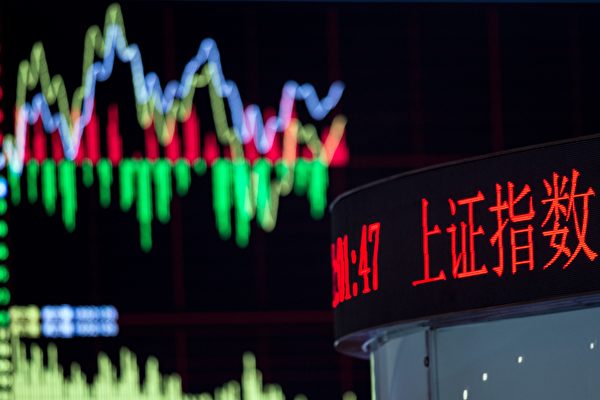
On June 23, the main A-share indexes experienced a significant drop. The ChiNext Index opened low and continued to decline throughout the day, with the largest intraday drop exceeding 4%. The total trading volume of the Shanghai and Shenzhen markets shrank by nearly 300 billion yuan compared to the previous day.
By the end of the trading day, the Shanghai Composite Index fell by 1.37% to close at 4106.25 points, the Shenzhen Component Index dropped by 3.17% to 15854.20 points, and the ChiNext Index decreased by 3.84% to 4192.19 points. The STAR 50 Index also fell by 1.68%, while the CSI 300 Index, representing the Shanghai and Shenzhen stocks, experienced a 2.77% decline, marking the largest single-day drop in nearly three months. Trading activity remained active for the Huaxia CSI 300 ETF (510330).
The total turnover of the Shanghai and Shenzhen markets amounted to 3.44 trillion yuan, a decrease of 296.5 billion yuan from the previous trading day. Specifically, the Shanghai market turnover was 1.5945 trillion yuan, down by 109.5 billion yuan from the previous trading day, while the Shenzhen market turnover was 1.8462 trillion yuan.
In terms of sectors, the pharmaceutical sector showed strength against the market trend, with active performance in the humanoid robot concept and continued strength in the phosphorus chemistry sector. On the other hand, the non-ferrous metal sector experienced volatile adjustments, while the PCB and CPO concepts led the decline.
According to Wind data, by the end of the trading day, there were 29 stocks with a net outflow of over 1 billion yuan, all recording significant declines, mainly from the technology and non-ferrous metal sectors. Stocks such as Industrial Fulian, Zhaoyi Innovation, Trina Solar, Changdian Technology, Shenghong Technology, Lanqi Technology, CATL, Northern Rare Earth, Shengyi Technology, and Zhijia Xuchuang had net outflows exceeding 2 billion yuan.
The fluctuations in the A-share market on June 23 sparked various discussions on Weibo.
Netizens commented, “Today’s market is too fragmented, with all three major indexes falling sharply, ChiNext down by nearly 4%, trading volume decreasing by nearly 300 billion yuan, and funds clearly adopting a wait-and-see approach. Previously soaring sectors like non-ferrous metals and PCBs collectively collapsed, with many stocks hitting the limit down and profit-taking frenzy.”
“Technology stocks are being hammered, while funds are flocking to banks and pharmaceuticals for safety. Today’s market style has undergone an extreme switch, with previously hot technology sectors experiencing concentrated fund withdrawals, and undervalued sectors like banks and pharmaceuticals showing strength in a risk-averse market sentiment.”
Chen Hongbing, Chairman of Anhui Meitong Asset Management Co., Ltd., shared on social media, “As of today this year, the median stock decline is 10%, more tumultuous than last year.”
Analysts believe that the A-share adjustment was mainly influenced by three factors, including the surge in US bond yields putting pressure on the valuation of growth stocks, the concentration of profit-taking in the AI sector accumulated over time, and the downward trend in the Asia-Pacific stock markets causing a ripple effect.