
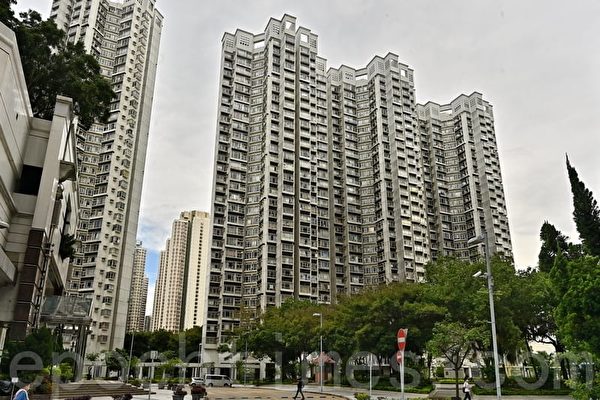
Guangzhou, Guangdong Province recently introduced the “Guangzhou Eight Articles” to promote the real estate market, initiating a pilot program led by the municipal state-owned enterprise “Guangzhou Anju Group” to acquire second-hand houses and support residents in the “selling old to buy new” policy aimed at reducing inventory. However, this new policy has sparked strong public skepticism after the detailed information was released.
The “Guangzhou Eight Articles” introduced at the end of last month in Guangzhou aimed to promote the real estate market, including subsidies for “selling old to buy new” and other new measures.
According to the press conference held by the Guangzhou municipal government on May 26, Guangzhou Anju Group will launch the pilot program for “selling old to buy new.” The acquisition targets are limited to second-hand residential properties within the Guangzhou ring expressway, with a construction area of less than 70 square meters and a total price within 3 million yuan (RMB), with no restriction on the age of the building.
The acquisition price will be determined through negotiations based on the market transaction price. Participating residents are required to purchase newly built residential properties within Guangzhou within 180 days after the transaction is completed, and the policy will be implemented until December 31, 2026. Furthermore, the government has provided a subsidy of up to 30,000 yuan for home purchases.
Despite the policy’s intention to stimulate the housing market, there have been objections raised by the public and online communities.
A verified user on Weibo, “Yao Mohe,” expressed disagreement, stating that this approach in Guangzhou is a direct intervention in the real estate market under the guise of supporting it, which cannot be supported. Any procurement personnel within an organization are the most prone to problems. For assets like second-hand houses with highly uncertain and fragmented pricing, it is unclear how to reasonably price them during the acquisition, making it easy for irregularities to occur, especially involving public funds.
“Yao Mohe” believes that government involvement as a market player directly participating in market activities has never yielded good results, using the example of state-owned investment companies reaping minimal benefits. Instead of using taxpayers’ money to make market purchases, it would be better to focus on improving the business environment, establishing market rules, guiding fund allocations, and enhancing supervision.
Weibo user and real estate blogger “Chengdu House Stories,” with 177,000 followers, raised two objections in a post:
Firstly, the new policy requires homeowners to purchase a new home within 180 days of selling their current property. After managing to cash out, homeowners are now burdened with more financial leverage.
Secondly, selling a property is not always smooth sailing for homeowners. For instance, if a designated evaluation company determines the pricing, would this lead to severely undervalued prices? If multiple properties within a neighborhood are evaluated simultaneously, would this directly impact the overall price of the entire property or even the neighborhood?
Additionally, all costs (evaluation fees of over 2,000 yuan?) must be borne by homeowners before signing the contract, and all outstanding loans must be settled in advance.
Internet users have also joined in to criticize the policy. One netizen from Guangdong remarked that their small property may only sell for around 700,000 yuan, but questioned, “Where in Guangzhou can you buy a new home for that amount?”
Another netizen sarcastically commented, “Low-price acquisitions with the condition of buying a new home within a time limit, it seems the ones benefiting the most are the speculators.” They pondered, “How is this different from indirectly issuing housing vouchers?”
User “Cuogabaihe” commented: “It seems Guangzhou is heading for trouble.”