
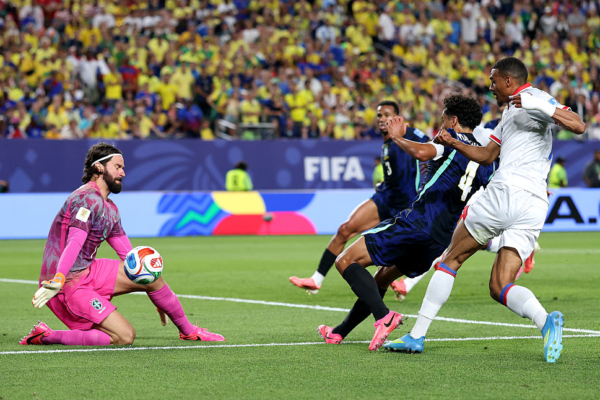
In the 2026 World Cup group stage of the United States, Canada, and Mexico, Haiti has lost both of their matches, which is not surprising at all. Haiti is not only one of the poorest countries in the world but also one of the most unstable countries today; yet, this country has managed to qualify for the World Cup.
Located in the southeast of Cuba in the Caribbean Sea, Haiti has a population of about 12 million. It is the poorest country in the Western Hemisphere and one of the least developed countries globally. According to the Human Development Index released by the United Nations Development Program in 2023, Haiti ranked 166th out of 193 countries.
Haiti has long experienced political instability and worsening security. Since the assassination of the then President Jovenel Moise in 2021, the country has plunged further into turmoil. Currently, much of the capital city, Port-au-Prince, remains under the control of powerful gang alliances.
Armed conflicts between gangs and the Haitian police and international forces, as well as conflicts among different gang factions, have led to the most severe refugee crisis in Haitian history. According to the latest data from the UN’s International Organization for Migration in June 2026, the number of displaced people in Haiti has soared to a record 1.5 million, with over 300,000 people in Port-au-Prince homeless. The UN report estimates that over 5.83 million people in Haiti are facing “severe food insecurity”.
In a country where even basic personal security is not guaranteed, and access to food and water is a luxury, how is it possible for a national football team to qualify for the World Cup?
In 2024, the Haitian Football Federation (FHF) hired a French head coach, Sébastien Migné, with extensive coaching experience in African countries. Migné had previously served as an assistant coach for the Cameroon national team and as head coach for national teams like the Democratic Republic of Congo and Equatorial Guinea. He also led the Kenyan national team to qualify for the Africa Cup of Nations after 15 years.
Understanding the turmoil in Haiti, Migné never set foot in Haiti after taking charge but first played a role of a “remote coach”. He maintained contact with local football association staff in Haiti through phone calls to gather information on local players and relied on video footage and data for tactical analysis.
Subsequently, Migné turned his focus to Haitian-born or dual-nationality players playing in Europe, including Jean-Ricner Bellegarde of the English Premier League’s Wolverhampton Wanderers and Hannes Delcroix of Switzerland’s FC Lugano. Migné himself acted as a full-time “persuader”, traveling frequently, holding video calls and persuading players’ families, ultimately creating a competitive “overseas legion”.
However, the situation in Haiti made it impossible to hold any matches. So, Migné led this legion to the Caribbean island of Curaçao, 800 kilometers away from Haiti, for training and matches.
Migné implemented strict discipline and emphasized high-intensity pressing and quick counterattacks, enabling the Haitian national team to maintain a high winning rate throughout the qualifying stages. Placed in a fiercely competitive group in the crucial third round of the group stage, Haiti faced traditional Central American powerhouses like Costa Rica and strong opponents like Nicaragua. The Haitian team unleashed their full firepower, securing decisive victories in key matches and ultimately progressing as group winners.
Additionally, the restructure by FIFA expanded the final round to 48 teams, and the joint hosting by the US, Canada, and Mexico meant that the “traditional big three” of North America automatically qualified, not using up qualifying slots. This provided a rare opportunity for the teams in the Caribbean region.
With the head coach never setting foot in the country and the national team never playing a true home match, Haiti has made a return to the World Cup after 52 years (Haiti first qualified in 1974).
While Haiti has not scored a goal in the current World Cup group stage, just being on the international stage is already a miracle.