
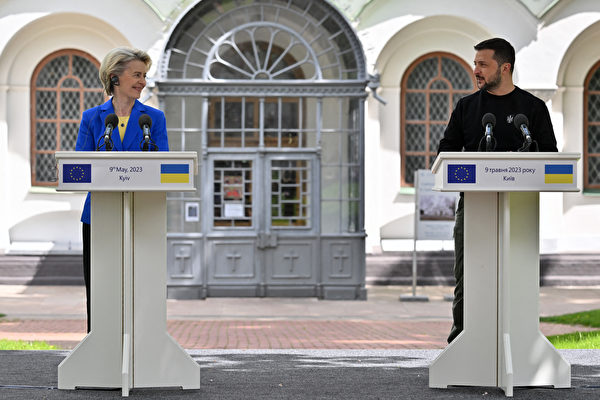
On Friday evening, the 27 member states of the European Union reached an agreement allowing Ukraine and Moldova to formally launch their first accession negotiation group, known as the “basic negotiations”.
Previously, Hungary lifted its two-year veto, which had been hindering the negotiation process.
Ambassadors from various countries in Brussels reached an agreement on Friday evening, endorsing a common position to move forward with the next stage of negotiations.
This position includes a roadmap on the rule of law and an action plan on minority rights, which has been a major point of contention between Hungary and Ukraine. The action plan has been revised based on the outcomes of negotiations between the two parties.
The formal process of joining the EU will take place next Monday in Luxembourg, where the EU will hold government-to-government meetings with the two candidate countries.
In a joint statement, the President of the European Commission, Ursula von der Leyen, and the President of the European Council, Antonio Costa, expressed that all member states agreed to start the first accession negotiation group with Ukraine and Moldova.
The statement said, “This reflects the determination, courage, and hard work shown by both countries in advancing reforms, despite facing significant challenges, they remain steadfast.”
“The enlargement of the EU is a strategic choice. By bringing us closer together, we will strengthen peace, security, and prosperity across the entire European continent,” the statement added.
The path to EU accession consists of six main clusters and 33 chapters.
The first cluster is named “Fundamentals”, covering the rule of law, human rights, and judiciary systems. This marks the beginning of the complex process of joining the EU.
Ukraine aims to open all clusters this summer, demonstrating to the war-torn population that EU membership is within reach.
Taras Kachka, Deputy Prime Minister of Ukraine in charge of European integration, expressed gratitude for the support and unity of all EU member states, announcing that Ukraine expects to open several clusters soon.
The European Commission and several member states support this ambitious goal. The current chair of the EU Council, Cyprus, aims to open another cluster by the end of this month.
A senior EU diplomat emphasized the importance of Ukraine opening other clusters quickly, stating, “Despite facing many challenges, maintaining progress in reforms is crucial because ultimately, this is the best guarantee for a smooth and rapid accession to the EU.”
However, the opening of the first cluster does not mean that Ukraine’s accession process will accelerate to compensate for the two years lost due to Hungary’s veto.
Member states aim to preserve the integrity and credibility of negotiations, with discussions based on capabilities and avoiding experimental measures such as the “quasi-membership status” proposed recently by the German Chancellor.