
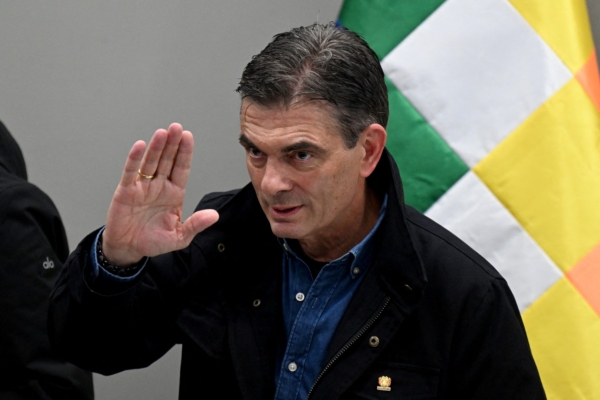
Bolivia’s situation remains volatile despite ongoing turmoil. After anti-government protesters blocked major roads for 50 days, resulting in at least 14 deaths, President Rodrigo Paz declared a state of emergency on Saturday, June 20th. This authorized the deployment of military and police forces to remove roadblocks across the country to restore traffic and supply lines.
According to reports from Reuters, Paz stated in a televised address early that day that the current roadblocks were no longer just social protests but organized attempts to undermine Bolivia’s democratic system. He emphasized that the government had to take action as continuing to stand by would be irresponsible.
Paz stressed that the state of emergency would allow the military to participate in maintaining order over a wider area, and anyone disrupting traffic and supply chains would face legal consequences. He said this move aimed to “give freedom back to the people” and free the country from road blockades that used political conflict to harm public interests.
Following the state of emergency declaration, police and military forces began clearing blockades in various areas on the morning of the 20th. Defense Minister Ernesto Justiniano reported that by the afternoon, several major roadblocks had been removed, with traffic and daily life gradually returning to normal in some regions.
In the outskirts of El Alto, clashes erupted between residents both in support and against the roadblocks as government bulldozers cleared the roads. While some welcomed the restoration of traffic, others, including protesters, pledged to continue their blockades in a fight for their livelihoods and family interests.
Before the state of emergency was declared, the Bolivian Congress had abolished laws restricting the executive branch from issuing emergency orders in May, clearing legal obstacles for the government to use emergency powers.
Under legal procedures, the president must notify Congress within 24 hours of the state of emergency declaration, and Congress must decide within 72 hours whether to approve or reject the order.
Opposition party “Alianza Libre” lawmakers like Lissa Claros expressed the necessity of government action but criticized the timing, citing the weeks-long conflict that had already resulted in multiple deaths. Senator José Manuel Ormachea pledged support for the government’s emergency decree.
However, some opposition lawmakers and legal experts cautioned that if the government failed to address the underlying issues causing the protests, expanding emergency powers could further escalate societal tensions.
The protests, largely led by organizations supporting former President Evo Morales, blocked major highways nationwide, causing significant disruptions to food, fuel, and medical supplies. The capital La Paz and nearby cities, especially El Alto, were severely affected.
Paz accused Morales of inciting unrest, but Morales denied these allegations in a recent Reuters interview, attributing the current wave of protests to economic hardship and calling it an “indigenous uprising,” while urging early elections.
Just hours before Paz declared the state of emergency, the government had reached an agreement with Bolivia’s largest labor organization, the Central Obrera Boliviana (COB), to ease tensions. However, rural organizations controlling several key roads did not participate in negotiations and continue to protest in places like Cochabamba.
After Bolivia announced the state of emergency, U.S. State Department officials stated their support for the Bolivian government’s measures to restore social order, believing that keeping traffic flowing smoothly would help ensure the supply of food, medicine, and other essentials.
Paz is generally seen as a center-right political figure advocating for market-oriented reforms, attracting foreign investment, and improving the business environment. He won the 2025 election and became president, ending the left-wing “Movement for Socialism” party’s nearly 20-year rule since 2006.