
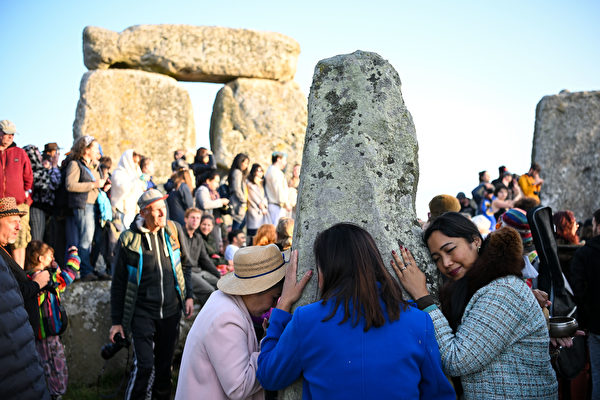
In a new study, the origin of the “Altar Stone” in the center of the Stonehenge monument in the UK has been revealed. This massive stone, weighing six tons, is believed to have come from the northeast of Scotland, about 700 kilometers away. Despite the assistance of glaciers in transportation, it would still have required human effort to move it hundreds of kilometers.
The ancient and enigmatic Stonehenge has stood in the south of England for five thousand years, baffling researchers and historians about its builders and purpose.
A research team from Curtin University in Australia reconstructed the possible transportation route of the stones and concluded that the society at the time had highly organized capabilities and engineering skills. By analyzing mineral grains and simulating glacier movements, they were able to estimate the source of the stones and test whether glaciers could have transported them southward.
The study ruled out glaciers as the sole means of transporting the stones and supported the theory that humans were involved in the process.
Co-first author of the study, Anthony Clarke, stated that the research findings indicate that the transportation journey was not easy, requiring careful planning through multiple stages. He said, “Rather than these stones being naturally transported by glaciers, the evidence points to deliberate and carefully planned movements that traversed difficult terrain and complex conditions.”
The researchers found that no glacier pathway connected the source of the stones to Stonehenge.
According to the models, glaciers might have transported the rocks a certain distance during the last ice age, possibly reaching as far as the Dogger Bank in the North Sea but not extending into southern England. This further confirms the conclusion that human transportation was necessary.
The study suggests that the stones were likely transported in stages, with some portions dragged over land while others may have been moved by river or sea. Additionally, the research indicates that past humans may have had a greater level of community organization and cooperation in the Neolithic era than previously thought.
Clarke emphasized the challenges of long-distance transportation of such massive stones, highlighting the need for planning, coordination, a deep understanding of the terrain, and immense perseverance. He suggested that combining geological analysis with computer modeling can help solve the long-standing mystery of how Stonehenge was constructed.
The giant stones of Stonehenge are primarily made of two types of rock: locally sourced sarsen sandstone and bluestones, arranged in a horseshoe shape within the monument, sourced from Wales about 230 kilometers away.
The Altar Stone, also known as Stone 80, is the most unique stone in Stonehenge. Located at the center of the monument, it is topped by two fallen sarsen stones and is distinctly different in rock type from the other stones in the structure.
By analyzing tiny zircon crystals within the Altar Stone, Clarke discovered that they originated from the Orcadian Basin in the northeast end of Scotland, making it one of the furthest points from Stonehenge in the UK.
Subsequently, Clarke and geologist Christopher Kirkland analyzed the mineral characteristics of the Salisbury Plain, where Stonehenge is located, during the transportation period of the Altar Stone. They determined that the Salisbury Plain was not covered by glaciers during this time, meaning the stone could not have been directly deposited by glacier movement.
The study further clarified the source of the Altar Stone, with zircon crystal analysis suggesting the most likely origin as Caithness, located at the northernmost tip of Scotland.
The research team also conducted modeling analysis of the flow patterns of the British-Irish Ice Sheet during the Last Glacial Maximum around 27,000 years ago, aligning with previous studies that glaciers could not have transported stones from Caithness all the way to Salisbury.
However, glaciers may have partially transported the Altar Stone.
The study revealed that the Altar Stone could have moved on the surface of the glacier, reaching as far as the Dogger Bank region in the North Sea. While the area is now underwater, it was land during the Ice Age, effectively halving the distance to the Salisbury Plain, from approximately 700 kilometers to about 400 kilometers.
This research was a collaborative effort between experts from Sheffield Hallam University, University of Sheffield, Wessex Archaeology, and University of Bristol. The related study has been published in the Journal of Quaternary Science.
This article referenced reports from Curtin University and ScienceAlert.