
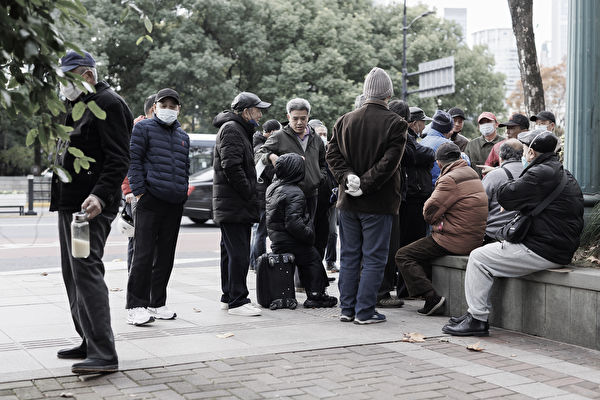
A report released on June 15 by the research team at Tsinghua University School of Economics and Management revealed that by the end of 2025, China’s population aged 60 and above reached 323.38 million, accounting for 23.0% of the total population; while the population aged 65 and above was 223.65 million, making up 15.9%. China has crossed the threshold into a moderately elderly society, entering a phase where the elderly population continues to expand.
This white paper titled “Silver Without Borders – A New Vision of Elderly Care Equity in Digital China” also indicated that the proportion of China’s population aged 65 and above has increased from 7% to 14% in just over 20 years, while it took the United States 71 years and France 115 years to reach similar levels. When China entered the stage of moderate elderly society, the per capita GDP was around $12,887, compared to about $39,934 for Japan and $54,973 for the United States at similar stages.
Social scientist Mr. Ke pointed out to reporters that these data illustrate the reality of China aging before becoming wealthy, and expose the long-standing shortfall in the Chinese Communist Party’s elderly care system. He remarked, “The Chinese Communist Party has historically poured a significant amount of financial resources into stability maintenance, infrastructure, and administrative systems, while severely neglecting investments in elderly care, nursing, and grassroots services. Premier Li Keqiang once mentioned the need to build more nursing homes and improve the elderly care system, but it seems to have been just empty talk. With the increasing number of elderly people, shrinking family sizes, and depleted pension funds, I wonder how they (the CCP) will cope with the growing number of retirees each year.”
The white paper presented several sets of data, indicating that in 2021, China had approximately 35 million elderly and partially disabled individuals, around 15 million elderly with dementia, and over 42 million elderly individuals; however, by 2024, the average occupancy rate of nursing institutions nationwide was less than 50%. Among the elderly willing to move into nursing homes, only 15.8% could afford monthly fees of 3000 yuan or more.
Ms. Zhang, currently residing in Canada, previously worked in elderly care management in Sichuan. She told reporters that the elderly care industry in China had developed to a certain scale between 2010 and 2018, but local governments saw the opportunity for profit and began intervening through various means, including acquiring privately operated nursing facilities.
She explained, “As a result, I had to close down the nursing home and immigrate to Canada. The inherent nature of Chinese officials and people vying for profit is difficult to change. Many nursing homes are now operating at a loss, and most privately operated nursing homes developed after 2010 have almost all closed down. However, government-funded nursing homes mainly cater to retired individuals within the system, leaving ordinary citizens neglected.”
Ms. Li, who works in the elderly care industry, mentioned that some nursing homes charged exorbitant fees and required several years’ worth of fees to be paid upfront, which was one of the reasons for low occupancy rates in nursing homes. She noted, “Some nursing homes have high fees and require a lump sum payment for 5 years, making it difficult for residents to stay. Disabled elderly individuals require care, and elderly individuals with dementia need assistance, which most ordinary families cannot afford in the long run.”
The white paper also addressed the issue of urban-rural disparities. The average monthly pension for urban employees’ basic old-age insurance was around 3825 yuan, while the average monthly benefits for rural and urban residents’ basic old-age insurance stood at approximately 246 yuan, a difference of about 15.5 times. The rural areas have a higher degree of aging, yet specialized nursing, rehabilitation support, aging-appropriate products, and home services are more concentrated in urban areas.
Chinese issues expert Zhao Tianyou (pseudonym) told reporters that the disparity in pension benefits between urban and rural areas is not merely an income gap but a result of long-term institutional arrangements by the CCP leading to unfairness in elderly care. He elaborated, “Although both are elderly individuals, urban employees and rural elderly individuals receive pensions differing by more than tenfold. Urban residents receive monthly pensions ranging from 3000 to 6000 yuan, reaching seven to eight thousand in some areas, while civil servants at certain levels can receive over ten thousand, whereas rural elderly individuals only receive a little over a hundred yuan. This discrepancy in pension benefits is a result of long-term institutional arrangements.”
The white paper further revealed that in 2021, only 36.6% of elderly individuals in China were able to use smartphones, with a mere 12.5% frequently accessing the internet. As many elderly services, appointment bookings, subsidy applications, and community notifications have moved online, the elderly population, especially those of advanced age, living alone, in rural areas, and with low incomes, are increasingly being excluded from availing these services.
Zhao Tianyou noted that despite the recent emphasis by the CCP on the “silver economy” and “smart elderly care,” many elderly individuals are not experiencing an upgrade in consumption but are facing inadequate basic care. He emphasized, “Portraying elderly care as an industrial opportunity can easily overshadow the real problems. Most elderly individuals need affordable nursing care, stable pensions, convenient healthcare access, and caretaking. If digitalization fails to reach the most vulnerable elderly, it will only create further inequalities.”
Zhao Tianyou believes that the CCP’s elderly care system has long relied on families to bear the risks, but with the acceleration of aging, families are finding it increasingly difficult to cope. He expressed that the so-called “silver economy” cannot mask the insufficiency of elderly care, and in the future, more elderly individuals and their children will be compelled to jointly bear the consequences of the failure of the Communist Party’s elderly care system.