
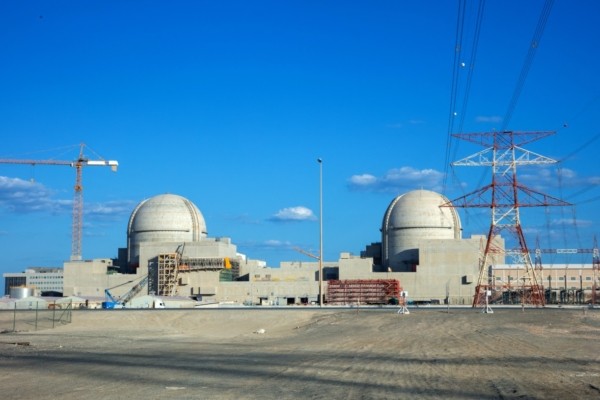
In the news reported on May 20, 2026, the United Arab Emirates (UAE) announced on Tuesday, May 19, that a total of six drones had been launched from Iraq within the past 48 hours. One of the drones struck a generator on the periphery of the Barakah nuclear power plant, causing no casualties or nuclear leakage.
Currently, no organization has claimed responsibility for the attack. However, during the US-Iran conflict, Iran-backed terrorist groups in Iraq and other countries have assisted Iran in targeting the surrounding Gulf countries, primarily focusing on US military bases and other critical infrastructure in the Gulf region.
The UAE Ministry of Defense stated in a press release that three drones targeted the Barakah nuclear power plant, with only one successfully carrying out the attack, while the others were intercepted successfully.
The UAE Federal Authority for Nuclear Regulation (FANR) confirmed the incident and emphasized that the nuclear power plant is currently safe and there has been no release of radioactive materials. UAE officials stated that the attack hit a generator near the facility.
The Barakah nuclear power plant is the first commercial nuclear power plant in the Arab world, providing nearly 25% of the UAE’s electricity needs. UAE officials stressed that the UAE has the full right to respond to such “terrorist attacks.” In response, Iraq stated that its air defense systems did not detect any drones being launched from its airspace.
Following the drone attack on the nuclear power plant, Saudi Arabia, Qatar, and Jordan have expressed full support for the UAE and condemned the attack as a “flagrant violation” of international law, severely threatening regional security and stability.
In May, the UAE has repeatedly stated that despite the ceasefire between the US and Iran starting on April 8, Iran continues to launch drone and missile attacks against the UAE.
Mohamed Abushahab, the UAE’s Permanent Representative to the United Nations, spoke at a special Security Council meeting regarding the incident and warned that this is not an isolated event.
Although he did not explicitly mention the perpetrator, it was clear he was referring to Iran. He cautioned, “This incident is occurring against a broader regional backdrop where a country and its proxies are continuing cross-border attacks, pushing the region towards escalating tensions and dangerous confrontations.”
Raphael Grossi, the Director-General of the International Atomic Energy Agency (IAEA), expressed concerns about the attack threatening the UAE’s nuclear security and causing significant attention and worry throughout the Gulf region.
He warned, “If the Barakah nuclear power plant were to be directly hit, it could potentially release large amounts of radioactive materials into the environment. If an impact disrupts the power supply to the nuclear plant, it could lead to core meltdown of the reactor, resulting in a serious radiation leak.”