
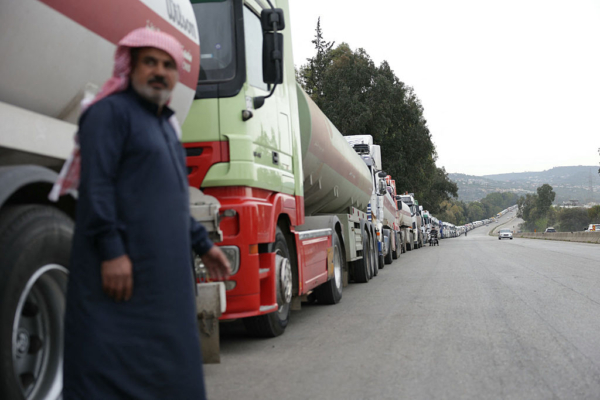
In the midst of the conflict in Iran, a land-based logistics network that bypasses the Strait of Hormuz, spanning the Arabian Desert, is rapidly taking shape.
According to reports from The Wall Street Journal, camels laden with goods were once the lifeline of Arab commerce. Now, this land transportation is experiencing a revival. With shipping in the Strait of Hormuz disrupted, forcing producers and exporters in the Persian Gulf region to seek alternative routes, the Saudi Arabian state-owned mining company Maaden has urgently dispatched truck operators to transport fertilizers to the Red Sea ports.
Maaden’s CEO Bob Wilt stated that he had sent top executives to the Red Sea ports and quickly reached out to railway and trucking operators within two weeks to establish a logistics network spanning Saudi Arabia. The size of his fleet has increased from the initial 600 trucks to 3,500, with each truck having two drivers taking shifts, and most vehicles operating around the clock shuttling back and forth between the Persian Gulf and the Red Sea.
Wilt outlined that the goal is to clear the backlog of export goods by the end of May.
He mentioned that this transportation route incurred high costs, as many trucks had to return empty after reaching the ports. However, the higher prices of goods absorbed the additional transportation costs to some extent. The company has set up prefabricated warehouses along the transportation route and adjusted transport equipment to use stainless steel tank trucks for transporting sulfuric acid – a crucial ingredient in producing phosphates.
Wilt expressed that the company aims to make this truck transportation route a long-term alternative channel rather than just an emergency solution. In the past, Maaden primarily shipped minerals through the Persian Gulf ports, passing through the Strait of Hormuz.
He told Huari: “We have proven our capabilities. Let us strengthen this route and always maintain the transportation passage to the Red Sea.”
This shift is not exclusive to Maaden. From Saudi Arabia and the United Arab Emirates to Oman, efforts are underway to restructure ports, railways, and highways, establishing transportation routes that circumvent the Strait of Hormuz. Major companies like Mediterranean Shipping Company (MSC) and Maersk are utilizing truck transportation to move goods across the Arabian Peninsula.
The UAE supermarket chain Spinneys dispatched trucks loaded with British food, including chips, oatmeal, and children’s snacks, from Kent County in the UK. The trucks traveled through Western Europe, Egypt, and Saudi Arabia, taking 16 days to reach Dubai.
Etihad Rail Freight recently transported hundreds of Nissan vehicles from Fujairah on the eastern coast of the UAE to Abu Dhabi along the coast of the Persian Gulf.
However, Huari believes that this dispatch cannot completely replace maritime shipping. Not only is it more costly, but it also does not address energy shortages. Nevertheless, in emergency situations, it can help sustain trade operations, alleviate supply shocks, stabilize prices, and mitigate global inflation pressures.
This article drew references from reports by The Wall Street Journal and the European transport media website trans.info.