
The United Arab Emirates’ state-owned oil company, Abu Dhabi National Oil Company (ADNOC), announced on Wednesday (May 21) that UAE has completed nearly 50% of the construction of the second bypass oil pipeline around the Strait of Hormuz.
Sultan Ahmed Al Jaber, the CEO of ADNOC, stated during an interview with the Atlantic Council, “Currently, a significant amount of global energy supply still flows through fewer critical chokepoints.”
This new pipeline will double ADNOC’s export capacity through the port of Fujairah, located on the coast of the Gulf of Oman, near but outside the Strait of Hormuz. Due to the impact of the conflict with Iran, UAE has accelerated the progress of this project. The pipeline is expected to be operational by 2027.
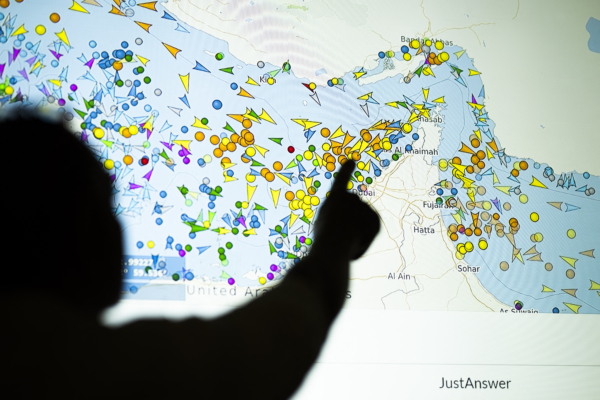
Since early March, Iran has been blocking the Strait of Hormuz, causing a halt in oil and gas exports for UAE and other Gulf Arab oil-producing countries. UAE has redirected some of its oil exports through the Abu Dhabi Crude Oil Pipeline (ADCOP), transporting crude oil from the Habshan onshore field to the port of Fujairah outside the strait. While smaller in scale, this pipeline can handle approximately 1.5 to 1.8 million barrels of crude oil per day.
Jaber highlighted that the blockade of the Strait of Hormuz has triggered the most severe energy supply disruption crisis in history. He pointed out that the closure of the strait has resulted in a supply loss of over one billion barrels of oil, and as long as the Strait of Hormuz remains closed, an additional nearly 100 million barrels of oil will be lost every week.
Jaber mentioned that even if the conflict ends immediately, it will take at least four months to restore oil flow to 80% of normal levels. He anticipates that it will not be until the first or second quarter of 2027 that oil flow will fully return to normal.
“This is not just an economic issue,” Jaber said, “In fact, allowing a single country to hijack the world’s most vital waterway sets an extremely dangerous precedent.”
On February 28, the United States and Israel conducted large-scale airstrikes against Iran, following which Iran blocked the Strait of Hormuz.
US Energy Secretary Chris Wright stated in an interview with CNBC last Friday that as Gulf countries construct more pipelines bypassing the Strait of Hormuz, the importance of the strait in the global energy market will decrease after the end of the conflict with Iran.
“This is a card that can only be played once,” Wright stated regarding Iran’s blockade of the strait, “Energy flow out of the Persian Gulf will find other routes.”
“We will see a decline in the significance of the Strait of Hormuz, but the importance of these countries in energy production and supply will not diminish,” he added.