
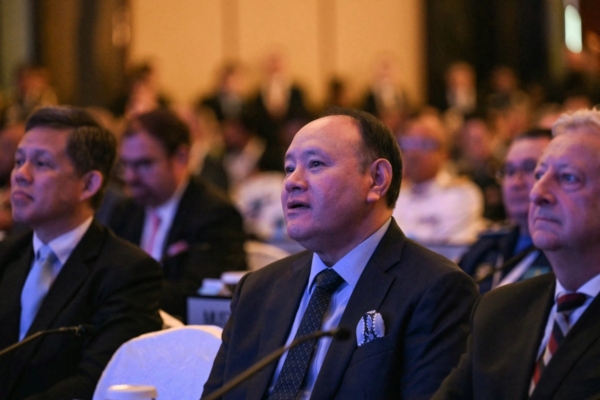
On Thursday, June 11th, Philippine Defense Minister Gilberto Teodoro stated that he would continue to fulfill his duties and uphold national interests despite being sanctioned by Beijing. The day before, the Chinese Ministry of Foreign Affairs announced sanctions against Teodoro and his relatives for “repeatedly making erroneous statements”.
According to Reuters, Teodoro stated in a press release, “This is the approach they take towards those who expose their deceptive behavior and speak the truth.” He affirmed that he would continue to carry out his responsibilities and defend national interests in the face of such actions.
The Chinese Ministry of Foreign Affairs declared on Thursday that Teodoro, his spouse, and children are prohibited from entering mainland China, Hong Kong, and Macau. Additionally, organizations and individuals within China are forbidden from engaging in transactions, cooperation, or other activities with his family. Beijing claimed that Teodoro’s statements have damaged China’s legitimate interests and strained the bilateral relationship.
The Philippine Department of Foreign Affairs responded by viewing these measures as “unfriendly behavior”, warning that it would further complicate bilateral relations. They emphasized that such actions do not help build mutual trust or responsibly address disagreements between the two countries.
Earlier at the Shangri-La Dialogue in Singapore, Teodoro discussed the pressures the Philippines faces from China in terms of territory and politics. He stressed the importance of resilience and appropriate responses to these challenges, asserting the necessity for the Philippines to stand firm in defending its interests.
Earlier this week, the Philippines discovered a 6-meter square floating structure with antennas at Scarborough Shoal in the South China Sea, known as Huangyan Island by China. The Philippine government promptly raised diplomatic concerns with Beijing, labeling the structure as an “illegal presence”.
Tensions between the Philippines and China have intensified in recent years due to disputes in the South China Sea. The government of Philippine President Ferdinand Marcos Jr. has consistently opposed what it perceives as pressure from Beijing, while China accuses the Philippines of repeatedly encroaching on its interests in the disputed waters.
China has vehemently opposed discussions between Japan, the Philippines, and Taiwan regarding maritime boundary negotiations in the waters east of Taiwan. Beijing believes that these negotiations, involving exclusive economic zones and continental shelf boundaries, could affect its sovereignty claims in the disputed region.
Analysts suggest that the sanctions reflect the ongoing deepening of contradictions between the Philippines and China over maritime interests and security matters.