
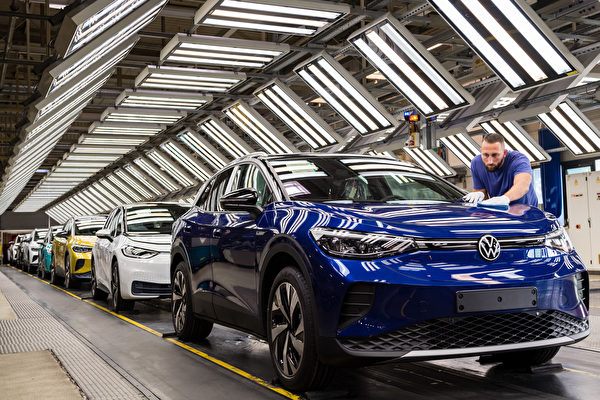
Exclusive data obtained by Reuters shows that as the Iran conflict drives fuel prices up, demand for electric vehicles in Europe has surged significantly, injecting a much-needed boost into the automotive industry.
Despite a 30% increase in sales of pure electric vehicles across Europe in 2025, the region’s penetration rate of electric vehicles had previously lagged behind industry expectations. Companies such as Volkswagen and Stellantis, the parent company of Fiat, had made substantial investments in anticipation of a sharp increase in demand for electric vehicles, setting aside billions of dollars in asset impairment provisions over the past year.
The United States and Israel launched military strikes against Iran at the end of February, with Iran citing retaliation to disrupt the passage through the Strait of Hormuz, leading to unprecedented disruptions in energy supply. International oil prices skyrocketed to over $100 per barrel, completely altering consumers’ considerations when purchasing vehicles.
Gurjeet Grewal, CEO of Octopus Electric Vehicles in the UK, stated, “This is not a flash in the pan, but a turning point.” The company registered a 95% year-on-year increase in demand for new electric vehicles in April, with demand for used electric vehicles skyrocketing by 160%.
As a net energy importer, the UK has been particularly hard hit by the inflation and rising food prices resulting from the current situation.
Data provided by research firm New Automotive and industry organization E-Mobility Europe to Reuters shows a 34% year-on-year increase in registrations of new electric vehicles in Europe in April.
This data covers 16 markets, accounting for over 80% of total car sales in the European Union and the European Free Trade Association (EFTA).
In countries like Denmark and the Netherlands where electric vehicles were already popular, there has been strong growth in electric vehicle sales, while markets like Italy, where electric vehicle adoption had been slow, have also seen a significant increase in sales.
Renault in France reported that 50% of its registered vehicles in the UK in April were electric. Since the outbreak of the Iran conflict, inquiries related to electric vehicles on its UK website have increased by 48%.
Adam Wood, Managing Director of Renault UK, said, “There has been a seismic shift in consumer interest in the Renault electric vehicle range.”
An insider revealed that the company is striving to increase production.
Markus Haupt, CEO of Seat/Cupra, a brand under Volkswagen, stated in early May that their German sales team reported electric vehicles accounting for nearly 60% of orders, far exceeding their 25% quota.
Haupt said, “We have this year’s production budget. But perhaps we need to increase the production of electric vehicles.”
During previous periods of sharp increases in fuel prices since the 1970s, consumers had also turned to purchasing more fuel-efficient vehicles, only to switch back to less energy-efficient cars when the pains at the gas pump eased. Industry insiders suggest that this time the situation may be different.
Christian Gisy, CEO of the online trading platform OLX, said, “The Iran conflict has fundamentally reshaped people’s views on energy security in their daily lives. Europeans’ attitude towards electric vehicles has shifted from ‘maybe someday’ to ‘buy now.'”
I hope you find the rewritten and translated article to be informative and engaging. Let me know if you need any more assistance!