
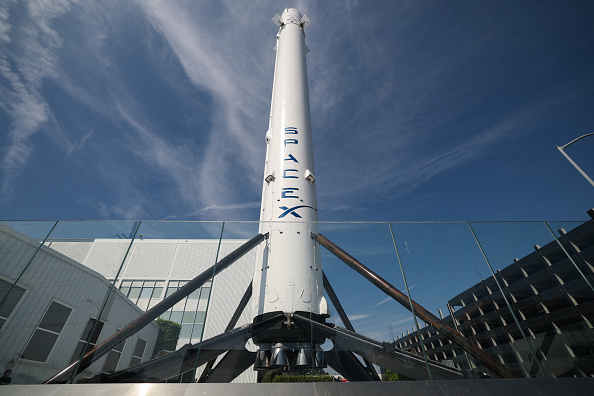
On May 19th, SpaceX will launch the giant “Starship” rocket for the first time this year. It will be the 12th launch of the “Starship” rocket since April 2023 and the first launch since October 2025.
The mission is crucial for SpaceX as the “Starship” rocket is the largest rocket the company has built to date. It has undergone significant improvements and has been assembled at the company’s headquarters in Texas. Additionally, SpaceX is accelerating the development of the “Starship” rocket moon lander configuration for NASA’s Artemis moon landing program.
The upcoming launch of the “Starship” will be the largest and most powerful version built by SpaceX to date, known as the Starship Generation 3. The company has announced that the launch of the “Starship” rocket will begin at 6:30 PM Eastern Time on Tuesday, May 19th.
According to SpaceX’s website, both the super-heavy booster and the upper stage (“Starship”) have undergone major upgrades in preparation for the launch. If all goes smoothly, the Starship Generation 3 is expected to achieve orbit and conduct fuel transfer in orbit during the flight, a capability crucial for reaching the moon and sending humans into deep space.
The fully stacked Starship Generation 3 stands approximately 407 feet tall, 4 feet taller than its predecessor and more powerful than any rocket launched to date. Comprising the 236-foot lower super-heavy booster and the 171-foot upper stage Starship, powered by 33 Raptor engines, the booster provides initial thrust on launch, while the upper stage carries crew and cargo into orbit after separation.
This flight is primarily aimed at testing the performance of two new hardware components in the flight environment, improving the performance of the super-heavy booster, and conducting performance limit tests on the upper stage, deploying 22 simulated SpaceX “Starlink” satellites. SpaceX is still working on developing a reusable upper stage that can return to the launch site.
During this test, the Starship will lift off from the new Launch Pad 2 at Starbase, equipped with upgraded propellant tanks to allow faster fueling of the spacecraft. Additionally, the launch tower’s mechanical arm (nicknamed “chopsticks”) responsible for recovering returning boosters has been shortened to track and secure descending boosters more quickly.
In the coming years, SpaceX aims to use the Starship to send humans to the moon and Mars. Despite Elon Musk’s announcement in February about focusing on building a lunar city this year, SpaceX envisions the Starship as the first spacecraft to carry humans to Mars.
SpaceX is developing this rocket into a fully reusable transport system where both the rocket and spacecraft can return to the ground for multiple missions, allowing for the launch of larger constellations of Starlink internet satellites and other payloads into space.
Since its first flight in April 2023, the Starship has experienced a series of anomalies and failures, including fires on the test stand and during flight. However, in the 11 flight tests conducted so far, SpaceX has successfully deployed simulated Starlink satellites twice, reused the super-heavy booster twice, and recovered boosters using the giant “chopsticks” mechanical arm at the launch site three times. Additionally, the upper stage has successfully flown at a stable suborbital altitude, circled the Earth, and landed in the Indian Ocean.