
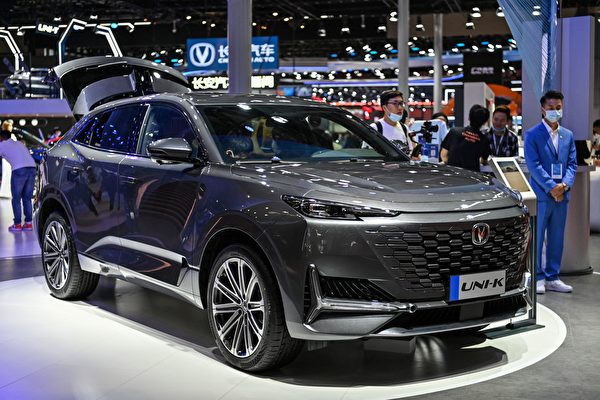
China’s gasoline car market has once again seen news of price reductions, with some models experiencing a reduction of nearly 30%. This comes after a widespread price reduction of gasoline cars earlier this year, marking another significant round of price cuts in the Chinese gasoline car market. The news made headlines on May 17.
According to reports from various Chinese media outlets including Sina Auto, on May 15, Changan Automobile launched the Yidong Classic Edition at a price of 64,900 yuan, a 26% decrease from the guidance price of 87,900 yuan. It also offered a limited-time cash discount of 23,000 yuan, as well as maintenance and data packages. Following this, Chery announced a maximum comprehensive subsidy of 40,000 yuan for purchases of their brand vehicles, while Kia’s new Lion Platinum Toluca’s price dropped to 109,900 yuan, a 29% decrease.
Data from the China Passenger Car Market Information Joint Conference (PCMIJC) shows that in April, other models like the Speed Teles, Civic, and Roewe i6 also experienced price reductions. For instance, the lowest guidance price for the 2026 Speed Teles is 119,900 yuan, which was reduced by 30,000 yuan, representing a 20% decrease. The new Civic had a lowest guidance price of 97,900 yuan, 32,000 yuan lower, a reduction of 24.6%. The lowest guidance price for the Roewe i6 was reduced by 14,900 yuan, a decrease of 16.6%.
In April, conventional gasoline cars saw a price reduction of 23,000 yuan on average, a 17.2% decrease; from January to April, prices dropped by an average of 34,000 yuan, a 14.6% reduction.
Despite the price cuts, gasoline car sales have not met expectations. Data from the PCMIJC shows that in April, retail sales of gasoline cars were only 530,000 units, a 37% year-on-year decrease.
This marks the second large-scale price reduction in the Chinese gasoline car market.
At the start of 2026, BMW China comprehensively lowered the prices of over 30 car models in China, including sedans, SUVs, electric vehicles, with the largest reduction reaching 301,000 yuan. In March, FAW-Volkswagen’s Audi A6 saw a price drop of 91,000 yuan, a 29% reduction. Toyota Camry and Passat also saw reductions of 40,000 to 50,000 yuan.
According to car sales data released by the PCMIJC, domestic retail sales of passenger cars in China totaled 1.384 million units in April, a 21.5% year-on-year decrease, marking the seventh consecutive month of decline. In the first four months of this year, domestic passenger car sales reached 5.604 million units, an 18.5% year-on-year decline. The impact of electric vehicles on gasoline cars is becoming more pronounced.
Industry experts point out that the slowdown in the Chinese car market is closely related to the weakening overall economic environment. In recent years, the Chinese real estate market has remained sluggish, residents’ income expectations have decreased, and consumer confidence has weakened, significantly impacting demand for major consumer goods such as cars. The current predicament of the Chinese automotive market reflects a confluence of multiple pressures, including slowing economic growth, consumption downgrading, and excess capacity. In 2026, China’s gasoline car market is experiencing the largest-scale price reduction wave in its history, with mainstream car prices generally decreasing by 15-30%.